The quality of the water and air around you can significantly affect how comfortable your home feels. While these systems often operate out of sight, paying attention to filtration, water sources, and indoor air can help homeowners make more informed decisions about maintaining their living environment.
For South Florida homeowners, these considerations are especially relevant. Homes may rely on different water sources and filtration approaches, while warm, humid conditions can make indoor air quality an important part of maintaining a comfortable household. Understanding how filtration systems work and what responsibilities come with them can help homeowners take a more proactive approach.
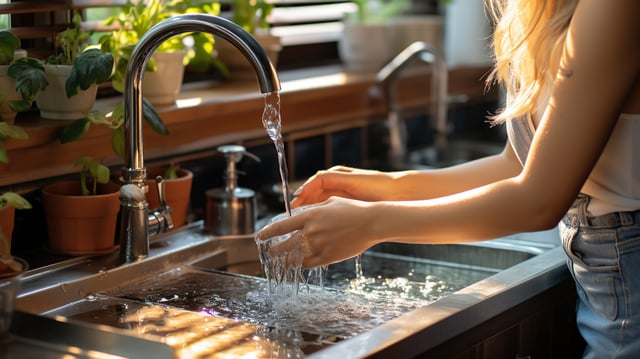
Consider How Water Filtration Affects Your Home
Water quality can influence everything from how water tastes and feels to how mineral buildup develops around plumbing fixtures and pool equipment. Hard water contains elevated concentrations of minerals such as calcium and magnesium, which can leave deposits over time.
Reverse osmosis is one technology used to address certain water-quality concerns. According to Pool Water Recycling, a mobile reverse osmosis filtration unit can remove hard-water minerals while preserving 85% of the water already present. For pool owners, that type of approach can be useful when addressing mineral concentrations without simply discarding a large volume of water.

Water filtration needs can vary considerably from one property to another. Factors such as the source of the water, existing mineral levels, plumbing configuration, and the intended use of the water can all influence what type of treatment may be appropriate.
Homeowners can also pay attention to changes in their water. Unusual taste, odor, discoloration, visible mineral deposits, or changes in how fixtures perform may warrant further investigation. Rather than assuming every issue has the same cause, identifying the underlying water-quality concern can help determine what type of treatment makes sense.
Know Your Responsibilities With Private Wells
Not every home receives water from a municipal system. Properties with private wells have different considerations because the homeowner has a more direct role in monitoring the condition of the water supply.
According to the U.S. EPA, private wells are 100% outside the coverage of federal Safe Drinking Water Act standards. As a result, responsibilities associated with testing, filtration improvements, and continued monitoring fall directly on the property owner.
This makes regular attention to a private well especially important. Homeowners may need to understand their water source, keep track of testing, and recognize changes that could indicate a problem. Testing can provide information that isn’t available simply by looking at or tasting the water.
Maintaining records can also make household water management easier. Keeping track of testing dates, treatment equipment, maintenance, and any unusual changes creates a useful history that homeowners can reference when evaluating their water quality.
Professional assistance may also be appropriate when a homeowner has questions about a well or discovers a potential water-quality problem. Different concerns can require different testing or treatment approaches, so getting information specific to the property can be more useful than relying on assumptions about another home’s water supply.
Pay Attention to Indoor Air Quality
Water isn’t the only part of the home environment that deserves attention. Indoor air can also affect comfort, particularly when homes are occupied for extended periods or when ventilation and filtration systems aren’t performing as expected.
Air filtration systems can help capture particles and other contaminants from circulating air. HEPA-grade systems are designed for high-efficiency particle filtration, making them an option in settings where controlling airborne particles is a priority.
According to Future Market Insights, HEPA-grade industrial air filtration systems can reduce energy consumption by 20% to 30% through optimized airflow, with full return on investment reported within 18 to 24 months because of reduced maintenance downtime. Although industrial systems differ from equipment used in typical residences, the information illustrates how filtration design and airflow can influence both system performance and energy use.
Homeowners can look at practical factors such as filter condition, ventilation, humidity, and how effectively their heating or cooling system circulates air. Replacing filters according to the requirements of the equipment and addressing noticeable airflow problems can be part of broader home maintenance.
A healthier home environment isn’t necessarily created by adding the most advanced equipment available. Understanding what your property needs and maintaining the systems already in place can be just as important.
Creating a Healthier Home Environment
Water and air quality are easy to overlook because filtration and ventilation systems generally operate without much attention. Yet taking time to understand your water source, monitor filtration, and pay attention to indoor air can help you make better decisions about your home’s environment.
For homeowners, the goal is to stay informed rather than wait until an obvious problem develops. Regular monitoring, appropriate maintenance, and professional guidance when needed can all contribute to a home that feels cleaner, more comfortable, and better maintained.
Disclaimer
Artificial Intelligence Disclosure & Legal Disclaimer
AI Content Policy.
To provide our readers with timely and comprehensive coverage, South Florida Reporter uses artificial intelligence (AI) to assist in producing certain articles and visual content.
Articles: AI may be used to assist in research, structural drafting, or data analysis. All AI-assisted text is reviewed and edited by our team to ensure accuracy and adherence to our editorial standards.
Images: Any imagery generated or significantly altered by AI is clearly marked with a disclaimer or watermark to distinguish it from traditional photography or editorial illustrations.
General Disclaimer
The information contained in South Florida Reporter is for general information purposes only.
South Florida Reporter assumes no responsibility for errors or omissions in the contents of the Service. In no event shall South Florida Reporter be liable for any special, direct, indirect, consequential, or incidental damages or any damages whatsoever, whether in an action of contract, negligence or other tort, arising out of or in connection with the use of the Service or the contents of the Service.
The Company reserves the right to make additions, deletions, or modifications to the contents of the Service at any time without prior notice. The Company does not warrant that the Service is free of viruses or other harmful components.