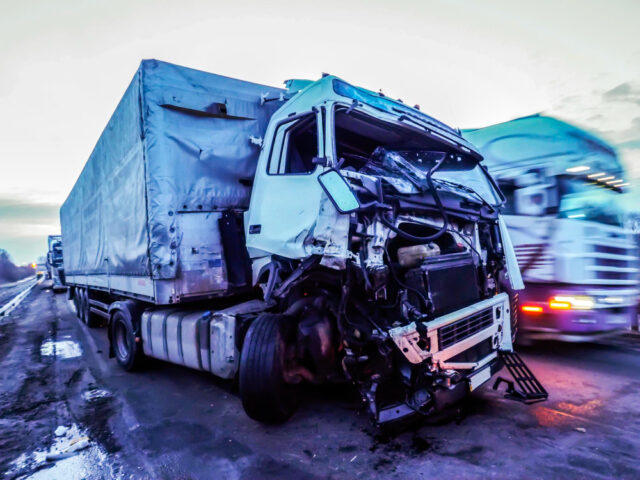
Commercial drivers are required to meet strict licensing standards because they operate large vehicles that can cause catastrophic injuries if something goes wrong. Discovering that the driver involved in your collision had an expired commercial driver’s license may seem like clear proof of liability, but the legal reality is often more nuanced. Understanding how licensing violations are evaluated is important, and Hersh Kirtman Injury Law can help injured individuals understand how this type of evidence may strengthen an accident claim when combined with the facts surrounding the crash.
An Expired Commercial License Can Raise Serious Questions
Drivers must renew their commercial driver’s licenses periodically to ensure they comply with federal and state rules for operating commercial vehicles. These requirements include training standards, medical requirements, and other licensing duties that help keep people safe on the roads. Allowing a commercial license to expire may indicate that important regulatory requirements were not properly followed.
An expired license can also raise questions about how the trucking business hires and oversees its workers. Most of the time, employers check whether commercial drivers have the right credentials before letting them drive company vehicles. If a company doesn’t find or correct an expired license, investigators may look into whether the company had other safety problems as well.
However, having an expired license does not automatically mean that someone is legally responsible for the crash. Most of the time, courts and insurance companies look at whether the license violation contributed to the accident. Because of this, every commercial vehicle accident needs a full investigation.

Liability Still Depends on the Cause of the Crash
One of the most common misconceptions is that an expired commercial license automatically means the injured person will win the case. In reality, the central legal question is whether the driver’s negligence caused the accident and whether the licensing issue contributed to the events leading to the collision. Evidence of an expired license may strengthen a claim, but it is usually evaluated alongside many other facts.
To determine exactly what happened in a crash, investigators often review police reports, witness statements, vehicle damage, electronic logging data, and accident reconstruction evidence. If the commercial driver ran a red light, failed to yield, was distracted, or broke other traffic laws, those factors may matter a lot, even if they don’t have a license. Then, the expired license could become more proof that people are worried about following the rules.
When licensing violations happen at the same time as other safety problems, they may show a more complete picture of carelessness. Each piece of evidence helps the police determine whether the driver or employer provided the level of care reasonable in the given situation. For a better understanding of liability, a thorough evaluation is needed.
Trucking Companies May Share Responsibility
Commercial vehicle accidents often involve more than the actions of the driver alone. Trucking companies have responsibilities that include verifying driver qualifications, maintaining accurate employment records, and ensuring drivers remain properly licensed throughout their employment. Failing to do these things could become a big problem during an accident investigation.
Investigators may also review the company’s safety policies, training records, hiring practices, and compliance with government rules. If proof shows that the boss knew or should have known that the driver’s commercial license had expired, it could raise more questions about supervision and how the business was run. These issues may influence how responsibility is evaluated after a serious collision.
You can learn a lot about whether safety rules were consistently followed by reviewing maintenance records, driver qualification files, and internal company documents. By reviewing these documents, you can determine whether the licensing issue was a one-time mistake or part of a larger pattern of rule violations. Comprehensive investigations often reveal facts that are not immediately apparent after the crash.
Strong Evidence Builds a Stronger Claim
Successful commercial vehicle accident claims are typically supported by detailed evidence rather than a single fact. Photographs from the crash scene, medical records, witness accounts, electronic data, inspection reports, and licensing information all contribute to understanding what happened. Preserving this evidence early can make a significant difference as the case develops.
Speaking with Hersh Kirtman Injury Law may help injured individuals better understand how an expired commercial license fits into the broader legal analysis of a trucking accident. Experienced legal guidance can evaluate whether licensing violations, regulatory failures, or other evidence strengthen a particular claim while helping victims understand their available options. Every commercial vehicle accident presents unique facts that deserve careful examination.
While an expired commercial license may not automatically determine the outcome of a case, it should never be overlooked. When combined with evidence of negligence or inadequate company oversight, it may become an important factor in establishing liability. Careful investigation helps ensure that all relevant evidence receives appropriate consideration.
Conclusion
An expired commercial driver’s license can be an important piece of evidence after a serious truck accident. Still, it is most effective when considered alongside the facts that explain how the collision occurred. A thorough investigation into the driver’s conduct, the trucking company’s oversight, and the available evidence provides the clearest picture of responsibility. Understanding how licensing violations fit within a broader negligence claim allows injured individuals to protect their rights better while pursuing fair compensation.
Disclaimer
Artificial Intelligence Disclosure & Legal Disclaimer
AI Content Policy.
To provide our readers with timely and comprehensive coverage, South Florida Reporter uses artificial intelligence (AI) to assist in producing certain articles and visual content.
Articles: AI may be used to assist in research, structural drafting, or data analysis. All AI-assisted text is reviewed and edited by our team to ensure accuracy and adherence to our editorial standards.
Images: Any imagery generated or significantly altered by AI is clearly marked with a disclaimer or watermark to distinguish it from traditional photography or editorial illustrations.
General Disclaimer
The information contained in South Florida Reporter is for general information purposes only.
South Florida Reporter assumes no responsibility for errors or omissions in the contents of the Service. In no event shall South Florida Reporter be liable for any special, direct, indirect, consequential, or incidental damages or any damages whatsoever, whether in an action of contract, negligence or other tort, arising out of or in connection with the use of the Service or the contents of the Service.
The Company reserves the right to make additions, deletions, or modifications to the contents of the Service at any time without prior notice. The Company does not warrant that the Service is free of viruses or other harmful components.