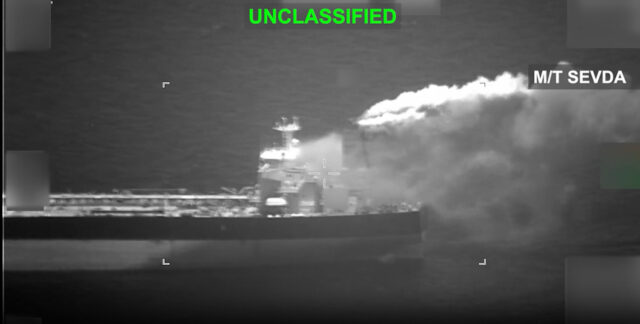
The silence emanating from the negotiation tables in Islamabad is currently the loudest sound in the global economy. As of Friday, May 8, 2026, the world remains suspended in a state of high-stakes atmospheric tension. The United States and its regional allies are awaiting a formal response from Tehran regarding the latest ceasefire proposal—a document intended to transform the fragile “Islamabad Extension” into a durable peace. However, the diplomatic “wait-and-see” approach was punctuated early this morning by a sharp kinetic reminder of the stakes involved: the U.S. Navy successfully disabled two unidentified vessels attempting to breach the exclusion zone around a primary Iranian port.
This maritime incident, occurring just as the clock ticks down on the current truce, underscores the razor-thin margin between a negotiated settlement and a return to the full-scale hostilities of Operation Epic Fury.
The Maritime Exclusion Zone: A Blockade Enforced
While diplomats in Pakistan trade drafts of a 10-point peace plan, the U.S. Fifth Fleet has been tasked with the unenviable job of maintaining a “leak-proof” blockade. According to military reports, the two vessels—which high-level sources suggest were either IRGC-linked logistics ships or sanctioned blockade runners—refused to yield to repeated warnings from a U.S. carrier strike group patrolling the approaches to the Gulf of Oman.
The Navy did not sink the vessels, opting instead for “non-lethal disabling fire” and electronic jamming to neutralize their propulsion systems. This calibrated use of force is a hallmark of the 2026 conflict: a “gray war” where the goal is rarely total destruction but rather total control of connectivity.

“The blockade is not just about oil; it is about the functional definition of sovereignty in a post-Hormuz world,” noted one analyst from the India Foundation. “By disabling these ships without sinking them, the U.S. is signaling that while they are waiting for a ceasefire, they are not waiting for permission to control the water.”
The Shadow of Operation Epic Fury
To understand the weight of the current silence, one must look back to February 28, 2026, the day the regional order fractured. The launch of Operation Epic Fury (U.S.) and Operation Roaring Lion (Israel) was a surgical, multi-front strike campaign that targeted Iran’s nuclear infrastructure and command-and-control nodes.
The initial days of the war were a whirlwind of asymmetric retaliation. Iran’s response was swift, utilizing its massive drone and ballistic missile arsenal to strike at the “soft underbelly” of the global energy market—refineries in Saudi Arabia, shipping lanes in the UAE, and desalination plants across the GCC. By March 2, 2026, the Strait of Hormuz was effectively closed to commercial traffic, stranding nearly 15 million barrels of oil per day and sending Brent crude prices soaring toward the $150 mark.
Table 1: Key Milestones of the 2026 Conflict
| Date | Event | Outcome |
| Feb 28, 2026 | Initiation of Operation Epic Fury | Coordinated U.S.-Israeli strikes on Iranian military infrastructure. |
| Mar 2, 2026 | Closure of Strait of Hormuz | Tanker traffic drops by 90%; global oil prices spike. |
| Apr 8, 2026 | First Islamabad Truce | Two-week ceasefire announced to allow for high-level talks. |
| May 1, 2026 | Indefinite Extension | U.S. extends truce but maintains the naval blockade. |
| May 8, 2026 | Current Standoff | Two ships disabled; U.S. awaits Tehran’s final word on peace terms. |
The Economic Toll: From Sulfur to Supermarkets
The war in Iran has proven that in 2026, connectivity is the ultimate weapon. It isn’t just about the gas pump; it’s about the dinner table. The closure of the Persian Gulf has disrupted the global supply of sulfur, a critical feedstock for phosphate fertilizers. Nations like China, Indonesia, and Morocco—major agricultural players—have seen their supply chains buckle.
The “Hormuz Crisis” has forced a massive rerouting of global trade. Approximately 10% of the world’s container traffic has been diverted around the Cape of Good Hope, adding weeks to delivery times and billions to insurance premiums. While some analysts at the U.S. Energy Information Administration (EIA) suggest the shock might be short-lived if a deal is signed this week, others warn of a “structural shift” in how maritime risk is priced.
Awaiting the “Islamabad Word”
The current ceasefire proposal reportedly hinges on a few non-negotiable points:
- The Reopening of the Strait: The U.S. demands an immediate, internationally monitored reopening of the waterway.
- Nuclear Constraints: Re-establishment of limits on enrichment that were bypassed during the hostilities.
- The “Hormuz Toll” Debate: Iran has floated a 10-point plan that includes the right to charge a “security toll” for transit through the Strait—a proposal the U.S. and Israel have thus far viewed as a non-starter.
The tension in Washington is palpable. President Trump has signaled a desire for a “clean exit,” even suggesting a U.S. troop withdrawal from the region within a month of a signed deal. However, Vice President J.D. Vance has maintained a more hawkish line, insisting that any agreement must involve the total neutralization of Iran’s long-range missile capabilities.
The Fog of Gray War
As we wait, the “gray war” continues. The disabling of the two ships today serves as a reminder that the ceasefire is a legal construct, not a physical reality on the water. Modern conflict in 2026 is a “mosaic”—a fragmented landscape where major powers, regional players, and non-state actors like the Houthis or Hezbollah interact through a blend of cyber operations, drone swarms, and “lawfare.”
The world is holding its breath. If Tehran says “yes,” we may see the beginning of a complex, managed de-escalation. If they say “no,” the U.S. Navy’s actions this morning may be the opening notes of a much louder, much more destructive final movement.
References & Sources
- The 2026 Gulf War and the Fragility of Global Maritime Security India Foundation, May 1, 2026. https://indiafoundation.in/articles-and-commentaries/the-2026-gulf-war-and-the-fragility-of-global-maritime-security/
- Weaponising Connectivity: The Iran War and the Rise of Chokepoint Warfare. TRT World Research Centre, April 8, 2026. https://researchcentre.trtworld.com/publications/analysis/weaponising-connectivity-the-iran-war-and-the-rise-of-chokepoint-warfare/
- The U.S.–Iran War, Rising Energy Prices and the International Political and Economic Landscape. Prospect Foundation, April 8, 2026. https://www.pf.org.tw/en/pfen/33-11899.html
- How Sustainable Is Arctic Route Diversification? Economic Losses and Supply Chain Resilience in the 2026 Hormuz Crisis. MDPI Sustainability, May 7, 2026.https://www.mdpi.com/2071-1050/18/9/4318
- Fury and Folly: Asia Faces Consequences of American Strategic Distraction. Strategy International, April 24, 2026. https://strategyinternational.org/2026/04/24/publication262/
- Changing Security Dynamics in the Persian Gulf after Epic Fury: A Preliminary Assessment. Journal of Strategic Security (via Project MUSE), April 30, 2026. https://muse.jhu.edu/article/988810
- The Ongoing War Between Iran, the US, and Israel: A Brief Analytical Assessment. European Center for Populism Studies (ECPS), April 23, 2026. https://www.populismstudies.org/the-ongoing-war-between-iran-the-us-and-israel-a-brief-analytical-assessment/
- NDSU Agricultural Trade Monitor: Impacts of the 2026 Strait of Hormuz Closure. AgEcon Search, March 2026. https://ageconsearch.umn.edu/record/396250/files/NDSU%20Agricultural%20Trade%20Monitor%202026-03.pdf
Disclaimer
Artificial Intelligence Disclosure & Legal Disclaimer
AI Content Policy.
To provide our readers with timely and comprehensive coverage, South Florida Reporter uses artificial intelligence (AI) to assist in producing certain articles and visual content.
Articles: AI may be used to assist in research, structural drafting, or data analysis. All AI-assisted text is reviewed and edited by our team to ensure accuracy and adherence to our editorial standards.
Images: Any imagery generated or significantly altered by AI is clearly marked with a disclaimer or watermark to distinguish it from traditional photography or editorial illustrations.
General Disclaimer
The information contained in South Florida Reporter is for general information purposes only.
South Florida Reporter assumes no responsibility for errors or omissions in the contents of the Service. In no event shall South Florida Reporter be liable for any special, direct, indirect, consequential, or incidental damages or any damages whatsoever, whether in an action of contract, negligence or other tort, arising out of or in connection with the use of the Service or the contents of the Service.
The Company reserves the right to make additions, deletions, or modifications to the contents of the Service at any time without prior notice. The Company does not warrant that the Service is free of viruses or other harmful components.