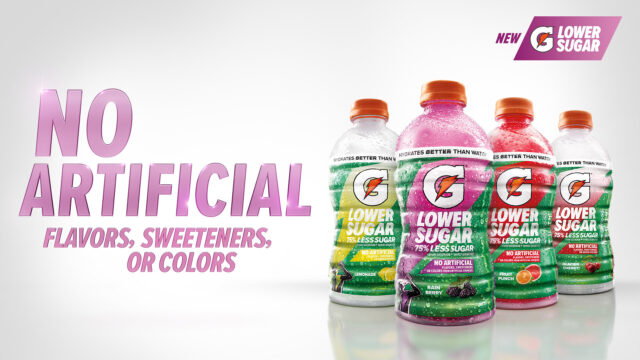
The Gatorade lightning bolt has served as the undisputed beacon of athletic recovery since its inception in a University of Florida laboratory in 1965. For sixty years, the brand’s identity was inextricably linked to its vibrant, almost radioactive palette—shades of neon orange, electric blue, and “Glacier Cherry” white. However, as of April 17, 2026, the beverage landscape has undergone a tectonic shift. Faced with a dual assault of aggressive legislative bans on synthetic dyes and a generational pivot toward “functional purity,” PepsiCo has officially completed the most significant rebrand in Gatorade’s history: the total elimination of FD&C colors and a 40% reduction in average sugar content across its flagship portfolio.
The Catalyst for Change: Legislation and the “MAHA” Movement
The catalyst for this rebranding was not merely a change in consumer taste, but a fundamental shift in the American regulatory environment. Following the momentum of the California Food Safety Act, the U.S. Department of Health and Human Services (HHS), under the leadership of Secretary Robert F. Kennedy Jr., launched a national initiative in April 2025 to phase out petroleum-derived dyes from the American food supply.
This “Make America Healthy Again” (MAHA) agenda targeted the “Big Six” synthetic colors, most notably Red 40, Yellow 5, and Blue 1. By early 2026, the FDA began exercising enforcement discretion for “No Artificial Color” claims, encouraging the industry to move toward naturally derived alternatives. For Gatorade, which historically relied on these stable, inexpensive synthetics to maintain brand consistency across global supply chains, the mandate was clear: evolve or face retail obsolescence.

The Sugar Dilemma
For decades, Gatorade’s efficacy was built on the “G-Curve”—a specific ratio of electrolytes and carbohydrates designed to maximize fluid absorption via the SGLT1 (Sodium-Glucose Linked Transporter) protein. The classic formula relied heavily on sucrose and dextrose to provide immediate energy and facilitate the transport of water across the intestinal wall.
However, the 2026 athlete is increasingly wary of the “sugar spike.” With the rise of GLP-1 medications and a broader societal focus on metabolic health, the standard 21 grams of sugar per 12-ounce serving began to look less like fuel and more like a liability. Gatorade’s rebrand has introduced a “Low-Glycemic Performance” tier. By utilizing Isomaltulose—a slow-release carbohydrate—and enhancing the electrolyte molarity, Gatorade has managed to maintain the osmotic pressure required for rapid hydration while slashing simple sugar content.
The New Osmotic Balance
To maintain the same hydration efficiency without the high sugar load, the new formula utilizes a more complex electrolyte matrix:
| Component | Classic Formula (Approx.) | 2026 “Clean” Formula |
| Sugar (Sucrose/Glucose) | 21g per 12oz | 8g – 12g per 12oz |
| Sodium (Na+) | 160mg | 220mg |
| Potassium (K+) | 45mg | 90mg |
| Color Source | FD&C Blue 1 / Red 40 | Spirulina / Black Carrot |
The Chemistry of “Natural” Vibrancy
The most difficult technical challenge in this rebrand was maintaining Gatorade’s visual “Cool Factor” without the stability of petroleum-based dyes. Synthetic dyes are favored by manufacturers because they are heat-stable, pH-resilient, and virtually permanent. Natural colors, conversely, are notorious for fading under grocery store fluorescent lights or shifting hue in acidic environments.
Gatorade’s R&D team spent eighteen months perfecting “bio-mimetic” stabilization. To replace Red 40, they turned to anthocyanins derived from purple sweet potatoes and black carrots. To maintain the iconic Cool Blue, the brand utilized a proprietary, acid-stable spirulina extract. This transition wasn’t just aesthetic; it was a feat of chemical engineering.
“We aren’t just changing the label,” a PepsiCo lead scientist noted during the Q1 2026 earnings call. “We are changing the molecular architecture of how a sports drink reflects light.”
Rebranding the Bolt: A Visual Identity Shift
Visually, the 2026 Gatorade bottle looks different. The plastic is no longer crystal clear; instead, the brand has moved toward 100% rPET (recycled polyethylene terephthalate) with a slight “frosted” finish to mask any minor color variations inherent in natural ingredients.
The typography has shifted from the aggressive, blocky “G” to a more streamlined, “Precision-Aero” font. The lightning bolt remains, but it is now rendered in a matte metallic finish, signaling a move from “juice-adjacent” to “scientific-instrument.” This shift targets the “Performance Essentialist”—the Gen Z and Gen Alpha consumer who values transparency and utility over legacy brand loyalty.
Competitive Pressures: The “Prime” Effect
Gatorade’s pivot is also a defensive maneuver against the “Influencer Tier” of hydration. Brands like Prime Hydration and BodyArmor forced Gatorade’s hand by marketing “coconut water bases” and “no artificial colors” as the new gold standard. While Gatorade maintained its dominance in the professional locker room, it was losing the “social media shelf” to brands that felt more modern.
By removing FD&C colors and lowering sugar, Gatorade has effectively neutralized the primary marketing advantages of its upstart competitors. With its massive distribution network and professional sports partnerships (NFL, NBA, WNBA), Gatorade is now re-asserting its role as the “original innovator” that finally caught up to the “clean” revolution.
The Economic Reality of the Pivot
This rebrand is not without its costs. Natural colorants are significantly more expensive than their synthetic counterparts—often by a factor of 10x to 20x. Additionally, the reformulated “Low-Sugar” blends require more sophisticated flavoring agents to mask the “aftertaste” often associated with sugar reduction.
However, PepsiCo’s Q1 2026 report (released today, April 17, 2026) shows an 8.5% increase in net revenue, largely driven by the premium pricing of the “Gatorade Fit” and “Gatorade Clean” lines. Consumers seem willing to pay a 15-20% premium for products that align with their longevity and wellness goals.
Conclusion: The Future of Hydration
The rebranding of Gatorade is a microcosm of the broader shifts in the global food system. We are moving away from an era of “artificial abundance” toward an era of “functional precision.” By shedding its neon skin and embracing a lower-sugar, naturally-colored future, Gatorade has ensured that the lightning bolt remains the most recognizable symbol of performance for the next sixty years.
The message is clear: the future of sports nutrition isn’t just about what helps you win today; it’s about what helps you stay healthy enough to compete tomorrow.
Sources Used and Links:
- Fortune Business Insights: Sports Drink Market Size, Share, Trends, Analysis, Report, 2034. https://www.fortunebusinessinsights.com/sports-drink-market-102083
- NACS (Convenience.org): PepsiCo Reports Increased Net Revenue in Q1 2026. https://www.convenience.org/Media/Daily/2026/April/17/3-PepsiCo-Reports-Increased-Net-Revenue-Q1_Finance
- Food & Drink International: PepsiCo advances nutrition targets ahead of schedule (September 2025). https://www.fdiforum.net/mag/featured/pepsico-advances-nutrition-targets-ahead-of-schedule/
- FDA.gov: Tracking Food Industry Pledges to Remove Petroleum Based Food Dyes. https://www.fda.gov/food/color-additives-information-consumers/tracking-food-industry-pledges-remove-petroleum-based-food-dyes
- Morrison Foerster: February 2026 Sees Flurry of MAHA-Aligned Food Regulatory Activity. https://www.mofo.com/resources/insights/260223-february-2026-sees-flurry-of-maha-aligned-food-regulatory-activity
- EWG.org: No dyes, no problem: Your favorite snacks will still taste the same without synthetic colors. https://www.ewg.org/news-insights/news/2025/03/no-dyes-no-problem-your-favorite-snacks-will-still-taste-same-without
- Innova Market Insights: US Sports Drinks Market Trends: Beyond Athletes to Everyday (February 2026). https://www.innovamarketinsights.com/trends/us-sports-drinks-market-trends/
- A-GAME Hydration: The Fastest-Growing Sports Drink Niches of 2026. https://www.drinkagame.com/the-fastest-growing-sports-drink-niches-of-2026-and-where-a-game-is-pulling-ahead
Disclaimer
Artificial Intelligence Disclosure & Legal Disclaimer
AI Content Policy.
To provide our readers with timely and comprehensive coverage, South Florida Reporter uses artificial intelligence (AI) to assist in producing certain articles and visual content.
Articles: AI may be used to assist in research, structural drafting, or data analysis. All AI-assisted text is reviewed and edited by our team to ensure accuracy and adherence to our editorial standards.
Images: Any imagery generated or significantly altered by AI is clearly marked with a disclaimer or watermark to distinguish it from traditional photography or editorial illustrations.
General Disclaimer
The information contained in South Florida Reporter is for general information purposes only.
South Florida Reporter assumes no responsibility for errors or omissions in the contents of the Service. In no event shall South Florida Reporter be liable for any special, direct, indirect, consequential, or incidental damages or any damages whatsoever, whether in an action of contract, negligence or other tort, arising out of or in connection with the use of the Service or the contents of the Service.
The Company reserves the right to make additions, deletions, or modifications to the contents of the Service at any time without prior notice. The Company does not warrant that the Service is free of viruses or other harmful components.