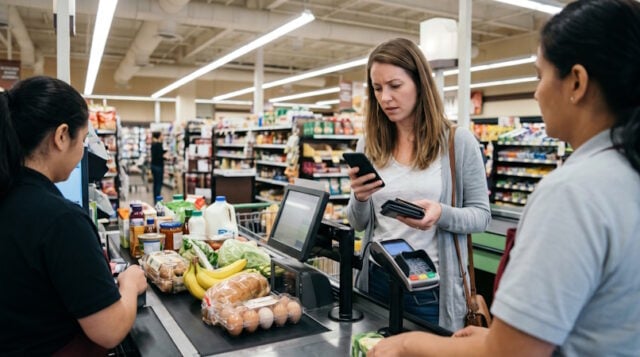
For many borrowers, these are the uncomfortable choices behind the weekly shopping list. A survey commissioned by Advance America found that 42% had borrowed money for groceries while still paying off money borrowed for an earlier grocery run.
The survey of 3,062 borrowers, conducted in September 2026, explored how borrowing fits into everyday life, from covering household bills to showing up for birthdays. The findings show that borrowing reaches further than most might expect, right down to everyday household staples. A car repair is one thing. Financing toothpaste is another.
Groceries lead the everyday borrowing list
When Floridians were asked which everyday necessities they had borrowed for, groceries ranked first. The top 20 were:

1. Groceries
2. Gas
3. Utility bills
4. Rent or mortgage payments
5. Car repairs
6. Medication or medical appointments
7. Pet food or veterinary care
8. Clothing or shoes
9. Takeout or food delivery
10. Travel to see friends or family
11. Public transportation or rideshares
12. A birthday or holiday gift
13. Coffee from a café
14. A restaurant meal
15. Movie tickets
16. A date
17. A haircut or beauty appointment
18. A streaming or gaming subscription
19. School lunches or school supplies
20. Childcare
Much of the list is the ordinary machinery of keeping a household running: food in the kitchen, fuel in the car and electricity to keep the lights on.
Further down the spending scale, Florida respondents also reported borrowing for purchases small enough to barely register on a typical shopping receipt (each of the following was reported by fewer than 10% of respondents):
1. A fast-food meal
2. Toilet paper
3. Laundry
4. A snack or soft drink
5. Toothpaste or deodorant
6. A single cup of coffee
7. Parking
8. A lottery ticket
9. A drink at a bar
Not every purchase carries the same urgency. But the range shows how borrowing can reach right down to the smallest transactions, including the cost of getting clothes clean or replacing an empty tube of toothpaste.
Created by Advance-America • Viewlarger version
Birthdays don’t wait for payday
Family occasions come with dates attached. Unfortunately, those dates are rarely chosen with anyone’s checking account in mind.
When respondents in Florida were asked which social or family occasions they had borrowed for over the past year, respondents’ 10 most common answers, in order, were:
1. Another social or family occasion
2. A trip to visit family or friends
3. A family outing
4. A meal or night out with friends
5. Buying holiday gifts
6. My child’s birthday celebration
7. A birthday celebration for another adult
8. A first date
9. Attending a wedding
10. A workplace social event
Borrowing is a regular part of the budget, for some
For a substantial share of respondents, borrowing for everyday expenses or small purchases was a recurring event. In total, 42% said they had done so at least monthly over the past year. The frequency breakdown included:
- 10% borrowed at least once a week.
- 17% borrowed a few times a month.
- 15% borrowed about once a month.
- 21% borrowed less than once a month.
Paying for the kids, cutting back on themselves
The survey also asked whether respondents had borrowed to pay for something for their children while reducing their own spending.
Food was the most common personal sacrifice, ahead of clothing, grooming and social activities. Respondents reported cutting back on:
- Meals or groceries: 19%
- Clothing or shoes: 15%
- Haircuts or personal care: 12%
- Social activities: 11%
- Medical or dental care: 8%
Dinner can outlast the leftovers.
A meal may be finished in half an hour. Paying for it can take considerably longer.
When asked about the longest they had taken to repay borrowing for a single restaurant meal, takeout order, or food delivery over the past year, 14% said less than a week, while 20% said between one week and less than a month.
For others, the bill lingered:
- 15% had taken one month to less than three months.
- 6% had taken three months or longer.
- 3% had not fully repaid it yet.
For those facing longer repayments, a single meal had become an expense spanning several paychecks. Long after the delivery bag went into the trash, the cost was still on the household’s tab.
“These findings show how often everyday expenses arrive before payday, whether it’s a grocery run, a car repair, or a child’s birthday,” says Laura McCutcheon, VP of Marketing at Advance America. “Even a carefully planned budget can come under pressure when several costs land at once.”
“For people considering borrowing to bridge that gap, clear information matters. Understanding the total cost, the repayment schedule, and how those payments fit into the household budget can help them make an informed decision.”
Methodology
This survey was conducted by Advance America among 3,062 adults in September 2026. Respondents were recruited from a geographically representative, double opt-in online panel and screened to meet the study’s criteria. Data quality checks included digital fingerprinting, bot detection, geo-verification, speeding detection and individual response reviews..
About Advance America
Founded in 1997, Advance America is a leading state-licensed consumer lender in the U.S., serving customers across 23 states through more than 700 storefronts and online lending operations. With approximately 2,500 employees, Advance America provides convenient access to credit through a combination of digital services and real human support.
Disclaimer
Artificial Intelligence Disclosure & Legal Disclaimer
AI Content Policy.
To provide our readers with timely and comprehensive coverage, South Florida Reporter uses artificial intelligence (AI) to assist in producing certain articles and visual content.
Articles: AI may be used to assist in research, structural drafting, or data analysis. All AI-assisted text is reviewed and edited by our team to ensure accuracy and adherence to our editorial standards.
Images: Any imagery generated or significantly altered by AI is clearly marked with a disclaimer or watermark to distinguish it from traditional photography or editorial illustrations.
General Disclaimer
The information contained in South Florida Reporter is for general information purposes only.
South Florida Reporter assumes no responsibility for errors or omissions in the contents of the Service. In no event shall South Florida Reporter be liable for any special, direct, indirect, consequential, or incidental damages or any damages whatsoever, whether in an action of contract, negligence or other tort, arising out of or in connection with the use of the Service or the contents of the Service.
The Company reserves the right to make additions, deletions, or modifications to the contents of the Service at any time without prior notice. The Company does not warrant that the Service is free of viruses or other harmful components.