Below you’ll find a skimmable, accurate, and up-to-date collection of facts grouped by theme (ecology, wildlife, history, restoration, and visitor tips). This guide reflects current authority sources and the main points covered by pages that rank today, while keeping the tone friendly and useful for travelers.

Everglades at a Glance (Quick Facts)
- Where it is: Southern Florida, flowing from the Kissimmee River and Lake Okeechobee south toward Florida Bay. Wikipedia
- Why it matters: The Everglades provides drinking water for more than 7 million people in South Florida. U.S. Geological Survey
- Size: Everglades National Park protects ~1.5 million acres; the greater ecosystem is larger. National Park Service
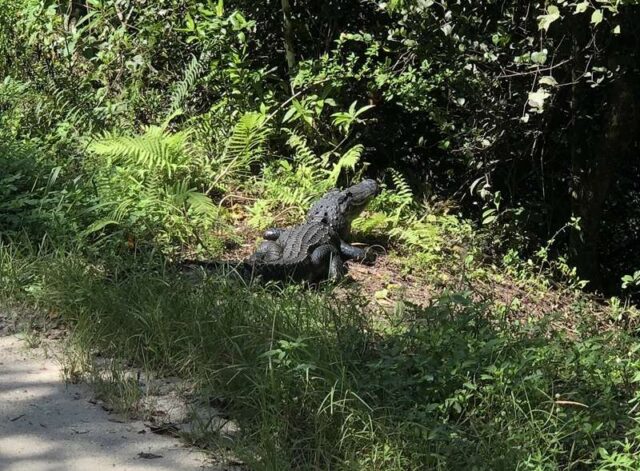
- Unique globally: It’s the only place on Earth where American alligators and American crocodiles coexist in the wild. USGS
- Biodiversity: Home to 350+ bird species and 36 threatened or endangered species including the Florida panther and West Indian manatee. National Park Service
- Special designations: UNESCO World Heritage Site, Biosphere Reserve, and Ramsar Wetland of International Importance; the park is also the largest wilderness in the eastern U.S. and the largest mangrove ecosystem in the Western Hemisphere. UNESCO World Heritage Centre
- Established: The national park was designated in 1947—the first U.S. national park established primarily for its biodiversity. National Park Service
Map of the Florida Everglades

The green area of the map of the Everglades shows the extent of runoff of three rivers from central Florida.

Any and all of these lands are affected by what we call the Florida Everglades. The underlying water moves at a pace of one-half mile per hour.
The significance of the aquifer surrounding these wetlands cannot be underestimated. The water gives life to the plants, trees, and wildlife for 100 miles south.
Disclaimer
Artificial Intelligence Disclosure & Legal Disclaimer
AI Content Policy.
To provide our readers with timely and comprehensive coverage, South Florida Reporter uses artificial intelligence (AI) to assist in producing certain articles and visual content.
Articles: AI may be used to assist in research, structural drafting, or data analysis. All AI-assisted text is reviewed and edited by our team to ensure accuracy and adherence to our editorial standards.
Images: Any imagery generated or significantly altered by AI is clearly marked with a disclaimer or watermark to distinguish it from traditional photography or editorial illustrations.
General Disclaimer
The information contained in South Florida Reporter is for general information purposes only.
South Florida Reporter assumes no responsibility for errors or omissions in the contents of the Service. In no event shall South Florida Reporter be liable for any special, direct, indirect, consequential, or incidental damages or any damages whatsoever, whether in an action of contract, negligence or other tort, arising out of or in connection with the use of the Service or the contents of the Service.
The Company reserves the right to make additions, deletions, or modifications to the contents of the Service at any time without prior notice. The Company does not warrant that the Service is free of viruses or other harmful components.