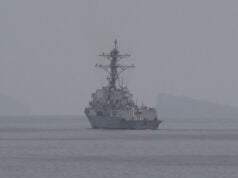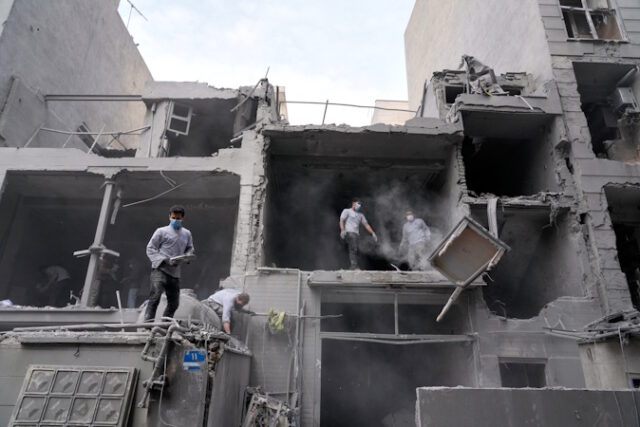
The geopolitical tension that has simmered for months in the Middle East reached a boiling point today as the United States launched a massive, coordinated aerial and naval operation to reopen the Strait of Hormuz. In an engagement involving a sophisticated mix of carrier-based warplanes and low-altitude attack helicopters, the U.S. military has begun systematically dismantling coastal defense networks and maritime blockades that have paralyzed global oil markets for the past 48 hours.
The operation, which began under a moonless night, represents a significant escalation in the regional conflict. While previous interactions in the Gulf have been characterized by “shadow war” tactics—unattributed drone strikes and mysterious tanker explosions—this latest maneuver is an overt display of kinetic force aimed at securing the transit of nearly 20 million barrels of oil per day.
The Opening Salvo: Warplanes and Electronic Warfare
According to early reports from the region, the first phase of the battle was led by F-35C Lightning II stealth fighters and EA-18G Growler electronic warfare aircraft. These units worked in tandem to blind regional radar installations and disrupt the communications of fast-attack craft swarming the Strait’s narrowest points.
The primary objective was to neutralize the “A2/AD” (Anti-Access/Area Denial) bubble. Coastal missile batteries, including long-range anti-ship cruise missiles, were targeted by precision-guided munitions. Witnesses on the coast described the sky as lit with the “constant strobing of interceptor missiles and secondary explosions” as ammunition depots near the shoreline were struck.

However, the most significant shift in tactics observed in this battle is the heavy reliance on rotary-wing assets. While fixed-wing jets focused on high-altitude suppression of air defenses, U.S. attack helicopters—including the AH-64E Apache and the AH-1Z Viper—were deployed at sea-level to engage the hundreds of small, fast-moving explosive boats and “midget” submarines that had been deployed to mine the shipping lanes.
A Multi-Domain Battle for Navigation
The integration of helicopters into this high-intensity aerial battle highlights the unique challenges of the Strait of Hormuz. At its narrowest, the passage is only about 21 miles wide. For traditional naval destroyers, this provides very little “sea room” to maneuver against swarming tactics. By utilizing attack helicopters launched from amphibious assault ships, the U.S. has been able to provide a close-in security screen that can identify and neutralize “suicide boats” before they reach the commercial tanker convoys.
“This is not a traditional dogfight,” noted one retired naval aviator. “This is a littoral slugfest. You have warplanes providing the umbrella of protection from above, while the helicopters do the dirty work of clearing the surface. It is a highly dangerous environment where every second counts.”
The battle to “reopen” the Strait is not merely about clearing physical obstacles; it is about restoring the confidence of the global shipping industry. Currently, dozens of ultra-large crude carriers (ULCCs) are anchored in the Gulf of Oman, refusing to enter the Persian Gulf until the “mine threat” is completely mitigated.
Global Economic Consequences
The impact of the battle was immediately reflected in the world’s financial hubs. Crude oil futures surged to record highs as the first reports of the engagement broke, with analysts warning of a “sustained supply shock” if the battle lasts more than a few days. The closure of Hormuz effectively cuts off the primary revenue stream for several Gulf nations and the primary energy source for much of East Asia and Europe.
In Washington, the administration defended the move as a “freedom of navigation” operation essential to global stability. A spokesperson for the Department of Defense stated that the U.S. “does not seek conflict, but will not allow a strategic choke point to be held hostage by regional aggressors.”
Conversely, regional actors have condemned the strikes as “unprovoked aggression.” High-ranking officials in Tehran warned that the U.S. presence is a “fire in a hayfield” that will consume the entire region. They claimed that their forces were merely “policing” their own territorial waters and that the U.S. intervention has made a peaceful resolution impossible.
The Tactical Outlook
As the battle enters its second day, the focus has shifted toward mine-clearing operations. While the warplanes and helicopters have succeeded in pushing back the surface threats, the “invisible” threat of bottom-dwelling sea mines remains. Specialist MH-53E Sea Dragon helicopters are now being seen dragging mine-sweeping equipment through the transit lanes, protected by a constant patrol of fighter jets.
The success of the operation hinges on whether the U.S. can maintain air and sea superiority without triggering a wider ground conflict. With additional carrier groups reportedly en route to the North Arabian Sea, the message from the Pentagon is clear: the Strait will be reopened, regardless of the cost.
For now, the world waits as the smoke continues to rise over the horizon of the Persian Gulf. The “Battle of Hormuz” is no longer a hypothetical war-game scenario; it is a reality reshaping the 21st-century energy landscape.
Sources and Links
- The Wall Street Journal: U.S. War Planes and Helicopters Kick Off Battle to Reopen Hormuz
- Reuters: Oil prices surge as U.S. military moves to clear Strait of Hormuz
- U.S. Department of Defense: Update on Freedom of Navigation Operations in the U.S. 5th Fleet Area of Operations
- Al Jazeera: Regional tensions reach breaking point as U.S. strikes coastal batteries
- Maritime Executive: The challenges of mine-clearing in the littoral waters of the Persian Gulf
Disclaimer
Artificial Intelligence Disclosure & Legal Disclaimer
AI Content Policy.
To provide our readers with timely and comprehensive coverage, South Florida Reporter uses artificial intelligence (AI) to assist in producing certain articles and visual content.
Articles: AI may be used to assist in research, structural drafting, or data analysis. All AI-assisted text is reviewed and edited by our team to ensure accuracy and adherence to our editorial standards.
Images: Any imagery generated or significantly altered by AI is clearly marked with a disclaimer or watermark to distinguish it from traditional photography or editorial illustrations.
General Disclaimer
The information contained in South Florida Reporter is for general information purposes only.
South Florida Reporter assumes no responsibility for errors or omissions in the contents of the Service. In no event shall South Florida Reporter be liable for any special, direct, indirect, consequential, or incidental damages or any damages whatsoever, whether in an action of contract, negligence or other tort, arising out of or in connection with the use of the Service or the contents of the Service.
The Company reserves the right to make additions, deletions, or modifications to the contents of the Service at any time without prior notice. The Company does not warrant that the Service is free of viruses or other harmful components.