WASHINGTON — The high-stakes diplomatic effort to permanently end the three-month-old war between the United States and Iran has ground to a precarious halt. Despite a flurry of back-and-forth negotiations mediated by regional partners, a permanent settlement remains frustratingly out of reach. While negotiators from both sides managed to sketch out a tentative framework to extend the temporary ceasefire by 60 days, deep-seated disagreements over nuclear disarmament, sanctions relief, and the control of the world’s most critical energy chokepoint have frozen real structural progress.
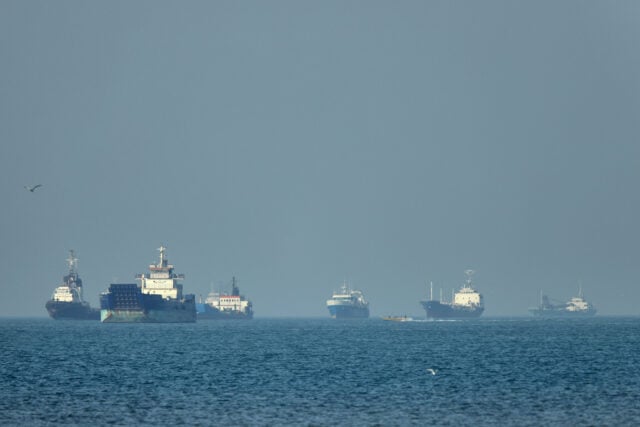
Compounding the paralysis, intelligence reports and regional tracking data indicate that the U.S. Navy has been quietly conducting high-risk, low-profile escort operations for merchant vessels through the heavily contested Strait of Hormuz. Officially denied by the Pentagon, these clandestine maritime operations are threatening to shatter the fragile, undeclared truce that has kept a lid on all-out theater warfare since April.
As both Washington and Tehran dig in, the stalemate highlights a sobering reality: neither side is willing to blink first, and the window for a peaceful resolution is rapidly closing.
The Anatomy of a Deadlock
The current diplomatic impasse stems from two vastly different and structurally incompatible visions for a post-war Middle East. Following the intense aerial campaign and naval blockades that defined the early months of the 2026 conflict, Pakistan stepped forward to broker a temporary cessation of hostilities. While that initial truce halted large-scale bombing runs, transitioning the temporary pause into a durable peace agreement has proved nearly impossible.

According to a framework leaked from the mediation sessions in Islamabad, the United States has laid down several non-negotiable “red lines.” The primary American demands include:
- Verifiable Nuclear Surrender: Iran must completely surrender its stockpiles of highly enriched uranium and agree to permanent, verifiable constraints on its nuclear program.
- Unconditional Reopening of Hormuz: Tehran must formally dismantle its newly established “gatekeeper” agency, clear all newly laid sea mines, and guarantee free, untaxed transit for all international commercial shipping.
- A Two-Phased De-escalation: A temporary extension of the current ceasefire to allow for localized stabilization, followed by a strictly sequenced rollback of military assets.
Tehran has flatly rejected this sequencing. In a counter-proposal delivered through Pakistani intermediaries, the Iranian Ministry of Foreign Affairs outlined its own 10-point peace plan. Iran demands immediate, comprehensive sanctions relief and the unfreezing of billions of dollars in sovereign assets currently blocked in Western banks before any concessions on its nuclear infrastructure are considered. Furthermore, Tehran insists that any maritime framework must respect its territorial sovereignty over the strait, including its self-proclaimed right to monitor and regulate shipping traffic it deems hostile.
This fundamental disagreement over “who goes first”—whether Washington eases its economic chokehold before Tehran rolls back its military and nuclear capabilities—has frozen the talks. U.S. Treasury Secretary Scott Bessent summarized the administration’s unyielding posture during a recent White House press briefing:
“Nothing is going to be on the table until Iranian officials first agree to reopen the Strait of Hormuz… The president has several red lines. He’s not going to take a bad deal.”
The Shadow War in the Strait
While diplomats argue in air-conditioned rooms in Islamabad, a far more dangerous game is playing out in the narrow waters of the Strait of Hormuz. The waterway, which typically carries roughly 20% of the world’s traded petroleum and natural gas, has been effectively paralyzed since the outbreak of hostilities in late February.
In early May, the White House announced “Operation Project Freedom,” a highly publicized initiative intended to “guide” hundreds of stranded commercial vessels out of the Persian Gulf. However, following fierce pushback from regional Gulf states and a series of sharp kinetic skirmishes with the Islamic Revolutionary Guard Corps (IRGC), senior U.S. military leaders publicly walked back the scope of the operation. Chief of Naval Operations Admiral Daryl Caudle warned Congress that conducting close-escort services through a contested, heavily mined strait would exceed the operational capacity of the Navy without an explicit, universally accepted ceasefire.
Yet, despite official claims from U.S. Central Command (CENTCOM) that Project Freedom has not been resumed, maritime intelligence sources and shipping logs reveal a pattern of covert operations. Small clusters of high-value commercial tankers, particularly those carrying critical energy supplies to European and Asian allies, have reportedly been transiting the strait under the discrete, over-the-horizon protection of U.S. guided-missile destroyers and carrier-based aviation.
[Persian Gulf] ---> (Secret U.S. Naval Escort Zone) ---> [Strait of Hormuz] ---> [Oman]
                                 |
                     (IRGC Minefields & Drone Boat Patrols)
These unpublicized escorts are highly precise, localized operations designed to slip merchant ships through Iranian radar webs without triggering a full-scale regional response. The U.S. Navy is using advanced electronic warfare to mask the automatic identification system (AIS) signals of friendly vessels while providing dedicated anti-mine and anti-drone umbrellas during the critical transit windows.
Tehran, however, is acutely aware of these maneuvers. The IRGC has publicly accused the United States of violating the terms of the April truce, warning that any uncoordinated maritime movements will be met with force. The friction is already generating kinetic sparks; recent days have seen sharp, localized exchanges of drone and missile fire, including an incident where Kuwaiti air defenses intercepted Iranian-origin projectiles, and a U.S. strike on active Iranian minelaying boats. These skirmishes serve as a stark reminder that the “secret” escort operation is pushing both nations to the absolute brink of renewed, open warfare.
The Economic and Regional Toll
The human and economic costs of the diplomatic standstill are compounding daily. The effective closure of the Strait of Hormuz has sent global energy markets into wild gyrations, driving up shipping insurance rates to prohibitive levels and stranding thousands of international mariners in the Persian Gulf. While Treasury Secretary Bessent predicted that global oil prices could normalize rapidly once a permanent deal is signed, the current volatility is dragging heavily on international trade.
Domestically, the U.S. naval blockade and aggressive financial measures are inflicting severe damage on the Iranian economy. U.S. officials report that the economic squeeze has severely restricted the Iranian regime’s ability to pay its state employees, leading to widespread domestic disruptions and police absenteeism in several major cities. The administration is also moving to completely isolate Iran’s commercial aviation sector by cutting off access to international landing spots, refueling options, and global ticketing networks.
Yet, history suggests that maximum economic pressure does not automatically translate into diplomatic surrender. At a recent Cabinet meeting, the U.S. administration signaled that it feels no immediate pressure to soften its demands, with the president noting that historical conflicts like Vietnam and Korea lasted for years, and that Washington holds the definitive upper hand in maximum negotiating leverage.
The Path Forward: A Dangerous Status Quo
The current state of affairs is inherently unsustainable. The tentative 60-day ceasefire extension currently being reviewed by political leadership in Washington and Tehran offers a temporary buffer, but it treats the symptoms rather than the disease. Without a fundamental shift in how both nations approach the core issues of maritime security and nuclear sovereignty, any pause in the fighting will remain profoundly fragile.
For now, the strategy relies on a delicate, high-stakes contradiction: pursuing a diplomatic breakthrough through intermediaries while simultaneously running a covert maritime escort operation that could trigger a catastrophic military escalation at any moment. As long as the talks remain stalled, the peace of the global economy and the stability of the Middle East rest on the hope that a single stray missile or a misunderstood naval maneuver does not light the match for a much larger conflagration.
Sources and Links:
- Wikipedia: 2026 Iran war ceasefire — Detail on the Pakistan-mediated talks, the 10-point Iranian proposal, and the structural phases of the U.S. diplomatic plan. https://en.wikipedia.org/wiki/2026_Iran_war_ceasefire
- The Washington Post: U.S., Iran nearing deal to end war and reopen Strait of Hormuz — Coverage of Treasury Secretary Scott Bessent’s statements on economic pressure, red lines, and Cabinet-level negotiating strategies. https://www.washingtonpost.com/national-security/2026/05/28/us-iran-trade-strikes-trump-cites-no-pressure-peace-deal/
- The Washington Examiner: CENTCOM refutes claims that Navy resumed escorting vessels through Strait of Hormuz — Analysis of Operation Project Freedom, Admiral Daryl Caudle’s Senate testimony, and official military denials regarding active maritime escorts. https://www.washingtonexaminer.com/policy/defense/4582132/centcom-refutes-claims-navy-escorts-vessels-strait-of-hormuz/
- TIME: What to Know About Trump’s Plan to ‘Guide’ Ships Out of the Strait of Hormuz — Background on the initial launch of Project Freedom, transit volume challenges, and the operational limitations of the U.S. Navy in the Persian Gulf. https://time.com/article/2026/05/04/strait-hormuz-ships-guide-escort-ceasefire-us-iran-trump/
- Wikipedia: 2026 Strait of Hormuz crisis — Chronological data regarding shipping casualties, IRGC maritime regulations, and the wider economic fallout of the regional energy blockade. https://en.wikipedia.org/wiki/2026_Strait_of_Hormuz_crisis
- PBS NewsHour: U.S. and Iranian negotiators reach tentative deal to extend ceasefire and start new nuclear talks — Reporting on the tentative 60-day extension parameters hammered out by diplomatic teams. https://www.pbs.org/newshour/world/u-s-and-iranian-negotiators-reach-tentative-deal-to-extend-ceasefire-and-start-new-nuclear-talks
Disclaimer
Artificial Intelligence Disclosure & Legal Disclaimer
AI Content Policy.
To provide our readers with timely and comprehensive coverage, South Florida Reporter uses artificial intelligence (AI) to assist in producing certain articles and visual content.
Articles: AI may be used to assist in research, structural drafting, or data analysis. All AI-assisted text is reviewed and edited by our team to ensure accuracy and adherence to our editorial standards.
Images: Any imagery generated or significantly altered by AI is clearly marked with a disclaimer or watermark to distinguish it from traditional photography or editorial illustrations.
General Disclaimer
The information contained in South Florida Reporter is for general information purposes only.
South Florida Reporter assumes no responsibility for errors or omissions in the contents of the Service. In no event shall South Florida Reporter be liable for any special, direct, indirect, consequential, or incidental damages or any damages whatsoever, whether in an action of contract, negligence or other tort, arising out of or in connection with the use of the Service or the contents of the Service.
The Company reserves the right to make additions, deletions, or modifications to the contents of the Service at any time without prior notice. The Company does not warrant that the Service is free of viruses or other harmful components.