Monday was the deadline for Floridians to weigh in on a proposed Department of Health rule that would roll back several school and childcare vaccination requirements while broadening the grounds on which parents may seek an exemption.
The rule, published Aug. 24, would remove requirements for vaccines against hepatitis B, varicella (chickenpox), Haemophilus influenzae type b (Hib), and pneumococcal disease. Those requirements were established through Department rules rather than directly in statute.
The proposal would leave untouched the vaccines specifically required under Florida law, including immunizations against polio, diphtheria, measles, rubella, pertussis, mumps and tetanus. Eliminating those requirements would require action by the Legislature, something lawmakers declined to do this year despite Gov. Ron DeSantis and Surgeon General Joseph Ladapo pushing to eliminate vaccine mandates more broadly.
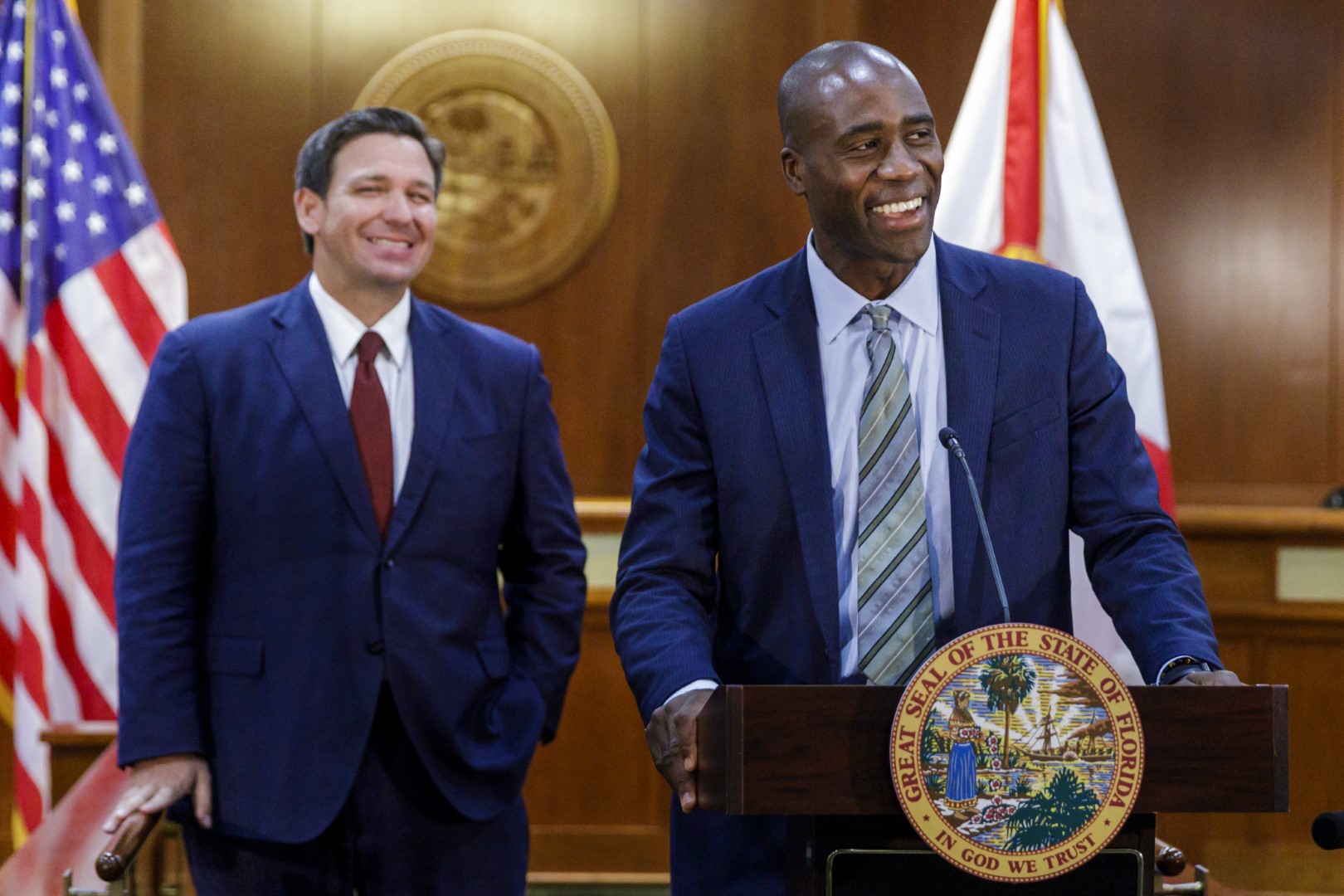
DOH also proposes changing the state’s religious exemption form to specify that a parent’s religious tenets or practices may include a “sincerely held moral or ethical belief.” The Department says the changes are intended to align its rules with state law; medical groups argue the language effectively expands nonmedical exemptions and could further depress childhood vaccination rates.

The debate comes as Florida’s kindergarten immunization rate sits at 88.9% for 2026, according to Department data, down from 93.3% in 2021. Florida has also dealt with a significant measles outbreak this year, though the proposed rule would not eliminate the statutory measles vaccination requirement.
The public comment period closes Monday. But the rulemaking process may not end there: the Florida Chapter of the American College of Physicians and the Florida Osteopathic Medical Association have requested a public hearing on the proposal. Florida administrative law requires agencies to schedule a hearing when an affected person timely requests one.
— Transparency —
The Political Rights Advocate (PRA) has issued a report that shows 62% of Florida hospitals are complying with the federal Hospital Price Transparency Rule.
The federal regulation enacted half a decade ago requires hospitals in the U.S. to post their prices for procedures and services online for public review.
Florida hospitals have seen a substantial increase from the PRA’s last report in November 2024. At that time, the organization found only 29% of Florida hospitals were in compliance.

The regulation was enacted five years ago. The PRA indicates there’s been a 28% increase in hospital compliance across the country.
PRA officials say while more hospitals are complying with the regulation, there’s more work to be done.
“Too many patients are still being denied the real, up-front prices they need to shop for affordable care and protect themselves from overcharges. When patients have access to real dollar-and-cents prices, they can shop as informed consumers, spot wide price variation, and be protected from overcharges,” Cynthia Fisher, Founder and Chair of the PRA.
“We commend the Donald Trump administration and Congress for their continued efforts to make real prices available to every patient, employer, union, and taxpayer, and look forward to the day when clear, usable prices will be the standard nationwide.”
While 93 out of 151 Florida hospitals are complying with the regulation, PRA officials pointed out that only 988 hospitals across the country were in compliance, a 49.4% compliance rate. It’s still an improvement from figures two years ago, when the compliance rate was 21.1% across the U.S.
— EVOS —
Tampa General Hospital and the Florida Orthopaedic Institute (FOI) have reached a new level in the treatment of pelvic injuries.
The two institutions recently announced they’ve become the first to perform surgery using the EVOS Pelvic and Acetabular System. That’s an approach approved by the U.S. Food and Drug Administration (FDA) that helps surgeons treat complicated fractures and other traumatic injuries to the pelvis.
The first procedure to use the technique took place last month at Tampa General Hospital by Hassan R. Mir, who’s also a professor of Orthopaedic Surgery. He’s also Associate Dean of Cultural Enrichment & Environment at the University of South Florida (USF).

Mir is also one of four physicians who developed the EVOS Pelvic and Acetabular System.
“By bringing together clinical expertise, research and innovation, we can develop new solutions to some of the most complex challenges in orthopaedic care and make those advances available to patients sooner,” said Roy Sanders, Chair of the Department of Orthopaedic Surgery at the USF Health Morsani College of Medicine.
“The fact that Dr. Mir helped design this technology and then performed the world’s first procedure using it at Tampa General speaks to the extraordinary talent across our organizations and our partnership. Most importantly, it means patients have access to leading-edge care that has the potential to improve their treatment and recovery.”
The EVOS Pelvic and Acetabular System got FDA approval in February 2025. It consists of bone plates that give surgeons multiple options for addressing the complex challenges posed by pelvic injuries.
“Every pelvic fracture is different; pelvic and acetabular trauma can be incredibly complex, and every patient deserves a treatment approach tailored to their specific injury,” said Mir.
“We designed this system with the goal of helping surgeons navigate these complex procedures more effectively, giving them more options to restore anatomy and stability. Ultimately, that innovation is about improving the patient’s experience and supporting the best possible recovery.”
— Thriving Future —
The Tampa Bay Times and the Foundation for a Healthy St. Petersburg are offering free tickets to a Sept. 23 discussion on what Tampa Bay’s economy could look like a decade from now.
The panel will examine how changes in technology, workforce needs and rising housing and healthcare costs could shape the region through 2036.

Participants include Florida Housing Coalition CEO Ashon J. Nesbitt, Pinellas County Economic Development Director Cynthia Johnson, Tampa Bay Partnership President and CEO Bemetra Simmons and University of Tampa economics professor Michael Coon. Times real estate reporter Rebecca Liebson will moderate.
The event runs from 5-7:30 p.m. at the Foundation’s Center for Health Equity in St. Petersburg, with the panel beginning at 6 p.m. Admission and parking are free.
— ICYMI —
“Jolly spoke at event on disabilities issues, but did organizers fail to accommodate needs of attendees?” via Jacob Ogles of Florida Politics — An event in Venice never had individuals with disabilities on stage with the gubernatorial candidate, and there was no closed captioning. Jolly focused on the needs of the disability community during a stop in Venice. But some immediately criticized a failure to accommodate the disabled people attending the event. Olivia Keller, a prominent advocate for people with disabilities, was among those criticizing the event. “There was no ramp to the stage, meaning no one with a disability could speak from the stage. There were no caption screens or sign language interpreters at the event,” she said.

“Joseph Ladapo urges residents to take precaution amid dengue activity in Hillsborough County” via Kennedy Owens of Florida’s Voice — Florida Surgeon General Ladapo is urging residents to take precautions against mosquito-borne illnesses after health officials warned of dengue activity in Hillsborough County. The Florida Department of Health said Sept. 4 it was continuing to monitor dengue activity in Hillsborough County and working with local partners on mosquito control and prevention efforts. “I encourage everyone to take a few simple precautions to protect themselves and their families from mosquito bites,” Ladapo said. “Use insect repellent, cover up when possible, and remove standing water around your home. Individual prevention helps protect you and your community.”
“Vaccination protections are an economic priority for Florida” via Julio Fuentes for Florida Politics — Florida’s economic strength depends on more than taxes, investment and workforce development. Healthy communities matter, too. As the state considers changes to childhood vaccination standards, 86% of Floridians support maintaining vaccination requirements for public school students, while 78% worry that weaker protections could increase the risk of diseases such as measles and pertussis. Outbreaks carry high economic costs, forcing parents to miss work, reducing business productivity and burdening taxpayers. A 2025 New Mexico measles outbreak cost nearly $5.4 million, while declining measles, mumps and rubella vaccination rates cost U.S. manufacturers an estimated $275 million annually. Protecting children from preventable disease also protects Florida’s workforce, businesses and long-term economic success.
“Tampa General turns hospital food into medicine” via Anjelica Rubin of the Tampa Bay Business Journal — Tampa General Hospital is transforming patient meals through a multimillion-dollar overhaul built around the idea that food should contribute to recovery. CEO John Couris launched the effort after confronting the hospital’s institutional food culture and eventually brought celebrity chef Geoffrey Zakarian aboard. TGH invested roughly $10 million in modernizing its Davis Islands kitchens, reduced its menu to about 30 choices and shifted toward fresh, cook-to-order Mediterranean-style dishes. Seed oils, high-fructose corn syrup and processed foods were removed, while local sourcing increased. The changes raised overall food purchasing expenses 5% to 7%, but food-quality scores increased 82%. TGH is now developing a playbook to help other hospitals replicate the model nationwide.
— RULES —
The Department of Health, Division of Public Health Statistics and Performance Management’s final rule (64W-6.001) regarding Definitions goes into effect on September 17. More here.
The Department of Health, Division of Public Health Statistics and Performance Management’s final rule (64W-6.002) regarding Eligibility Requirements goes into effect on September 17. More here.
The Department of Health, Division of Public Health Statistics and Performance Management’s final rule (64W-6.003) regarding Documentation Requirements goes into effect on September 17. More here.
The Department of Health, Division of Public Health Statistics and Performance Management’s final rule (64W-6.004) regarding Application Processing goes into effect on September 17. More here.
The Agency for Health Care Administration, Health Facility and Agency Licensing’s final rule (59A-36.009) regarding Do Not Resuscitate Orders (DNROs) and Advance Directives goes into effect on September 17. More here.
The Board of Dentistry’s final rule (64B5-13.005) regarding Disciplinary Guidelines goes into effect on September 24. More here.
The Board of Dentistry’s final rule (64B5-2.014) regarding Licensure Requirements for Applicants from Accredited Schools or Colleges goes into effect on September 24. More here.
The Board of Dentistry’s final rule (64B5-2.0146) regarding Licensure Requirements for Applicants from Non-Accredited Schools or Colleges goes into effect on September 24. More here.
The Board of Dentistry’s final rule (64B5-4.002) regarding Advertising and Soliciting by Dentists goes into effect on September 24. More here.
The Board of Dentistry’s final rule (64B5-7.009) regarding Dental Dispensing Registration goes into effect on September 24. More here.
— PENCIL IT IN —
Sept. 20
Happy birthday to Reps. Jason Shoaf and Kiyan Michael!
Sept. 22
Happy birthday to Sen. Jennifer Bradley!

Sept. 25
Happy birthday to Rep. Michele Rayner!
Sept. 27
Happy birthday to Rep. Erika Booth!
The post Diagnosis for 9.15.26: Checking the pulse of Florida healthcare news and policy appeared first on Florida Politics – Campaigns & Elections. Lobbying & Government..
Disclaimer
Artificial Intelligence Disclosure & Legal Disclaimer
AI Content Policy.
To provide our readers with timely and comprehensive coverage, South Florida Reporter uses artificial intelligence (AI) to assist in producing certain articles and visual content.
Articles: AI may be used to assist in research, structural drafting, or data analysis. All AI-assisted text is reviewed and edited by our team to ensure accuracy and adherence to our editorial standards.
Images: Any imagery generated or significantly altered by AI is clearly marked with a disclaimer or watermark to distinguish it from traditional photography or editorial illustrations.
General Disclaimer
The information contained in South Florida Reporter is for general information purposes only.
South Florida Reporter assumes no responsibility for errors or omissions in the contents of the Service. In no event shall South Florida Reporter be liable for any special, direct, indirect, consequential, or incidental damages or any damages whatsoever, whether in an action of contract, negligence or other tort, arising out of or in connection with the use of the Service or the contents of the Service.
The Company reserves the right to make additions, deletions, or modifications to the contents of the Service at any time without prior notice. The Company does not warrant that the Service is free of viruses or other harmful components.