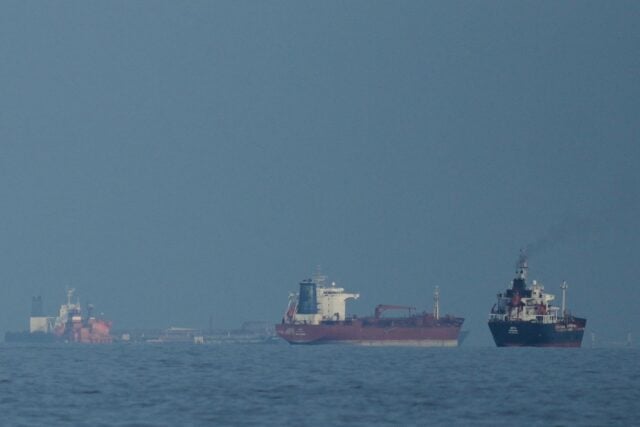
The crystalline waters of the Gulf of Oman served as a serene backdrop to what has become the most volatile diplomatic showdown of the decade. As of April 14, 2026, the second high-level summit between the United States and the Islamic Republic of Iran has ended not with a handshake, but with a hardening of battle lines. At the heart of the impasse is a fundamental disagreement over the timeline of nuclear containment—a fifteen-year gap that may well be measured in the barrels of blood and oil that a conflict in the Strait of Hormuz would inevitably spill.
The Iranian delegation, led by a desperate yet defiant foreign ministry, arrived in Muscat with a proposal they termed “The Five-Year Peace.” Under this framework, Tehran offered a total freeze on uranium enrichment above 3.67%, the dismantling of advanced centrifuges at Fordow, and the reinstatement of “unfettered” IAEA inspections. In exchange, they demanded the immediate lifting of the secondary sanctions that have paralyzed the Iranian economy since the mid-2020s. To the Iranians, five years represents a generation in political time—a period long enough to stabilize their domestic unrest but short enough to retain “strategic patience.”
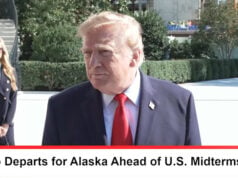
President Donald Trump, however, has dismissed the five-year window as a “pittance.” During a late-night press conference at the U.S. Embassy in Muscat, the President reiterated his demand for a “Double-Decade Guarantee.” The Trump administration’s stance is that anything less than 20 years of verifiable non-enrichment is merely a “payment plan for a future bomb.” This 20-year demand is not just a security metric; it is a political cornerstone of the administration’s “Grand Bargain” strategy, intended to permanently neutralize Iran’s nuclear ambitions until the current regime’s leadership has likely transitioned.
The “5 versus 20” deadlock has effectively killed the momentum generated by the initial exploratory talks in March. As the diplomatic theater stalls, the focus has shifted 250 miles northwest to the world’s most dangerous chokepoint: the Strait of Hormuz.

The “Wall of Steel”: Naval Posture in the Strait
The United States has responded to the diplomatic failure by initiating “Operation Sentinel’s Wrath,” a massive buildup of naval assets designed to ensure the free flow of commerce through the 21-mile-wide strait. The naval presence is currently the densest it has been since the 1980s “Tanker War.”
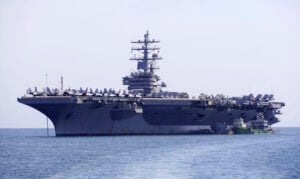
According to the latest reports from the U.S. Naval Institute, the following assets are currently positioned within or immediately adjacent to the Strait of Hormuz:
- The USS Ronald Reagan (CVN-76) Carrier Strike Group: Acting as the centerpiece of American power projection, the Reagan is stationed in the North Arabian Sea, with its air wing (CVW-5) conducting 24-hour Combat Air Patrols (CAP) over the shipping lanes.
- Guided-Missile Cruisers: Two Ticonderoga-class cruisers, the USS Shiloh (CG-67) and the USS Chancellorsville (CG-62), provide a sophisticated Aegis BMD (Ballistic Missile Defense) umbrella to counter Iran’s “Fateh” anti-ship missiles.
- Destroyer Squadron (DESRON) 15: Four Arleigh Burke-class destroyers—the USS Howard (DDG-83), USS Shoup (DDG-86), USS Dewey (DDG-105), and USS Higgins (DDG-76)—are performing “shotgun” duties, escorting commercial tankers through the narrowest points of the strait.
- The Bataan Amphibious Ready Group: The USS Bataan (LHD-5), a Wasp-class amphibious assault ship, carries a contingent of the 26th Marine Expeditionary Unit (MEU). This ship is critical for “visit, board, search, and seizure” (VBSS) operations, designed to prevent the Iranian Revolutionary Guard Corps (IRGC) from seizing merchant vessels.
- Littoral Combat Ships (LCS): Two Independence-class ships, the USS Gabrielle Giffords (LCS-10) and the USS Montgomery (LCS-8), are being utilized for their high speed and shallow draft to counter the IRGC’s “swarm” tactics involving fast-attack boats.
The IRGC has responded in kind, deploying hundreds of speedboats armed with rocket-propelled grenades and naval mines. The “close-quarters” nature of this standoff means that a single miscalculation by a junior commander on either side could trigger a regional conflagration.
The Moral Voice: Pope Leo XIV Intervenes
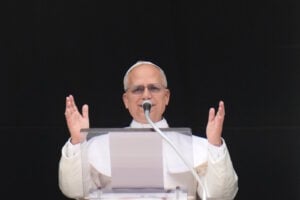
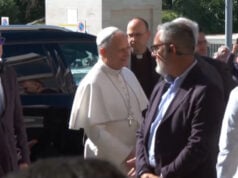
As the world’s secular leaders prepare for war, a different kind of authority has emerged from the Vatican. Pope Leo XIV, who took the chair of St. Peter following the transition of the previous papacy, has made the Hormuz crisis the central focus of his young reign.
In a stirring address from the balcony of St. Peter’s Basilica yesterday, the Pope departed from his prepared remarks to deliver a blistering critique of the “arithmetic of death.”
“The world is arguing over years—five years, twenty years—while the children of the Middle East and the workers of the West are being fitted for shrouds,” the Pope declared. “Whether the peace lasts five years or fifty is secondary to the fact that the peace must begin today. I will not be silenced by the demands of ‘realpolitik’ while the gates of hell are being pried open in the Persian Gulf.”
Vatican insiders suggest that Pope Leo is considering a personal diplomatic mission to Tehran and Washington, a move that would be unprecedented in modern history. His stance has resonated deeply with the “Global South,” putting pressure on Catholic-majority nations in Europe and Latin America to distance themselves from the U.S. military buildup. However, the Trump administration has remained cool to the Vatican’s intervention, with the State Department suggesting that “moral clarity requires a 20-year commitment to a nuclear-free Iran.”
Economic Fallout: Oil Futures and the Gas Pump
The “Hormuz Risk Premium” has officially returned to the global markets with a vengeance. For the last three decades, economists have warned that a closure of the Strait of Hormuz—through which 20% of the world’s petroleum flows—would be a “black swan” event for the global economy. That event is no longer theoretical.
Oil Futures Brent Crude futures surged 14% on the news of the Muscat failure, briefly touching $128 per barrel. Analysts at Goldman Sachs and Morgan Stanley have warned that a full kinetic conflict could see oil prices rocket to $200 per barrel within 48 hours. The uncertainty is being driven by “war insurance” premiums for tankers, which have increased tenfold in the last week. Many Japanese and South Korean shipping firms have ordered their vessels to anchor outside the Gulf, effectively creating a self-imposed blockade that is choking supply.
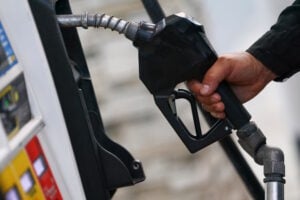
The Price at the Pump For the American consumer, the geopolitical tension has translated into immediate pain. The national average for a gallon of regular gasoline has climbed to $5.42, with California and the Pacific Northwest seeing prices exceed $7.00. This spike is particularly damaging because it is occurring during the spring “driving season,” hitting middle-class families just as they plan their summer travel.
Energy Secretary Jennifer Granholm’s successor has signaled that the administration may authorize further releases from the Strategic Petroleum Reserve (SPR), but market analysts warn that the SPR is at its lowest level in decades and can only provide a temporary psychological buffer, not a structural solution to a closed Strait.
The 2026 Midterms: A Republic Divided
The timing of the Hormuz standoff could not be more consequential for American domestic politics. With the 2026 Midterm Elections only seven months away, the “Muscat Deadlock” has become the primary wedge issue between the parties.
 The Republican Narrative: Peace Through Strength The GOP is rallying behind President Trump’s 20-year demand. The messaging is clear: the 2015 JCPOA was a “five-year mistake” that allowed Iran to build its regional hegemony. By demanding 20 years, Trump is positioning himself as the only leader capable of securing a “permanent” solution. Republican strategists believe that if the President can force an Iranian capitulation—or successfully “win” a short, sharp naval engagement—the GOP will cruise to expanded majorities in the House and Senate.
The Democratic Critique: The “Forever War” Fear Democrats, meanwhile, are painting the administration’s 20-year demand as a “poison pill” designed to trigger a war. They argue that by rejecting a five-year freeze, the President has chosen high gas prices and potential body bags over a pragmatic intermediate step. The Democratic National Committee (DNC) has launched a series of ads titled “The Price of Pride,” linking the $7.00 gas prices directly to Trump’s refusal to compromise in Muscat.
Polling suggests the American electorate is deeply conflicted. While there is little appetite for a nuclear-armed Iran, the immediate economic reality of inflation and energy costs is eroding the President’s approval ratings in key swing districts in Pennsylvania, Michigan, and Arizona. If the standoff continues into the summer, the “incumbency disadvantage” of high gas prices may outweigh the “rally ’round the flag” effect of a military crisis.
Conclusion: The Narrowing Path to Peace
As the sun sets over the Strait of Hormuz tonight, the lights of the USS Ronald Reagan are visible from the Iranian coast. The “5 vs 20” debate is no longer just a diplomatic disagreement; it is a countdown. With Pope Leo XIV calling for a “miracle of restraint,” and the global economy teetering on the edge of a recession, the coming weeks will determine if 2026 is remembered as the year of the “Grand Bargain” or the year the world’s energy artery was severed.
The President remains in Muscat for “consultations,” but the window for a second meeting is closing. As one senior diplomat put it: “In the Strait of Hormuz, time is the only thing more valuable than oil. And right now, we are out of both.”
Sources Used and Links
- U.S. Naval Institute (USNI) News: “Current Status of U.S. Naval Assets in the Fifth Fleet AOR.” (Accessed April 14, 2026). https://news.usni.org/category/fleet-tracker
- Reuters International: “The Muscat Deadlock: Five Years vs. Twenty.” (Published April 13, 2026). https://www.reuters.com/world/middle-east/iran-nuclear-talks-muscat-2026-04-13/
- Vatican News Service: “Urbi et Orbi: Pope Leo XIV Appeals for Peace in the Persian Gulf.” (Published April 13, 2026). https://www.vaticannews.va/en/pope/news/2026-04/pope-leo-hormuz-appeal.html
- The Wall Street Journal: “Oil Futures Hit Post-Pandemic Highs Amid Hormuz Tension.” (Published April 14, 2026). https://www.wsj.com/market-data/commodities/energy
- Associated Press: “Midterm Outlook: Gas Prices and the Shadow of War.” (Published April 14, 2026). https://apnews.com/hub/2026-midterm-elections
- International Energy Agency (IEA): “Global Oil Supply Vulnerabilities in Chokepoint Zones.” (Updated April 2026). https://www.iea.org/reports/oil-market-report
Disclaimer
Artificial Intelligence Disclosure & Legal Disclaimer
AI Content Policy.
To provide our readers with timely and comprehensive coverage, South Florida Reporter uses artificial intelligence (AI) to assist in producing certain articles and visual content.
Articles: AI may be used to assist in research, structural drafting, or data analysis. All AI-assisted text is reviewed and edited by our team to ensure accuracy and adherence to our editorial standards.
Images: Any imagery generated or significantly altered by AI is clearly marked with a disclaimer or watermark to distinguish it from traditional photography or editorial illustrations.
General Disclaimer
The information contained in South Florida Reporter is for general information purposes only.
South Florida Reporter assumes no responsibility for errors or omissions in the contents of the Service. In no event shall South Florida Reporter be liable for any special, direct, indirect, consequential, or incidental damages or any damages whatsoever, whether in an action of contract, negligence or other tort, arising out of or in connection with the use of the Service or the contents of the Service.
The Company reserves the right to make additions, deletions, or modifications to the contents of the Service at any time without prior notice. The Company does not warrant that the Service is free of viruses or other harmful components.