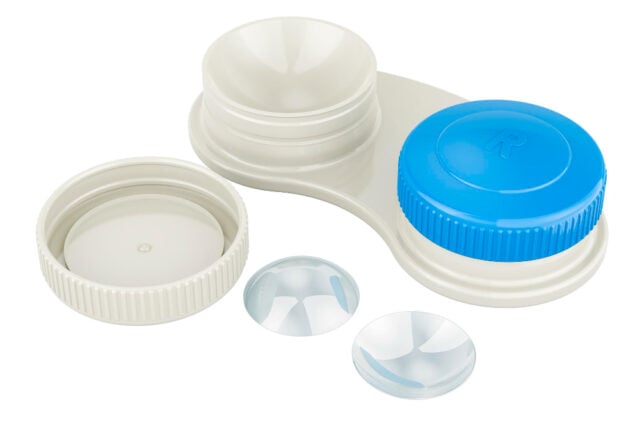
Buying contact lenses online can be convenient, especially if you already know your brand, prescription, replacement schedule, and preferred lens type. It can also help you compare prices, reorder from home, and avoid running out at the wrong time. But contacts are not ordinary online shopping items. They sit directly on your eyes, so the wrong fit, expired prescription, poor hygiene, or unreliable seller can create real eye-health risks.
For shoppers in the U.S. and Canada, the safest approach is simple: use online ordering for convenience, but keep your eye doctor involved and buy only from reputable sellers.
1. Start With a Current Contact Lens Prescription
A contact lens prescription is not the same as an eyeglass prescription. Glasses sit in front of your eyes, while contact lenses sit directly on the eye. That means a contact lens prescription includes details such as brand, lens power, diameter, base curve, and sometimes material or wearing schedule.
Before ordering online, make sure your prescription is current and specific to contact lenses. In the U.S., the FTC explains that shoppers have the right to receive their contact lens prescription after the fitting is complete, and that most online sellers will have a process for submitting or verifying that prescription before purchase. The FTC also warns consumers not to try buying contact lenses with an expired prescription in its guidance on buying prescription glasses or contact lenses.

Canadian shoppers should also treat contacts as medical devices, not casual beauty products. Health Canada states that corrective contact lenses are medical devices licensed before import or sale in Canada, and that only an eye care professional with specialized training should fit contact lenses.
Do not guess your numbers from an old box if your prescription has expired or your eyes feel different. Blurry vision, redness, dryness, discomfort, or frequent headaches are signs that you should book an eye exam before reordering.
2. Choose a Reputable Online Seller
Not every online contact lens seller is equally reliable. A trustworthy seller should make it easy to enter or verify your prescription, clearly list brands and lens details, explain shipping and return policies, and provide customer support if something goes wrong.
This is especially important when ordering across borders. U.S. and Canadian shoppers may see online sellers with attractive pricing, but low cost should not be the only factor. Contacts must match your prescription exactly. A seller that does not request prescription details or seems willing to send “similar” lenses without proper verification is not worth the risk.
For shoppers comparing options, contact lenses for Canadian shoppers can be reviewed through an established Canadian eyewear retailer with a dedicated contact lens category. The key is to make sure the brand, lens type, power, diameter, base curve, and replacement schedule match your valid prescription before checking out.
It can also help to review practical vision-shopping guidance from trusted publishers. South Florida Reporter has covered what to know when considering contact lenses, including why professional guidance matters when deciding whether contacts are right for you.
3. Compare the Total Cost, Not Just the Box Price
Online shopping makes price comparison easy, but the cheapest box is not always the best deal. Contact lens costs can vary based on brand, lens type, pack size, shipping fees, taxes, subscription discounts, return policies, and insurance or reimbursement options.
Before buying, compare:
- Price per box
- Number of lenses per box
- Daily, biweekly, or monthly replacement schedule
- Shipping fees and delivery time
- Auto-reorder discounts
- Return or exchange rules
- Insurance, FSA, or HSA eligibility in the U.S.
- Promo codes or first-order discounts
Daily disposable lenses may cost more per box than monthly lenses, but they can reduce the need for cleaning solution and lens cases. Monthly lenses may look cheaper upfront, but you need to factor in proper storage and care supplies. Toric lenses for astigmatism and multifocal contacts also tend to cost more than standard spherical lenses.
If you wear contacts regularly, calculate your cost over three, six, or twelve months. That gives you a more realistic picture than comparing one box at a time.
U.S. shoppers with vision insurance may also want to review how online eyewear benefits work. South Florida Reporter’s guide to buying glasses online using insurance focuses on glasses, but the same idea applies: check what your plan allows, which retailers are eligible, and whether you need reimbursement paperwork.
4. Never Substitute Brands Without Professional Advice
It is tempting to switch brands if another product is cheaper, ships faster, or has better reviews. But contact lenses are not interchangeable just because the prescription power looks the same.
Different brands can use different materials, moisture technologies, oxygen transmission levels, curves, diameters, and edge designs. A lens that works well for one person may feel uncomfortable or unsafe for another. Even decorative or colored contacts need proper fitting because size and curvature still matter.
The FDA’s guide to buying contact lenses advises consumers to be careful when buying lenses from anyone other than their eye care professional and to make sure their prescription is current. The FDA also notes that some online or mail-order sellers may send a different brand, so shoppers should confirm that the lenses received match the prescription.
This is also where online reviews have limits. A five-star review may tell you someone liked the comfort or price, but it does not mean the lens is right for your eyes. Reviews can help evaluate a seller’s delivery and customer service, but your prescription and eye doctor’s advice should guide the actual lens choice.
5. Check Shipping Timing Before You Run Out
One of the easiest mistakes is waiting until the last pair before reordering. Shipping delays, prescription verification issues, stock shortages, weather disruptions, or cross-border delivery problems can all slow things down.
A better approach is to reorder when you still have at least one to two weeks of lenses left. If you wear specialty lenses, toric lenses, multifocal lenses, or a less common prescription, give yourself even more time.
Also check whether the retailer offers order tracking, delivery estimates, and refill reminders. Auto-ship can be useful, but only if your prescription is still current and the replacement schedule matches your actual usage.
If you travel often, keep an extra supply with you and avoid packing all of your contacts in checked luggage. A small backup pair of glasses is also smart in case your eyes become irritated or you cannot wear lenses for a day.
6. Keep Healthy Lens Habits After the Order Arrives
Buying from a reputable seller is only the first step. Safe contact lens wear also depends on how you handle, clean, store, and replace your lenses.
The CDC recommends healthy habits such as washing and drying your hands before handling lenses, removing lenses before swimming or showering, and following proper care instructions. The CDC also explains that keeping water away from contact lenses is important because water can introduce germs to the eyes.
Good habits include:
- Wash and dry hands before touching lenses
- Follow your prescribed replacement schedule
- Never sleep in contacts unless your eye doctor says it is safe
- Do not rinse lenses with tap water
- Use fresh contact lens solution
- Replace your lens case regularly
- Stop wearing lenses if your eyes are red, painful, or unusually sensitive
- Contact an eye care professional if discomfort does not improve
When your order arrives, inspect the boxes before opening them. Confirm the brand, prescription power, base curve, diameter, expiration date, and packaging condition. Do not use lenses from damaged, opened, expired, or suspicious packaging.
Bonus Tip: Be Extra Careful With Colored or Decorative Contacts
Colored and decorative contact lenses may seem like costume or beauty products, but they are still regulated contact lenses. The FDA explains that decorative contact lenses are medical devices and says buyers should only purchase from companies that require a prescription and sell FDA-cleared or approved products. The FDA also warns against buying decorative lenses from street vendors, beauty supply stores, flea markets, novelty shops, Halloween stores, or unknown online distributors.
The CDC also states that decorative contact lenses require a prescription and proper fitting, even when they do not correct vision.
If you want colored lenses, ask your eye care professional for a proper fitting and prescription for the specific brand and style.
Final Thoughts
Buying contact lenses online can be a smart option for U.S. and Canadian shoppers, but it should never replace proper eye care. Start with a current contact lens prescription, choose a reputable seller, compare the full cost, avoid unapproved substitutions, order before you run out, and keep healthy lens habits after delivery.
The safest online purchase is the one that matches your prescription, comes from a reliable retailer, arrives in proper packaging, and supports the care routine your eyes need.
Disclaimer
Artificial Intelligence Disclosure & Legal Disclaimer
AI Content Policy.
To provide our readers with timely and comprehensive coverage, South Florida Reporter uses artificial intelligence (AI) to assist in producing certain articles and visual content.
Articles: AI may be used to assist in research, structural drafting, or data analysis. All AI-assisted text is reviewed and edited by our team to ensure accuracy and adherence to our editorial standards.
Images: Any imagery generated or significantly altered by AI is clearly marked with a disclaimer or watermark to distinguish it from traditional photography or editorial illustrations.
General Disclaimer
The information contained in South Florida Reporter is for general information purposes only.
South Florida Reporter assumes no responsibility for errors or omissions in the contents of the Service. In no event shall South Florida Reporter be liable for any special, direct, indirect, consequential, or incidental damages or any damages whatsoever, whether in an action of contract, negligence or other tort, arising out of or in connection with the use of the Service or the contents of the Service.
The Company reserves the right to make additions, deletions, or modifications to the contents of the Service at any time without prior notice. The Company does not warrant that the Service is free of viruses or other harmful components.