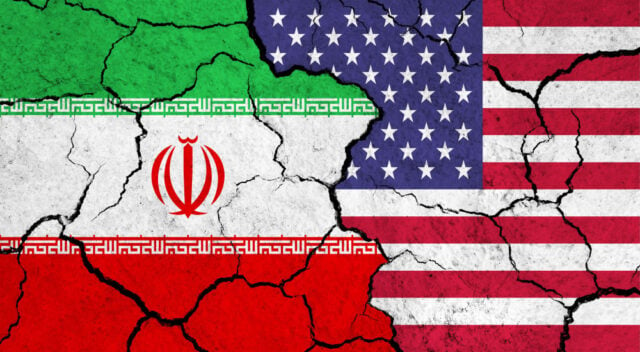
WASHINGTON — A stark, high-stakes disconnect between Washington and Tehran has plunged the international community into deep diplomatic uncertainty. On Monday, President Donald Trump insisted that indirect negotiations to end the devastating Middle East conflict are moving forward at a “rapid pace.” Simultaneously, Iranian state officials and media declared that peace talks are officially suspended, citing intensified Israeli military actions in Lebanon and sudden, last-minute alterations to a proposed ceasefire framework by American negotiators.
The whiplash between Donald Trump’s optimism and Iran’s stark withdrawal sent shockwaves through the global economy, causing oil prices to spike back toward $100 a barrel. The open fracturing of the peace track coincided with a volatile exchange of military strikes over the weekend, illustrating the fragile nature of a nominal truce that took hold in April but has since been repeatedly tested.
                  THE PERSISTENT DISCONNECT
┌───────────────────────────────────────┐┌───────────────────────────────────────┐
│          WASHINGTON'S STANCE          ││            TEHRAN'S STANCE            │
├───────────────────────────────────────┤├───────────────────────────────────────┤
│ • Talks progressing at a "rapid pace" ││ • Dialogue suspended on all fronts     │
│ • Maximum economic leverage via naval ││ • Ceasefire breached by US/Israeli    │
│   blockade ("a piece of steel")       ││   strikes in Iran and Lebanon         │
│ • Demanding complete dismantling of   ││ • Demanding total sanctions relief &   │
│   Iran's enriched uranium stockpile   ││   release of frozen sovereign assets  │
└───────────────────────────────────────┘└───────────────────────────────────────┘
The Public Disconnect: “Rapid Pace” vs. “Talks Are Off”
The friction burst into the open Monday morning when the Tasnim News Agency, an Iranian state-affiliated media outlet aligned with the Islamic Revolutionary Guard Corps (IRGC), reported that Tehran’s negotiating team had entirely halted the exchange of messages with Washington through intermediaries. According to the report, the suspension was a direct response to Israel’s expanding offensive in Lebanon and recent U.S. airstrikes hitting Iranian infrastructure.
Iranian Foreign Minister Abbas Araghchi reinforced this position in an aggressive public statement, clarifying that Tehran views regional theatres of conflict as entirely interconnected.

“The ceasefire between Iran and the U.S. is unequivocally a ceasefire on all fronts, including in Lebanon,” Araghchi stated. “Its violation on one front is a violation of the ceasefire on all fronts. The U.S. and Israel are responsible for the consequences of any violation.”
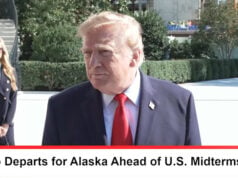
Yet, at the White House, President Trump presented a completely contrasting view of the back-and-forth. Taking to his Truth Social platform, Trump directly contradicted the reports coming out of the Islamic Republic. “Talks are continuing, at a rapid pace, with the Islamic Republic of Iran. Thank you for your attention to this matter,” Trump wrote.
In a subsequent series of phone interviews with major American news outlets, Trump downplayed the idea that the peace track was collapsing. Speaking with NBC News, Trump asserted that his administration had not received formal notification from Iranian negotiators regarding a suspension. He suggested that even if a pause in communication occurred, it would not derail his ultimate objective.
“I think we’ve been talking too much if you want to know the truth,” Trump told NBC News. “I think going silent would be very good, and that could be for a long time. It doesn’t mean we’re going to go and start dropping bombs all over there. We’ll just go silent. We’ll keep the blockade. The blockade is a piece of steel.”
Hours later, speaking with CNBC, Trump took an even more indifferent tone toward Tehran’s threats to walk away. “I don’t care if they’re over, honestly. I really don’t care. I couldn’t care less,” Trump said, brushing off anxieties regarding the immediate economic fallout.
To reassure the public, the president posted a late-night message urging Americans to remain patient: “Just sit back and relax. It will work out in the end. It always does.”
Military Skirmishes Undermine the Truce
The diplomatic standstill is playing out against a backdrop of direct military engagements that have shattered the quiet of the April truce. Over the weekend, U.S. Central Command ordered precision strikes against Iranian radar facilities and drone launch sites near the critical Strait of Hormuz, asserting the actions were defensive measures to neutralize threats against international shipping lanes.
Tehran retaliated quickly. By Monday morning, the Kuwaiti military confirmed its air defense systems had intercepted hostile drone and missile attacks targeting a military base housing U.S. forces within its borders. While U.S. and Kuwaiti authorities reported no American or allied personnel were harmed, the exchange proved that the shadow war is at constant risk of erupting into a wider conventional conflict.
The regional volatility was further exacerbated by developments in Lebanon. European diplomats, including ministers from Germany and Norway, were forced to abort a solidarity trip to Beirut mid-flight due to the rapidly deteriorating security situation and heavy airstrikes near the airport, forcing their military aircraft to divert to Cyprus.
   CHRONOLOGY OF A FALTERING CEASEFIRE

   [ April 2026 ] ──────────► Nominal truce established between U.S. and Iran
                                  │
   [ Late May 2026 ] ───────► Framework for 60-day extension drafted by diplomats
                                  │
   [ May 30-31, 2026 ] ─────► U.S. strikes Iranian radar sites; Trump tweaks terms
                                  │
   [ June 1, 2026 ] ────────► Iran fires missiles at U.S. assets in Kuwait;
                              Tehran officially suspends indirect peace talks
The Stumbling Blocks: Uranium, Leaks, and Changing Terms
Prior to Monday’s collapse, negotiators from both sides had reportedly been closing in on a 14-point memorandum of understanding. The proposed deal aimed to cement a 60-day cessation of hostilities, during which comprehensive negotiations regarding Iran’s nuclear program and the reopening of the Strait of Hormuz—the vital maritime corridor through which roughly 20 percent of the world’s oil supplies transit—could take place.
However, an Iranian official briefed on the discussions, speaking on the condition of anonymity, revealed that the progress dissolved due to sudden, unilateral modifications introduced by the U.S. team over the weekend. The official claimed that U.S. negotiators failed to inform their Iranian counterparts before integrating new demands into the text, a move interpreted by Tehran as negotiating in bad faith.
Furthermore, Iranian Foreign Ministry spokesperson Esmaeil Baghaei lambasted Washington for projecting a chaotic and inconsistent diplomatic strategy. “The other party is constantly changing its views and putting forward new or contradictory demands,” Baghaei stated during a press briefing. He warned that “sending contradictory messages” via American television networks would fail as a pressure tactic.
Substantive gaps between the two nations remain profound:
- The Nuclear Question: Treasury Secretary Scott Bessent and senior White house advisers have maintained that any permanent agreement requires Iran to turn over its highly enriched uranium stockpile and accept verifiable caps preventing the development of a nuclear weapon.
- Financial Sanctions: The Iranian economy is under immense pressure, with annual domestic inflation currently tracking at a crippling 53.9 percent. Iranian President Masoud Pezeshkian has spent weeks warning citizens to prepare for severe economic hardships. Consequently, Tehran is demanding immediate relief from sweeping Western sanctions and the unconditional release of billions of dollars in frozen sovereign funds currently held in international banks. Trump has adamantly refused to release these assets beforehand, stating, “When they behave properly… we’ll let them have their money. But right now, we’re not doing that.”
- Regional Dynamics: Members of Congress and Israeli Prime Minister Benjamin Netanyahu have repeatedly cautioned the Trump administration against signing a deal that fails to permanently degrade Iran’s regional proxy network. Trump attempted to smooth over these anxieties on Monday by announcing he had conducted productive calls with Prime Minister Netanyahu and representatives of Hezbollah to guarantee a temporary pullback of forces from Beirut, but the broader regional framework remains highly unstable.
Maximum Leverage and Global Anxieties
Within Washington, Trump’s allies view the breakdown not as a failure, but as a validation of the administration’s “maximum pressure” strategy. Military analysts, including retired Gen. Jack Keane, suggest that Iran’s aggressive posturing and threats to permanently close the Strait of Hormuz are tactical maneuvers designed to drag out negotiations toward the U.S. midterm elections, betting that the administration will avoid a return to a full war footing.
Trump himself emphasized that time is on the side of the United States, pointing to the effectiveness of the U.S. naval blockade operating in the Persian Gulf. By cutting off Iranian crude oil from the global market, the administration believes it holds the ultimate economic hammer.
For the global economy, however, the stakes could not be higher. The halting of exchanges through international mediators has revived fears that a prolonged disruption of oil shipping lanes will trigger domestic fuel spikes and broader supply chain shocks. While Trump has dismissed these worries—stating that domestic energy production ensures the U.S. “doesn’t need the strait”—independent economists warn that a complete breakdown of diplomacy could plunge international energy markets into an unpredictable spiral.
As both capitals retreat into defensive postures, the line between a diplomatic breakthrough and an open regional war remains razor-thin, leaving the international community to wait and see whose leverage will break first.
Sources and Links:
- The Guardian: Iran suspends peace talks after ‘violation of ceasefire’ in Lebanon
- Fox News: US trades strikes with divided Iran regime as peace talks stall
- The Washington Post: Iran says it is breaking off talks to end war after U.S. and Israeli strikes
- The Washington Post: U.S., Iran nearing deal to end war and reopen Strait of Hormuz
- CBC News: Trump says talks with Iran continuing at ‘rapid pace’ after reports Tehran had stopped indirect negotiations
- The Hindu: West Asia war LIVE: Trump says Netanyahu agreed not to send troops to Beirut
Disclaimer
Artificial Intelligence Disclosure & Legal Disclaimer
AI Content Policy.
To provide our readers with timely and comprehensive coverage, South Florida Reporter uses artificial intelligence (AI) to assist in producing certain articles and visual content.
Articles: AI may be used to assist in research, structural drafting, or data analysis. All AI-assisted text is reviewed and edited by our team to ensure accuracy and adherence to our editorial standards.
Images: Any imagery generated or significantly altered by AI is clearly marked with a disclaimer or watermark to distinguish it from traditional photography or editorial illustrations.
General Disclaimer
The information contained in South Florida Reporter is for general information purposes only.
South Florida Reporter assumes no responsibility for errors or omissions in the contents of the Service. In no event shall South Florida Reporter be liable for any special, direct, indirect, consequential, or incidental damages or any damages whatsoever, whether in an action of contract, negligence or other tort, arising out of or in connection with the use of the Service or the contents of the Service.
The Company reserves the right to make additions, deletions, or modifications to the contents of the Service at any time without prior notice. The Company does not warrant that the Service is free of viruses or other harmful components.