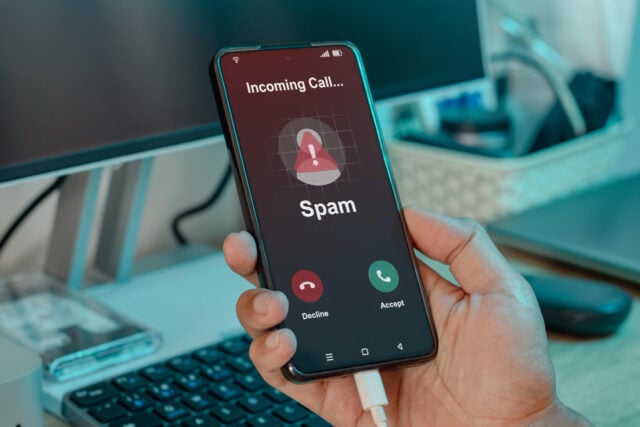
Just when you thought your phone was safe, election season might get much louder. The Federal Communications Commission is reviewing a controversial request. It could soon allow political groups to blast automated calls directly to cell phones. Even worse, voters would not need to give prior consent first. This means campaigns could ring your wireless device without your permission.
The petition comes from the conservative advocacy group Club for Growth. The group wants federal regulators to relax long-standing rules under consumer protection laws. Federal law currently bans most robocalls to mobile phones without express consent. Club for Growth argues that these protections restrict free political speech. They claim that automated calls help campaigns reach diverse voters and improve polling. Furthermore, the waiver would allow the use of artificial intelligence voices.
If granted, campaigns could use interactive AI agents to talk directly with voters. Under the proposed plan, callers would face a few basic guardrails. Groups would be limited to three calls per recipient every thirty days. They would also have to honor opt-out requests within ten business days. Still, consumer advocates warn that these limits will not prevent massive disruption. Cell phones could quickly fill up with unwanted prerecorded audio messages.
Critics fear a tidal wave of deceptive campaign spam right before midterm voting. FCC Commissioner Anna Gomez strongly opposes granting the waiver. She warned that the move would trigger a tsunami of misinformation. Gomez noted that dark money groups already use AI voices deceptively. Bypassing consumer consent could place manipulated audio straight into voters’ pockets. Consumer advocacy groups have also filed formal objections against the plan.

The debate highlights growing anxiety over realistic audio deepfakes during elections. In early 2024, a fake Biden robocall targeted New Hampshire primary voters. The FCC later clarified that voice-cloning tools violate federal law. Now, this new waiver request could reopen the door to synthetic voices. Public interest groups say voters overwhelmingly detest automated phone intrusions.
The agency has little time to make an official decision. The public comment reply window closes on October 19. Regulators led by Chairman Brendan Carr must then choose whether to act. If approved, your phone could soon ring with unwanted political bots. Voters should check their call-blocking settings ahead of the midterms. Staying alert for artificial audio remains your best immediate defense. You can also submit formal feedback directly to the FCC docket.
Sources Used
- Associated Press (AP News): https://apnews.com/article/fcc-political-robocalls-artificial-intelligence-ai-midterms-b97fb6e8d06704dc043556dba25de548
- Communications Daily: https://communicationsdaily.com/article/2026/10/08/most-comments-oppose-political-robocall-waiver-sought-by-club-for-growth-2610070035
- National Consumer Law Center (NCLC): https://www.nclc.org/stop-efforts-to-greenlight-ai-robocalls-ahead-of-the-midterms/
- Techlicious: https://www.techlicious.com/blog/fcc-political-robocalls-election-spam/
Disclaimer
Artificial Intelligence Disclosure & Legal Disclaimer
AI Content Policy.
To provide our readers with timely and comprehensive coverage, South Florida Reporter uses artificial intelligence (AI) to assist in producing certain articles and visual content.
Articles: AI may be used to assist in research, structural drafting, or data analysis. All AI-assisted text is reviewed and edited by our team to ensure accuracy and adherence to our editorial standards.
Images: Any imagery generated or significantly altered by AI is clearly marked with a disclaimer or watermark to distinguish it from traditional photography or editorial illustrations.
General Disclaimer
The information contained in South Florida Reporter is for general information purposes only.
South Florida Reporter assumes no responsibility for errors or omissions in the contents of the Service. In no event shall South Florida Reporter be liable for any special, direct, indirect, consequential, or incidental damages or any damages whatsoever, whether in an action of contract, negligence or other tort, arising out of or in connection with the use of the Service or the contents of the Service.
The Company reserves the right to make additions, deletions, or modifications to the contents of the Service at any time without prior notice. The Company does not warrant that the Service is free of viruses or other harmful components.