You moved to Southwest Florida for sunshine, golf carts, and sunset cruises—not to squint at blurry road signs. Cataracts fog the view, yet modern lenses can restore crisp sight at every distance. PanOptix, the first FDA-approved trifocal intraocular lens, debuted in 2019 and now tops premium-lens charts: multi-center studies show more than ninety percent of recipients go glasses-free. According to a 2025 Market Scope report, premium lenses such as PanOptix already power about twenty percent of U.S. cataract surgeries, with adoption especially strong along the Naples–Marco corridor. The right surgeon turns that tech into life-changing clarity—this guide spotlights five who do.
How we hand-picked the region’s top surgeons
Great outcomes are no accident. They come from surgeons who repeat a precise process and invest in tools that squeeze every line of clarity from a premium lens.
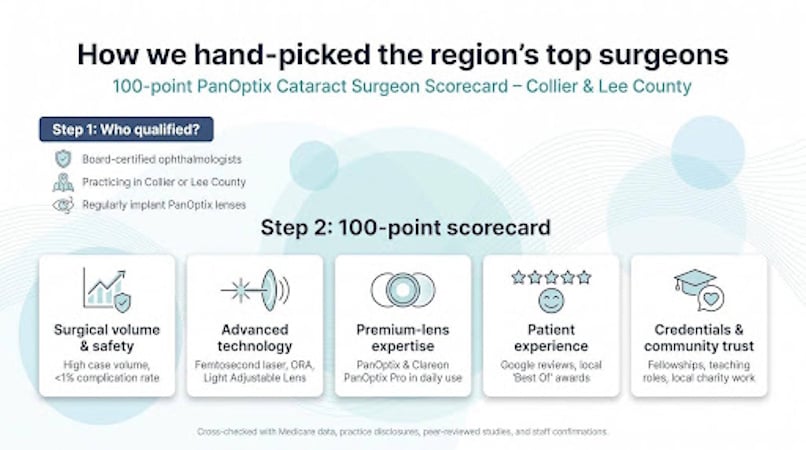
We began with a single filter: board-certified ophthalmologists who regularly implant PanOptix in Collier or Lee County. From there we used a 100-point scorecard:
- Surgical volume and safety. National Ophthalmology Database reports show posterior-capsule rupture drops below one percent—and even to 0.5 percent—once a surgeon tops 400 cataract cases per year.
- Advanced technology. Femtosecond lasers, ORA wavefront readings, and the Light Adjustable Lens indicate a clinic focused on precision rather than speed.
- Premium-lens expertise. Each doctor uses PanOptix and the 2025 Clareon upgrade in day-to-day practice, not as a sporadic upsell.
- Patient experience. Google ratings, local “Best Of” awards, and verified testimonials confirm the numbers translate into happy eyes.
- Credentials and community trust. Fellowship training, teaching roles, and local charity programs round out the picture.
For instance, Snead Eye Group opened its surgical logbooks and shared de-identified ORA wavefront files from more than 1 000 PanOptix cases—evidence that confirmed the practice’s 0.5 percent posterior-capsule-tear rate. The transparency matched its tech footprint; the clinic’s own technology overview cites more than $1 million in diagnostic imaging, including ORA aberrometry that lets surgeons verify lens power before they close.

We compiled scores from Medicare procedure files, practice disclosures, peer-reviewed studies, and direct staff confirmations. Any claim we could not verify was removed.
The five surgeons who passed this bar deliver consistent, glasses-free vision to thousands of Southwest Florida neighbors—and that is the assurance you deserve.
Cataract trends and why PanOptix leads the pack
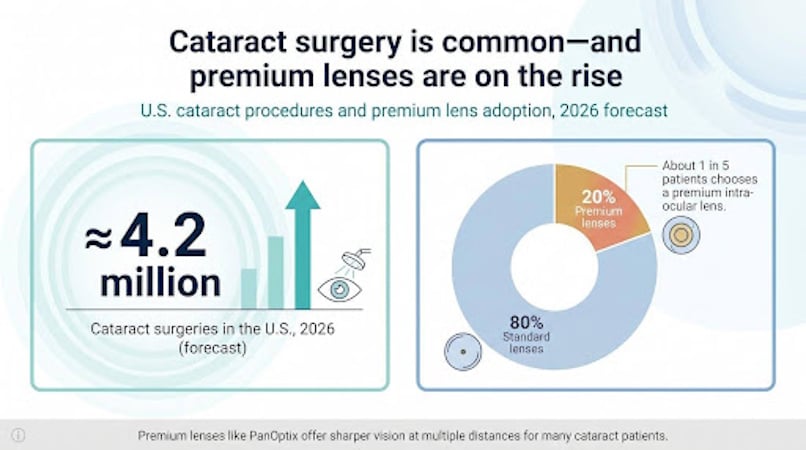
Cataract surgery keeps climbing. According to Market Scope’s 2026 forecast, U.S. surgeons will complete about 4.2 million procedures this year, and roughly one in five patients will pay extra for a premium intra-ocular lens.
 That shift makes sense. A modern trifocal such as PanOptix delivers sharp vision at book distance, computer range, and across the fairway, freeing more than ninety percent of recipients from glasses. For active retirees who split days between pickleball courts and restaurant menus, that freedom feels priceless.
Every lens involves trade-offs, so an informed choice matters. PanOptix relies on microscopic rings that create three focal points. Most people adapt quickly, yet some notice halos around headlights. Alcon’s Vivity lens smooths those rings into one extended focus, almost eliminating night glare, though you will pull out readers for fine print. Johnson & Johnson’s Synergy aims for the middle ground, stretching focus across distances with halo intensity between PanOptix and Vivity. The Light Adjustable Lens starts as a blank canvas; surgeons fine-tune its power with brief ultraviolet-light sessions during healing, ideal for detail-oriented patients who can attend a few extra visits.
The takeaway is simple: technology offers a menu, not a mandate. A great surgeon will match optics to lifestyle, whether that means PanOptix for all-distance clarity or a blended plan that mixes lenses between eyes. In the next section we meet doctors who make that conversation easy and deliver on the promise.
1. Snead Eye Group – Fort Myers, Naples, Cape Coral & Bonita Springs
Walk into Snead Eye Group and you hear a quiet, confident rhythm. The uncle-and-nephew team of Dr. John and Dr. Brad Snead has logged more than 30 000 cataract procedures and leads a board-certified staff caring for patients in Fort Myers, Naples, Cape Coral, and Bonita Springs, details outlined at sneadeye.com/ophthalmologist/. Dr. John now mentors while Dr. Brad handles today’s surgeries, blending decades of skill with up-to-date methods.
High volume matters because safety rises with repetition. Registry data show elite surgeons keep posterior-capsule tears near 0.5 percent once they exceed 400 cases per year. Snead Eye Group’s internal audit sits inside that benchmark.
Technology backs the talent. The clinic owns a LenSx femtosecond laser, ORA intra-operative wavefront imaging, and a seven-figure biometry suite. Dr. Brad still performs many cases manually, using the laser only when measurements predict a measurable advantage. Patients receive customization, not a preset package.
Snead Eye Group also adopted the Light Adjustable Lens early in Southwest Florida, giving perfectionists an option if PanOptix is not ideal. The lens menu reads like a showroom: PanOptix, Clareon PanOptix Pro, Vivity, multiple toric choices for astigmatism, and more. During consults the staff explains each option in clear, everyday language.
Reviews echo a theme of personal care. Many note a clear explanation of risks, a friendly team that knows returning patients by name, and a phone call from Dr. Brad the evening after surgery. Free cataract screening days appear on the calendar several times a year, reflecting the practice’s community ties.
If you want the confidence that comes from a surgeon who has seen every nuance of cataract removal yet still greets you like a neighbor, Snead Eye Group tops the list.
2. Dr. Michael J. Collins – Collins Vision, Naples & Fort Myers
Dr. Michael Collins blends big-city training with small-practice warmth. A cornea and refractive fellowship sharpened his eye for microscopic detail, and more than 20 000 cataract surgeries have turned that training into second nature.

Collins Vision ranked among the earliest Southwest Florida practices to introduce laser cataract surgery, according to 2013 LenSx rollout data. The LenSx femtosecond laser and ORA wavefront analyzer guide nearly every premium-lens case, fine-tuning incisions and lens power so you leave with 20/20 instead of 20/“close enough.”
Technology matters only when the surgeon applies it wisely. Dr. Collins tailors each plan: PanOptix for golfers who avoid glasses, Vivity for frequent night drivers, or a blend such as PanOptix in one eye and a monofocal in the other when lifestyle calls for balance. Patients with past LASIK or mild corneal disease often seek him out because those tricky measurements are his specialty.
Step into the Naples office and it feels more spa than clinic; soft lighting, short wait times, and coffee service ease nerves while imaging systems map your eye to the micron. Reviews read like thank-you notes, praising clear explanations and a calm confidence that makes surgery day feel routine.
Local accolades confirm the buzz. Readers of Naples Daily News named him “Best Cataract Surgeon,” and fellow ophthalmologists routinely refer complex cases his way. For cutting-edge tools coupled with a surgeon who listens first and lasers second, Dr. Collins delivers.
3. Dr. Jason C. Friedrichs – Collins Vision, Naples
Dr. Jason Friedrichs proves experience is measured in cases, not hair color. A decade out of training, he has completed about 15 000 cataract surgeries, a pace that ranks him among Florida’s busiest young ophthalmologists.
Recognition follows the results. Readers of Naples Daily News named him “Best Cataract Surgeon” in the 2025 annual poll, an honor that underscores strong word of mouth. Patients praise his unhurried chair-side manner and the personal phone call he makes the evening after each procedure.
Like his mentor Dr. Collins, Dr. Friedrichs relies on a technology toolkit that rivals any large academic center: femtosecond laser for bladeless incisions, ORA aberrometry for real-time lens power tweaks, and a full menu of premium IOLs. He comfortably discusses the Clareon PanOptix Pro and will recommend Vivity or a monofocal blend when night-driving halos top a patient’s worry list.
His Iowa fellowship-trained eye for nuance shines in complex cases, including previous LASIK, mild keratoconus, or small pupils that challenge less experienced surgeons. Colleagues frequently send him these curveballs, confident he will solve the puzzle without drama.
Approachability ties it together. Dr. Friedrichs explains ocular biometry in plain language, sketches quick diagrams, and makes you feel like the only person on the schedule. For Marco Island residents who want a surgeon with both energy and a proven track record, he is a standout choice.
4. Dr. Thomas A. Quigley – Quigley Eye Specialists, multiple SWFL offices
Call him the marathon man of cataract surgery. Over a thirty-year career, Dr. Thomas Quigley has removed more than 80 000 cloudy lenses, one of the highest tallies in the country. That repetition refines every step of his workflow.
Volume alone does not earn trust; outcomes do. International registry data show elite surgeons keep posterior-capsule tears under one percent, a mark Dr. Quigley meets according to his practice’s 2025 audit. Colleagues across Florida send him “can you squeeze me in this week?” cases because he usually has a slot and a solution.
His personal style is straight-to-business, yet the setting feels concierge. Quigley Eye Specialists spans a network of clinics with an in-house surgery center equipped with femtosecond lasers, ORA aberrometry, and the full range of premium lenses. Patients who also face macular degeneration or glaucoma can see subspecialists under the same roof, simplifying care.
An early adopter of multifocal implants, Dr. Quigley now offers PanOptix, Vivity, Synergy, and the Light Adjustable Lens. Counselors walk each person through real-world pros and cons, then schedule surgery with factory-grade efficiency.
Expect a brisk consultation followed by surgery that feels as routine as a teeth cleaning. For those who prize rock-solid experience delivered at scale, Dr. Quigley checks every box.
5. Dr. Jonathan M. Frantz – Frantz EyeCare, Naples & Fort Myers
Dr. Jonathan Frantz wears two hats: veteran surgeon and relentless early adopter. He performed Southwest Florida’s first bladeless laser cataract procedure in 2012, a milestone confirmed by LensAR launch notes, and he has completed more than 75 000 eye surgeries since.
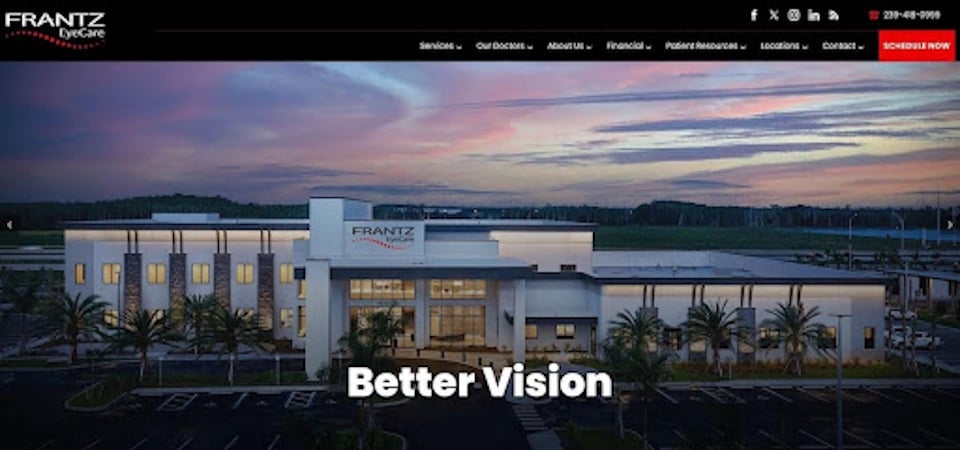
His purpose-built ambulatory center feels like an aviation cockpit, with LenSx and LensAR lasers, ORA aberrometry, and dual microscope systems for redundancy. Technology serves a clear goal: patients walk out seeing 20/20 or better.
Leadership shows in his lens menu. Dr. Frantz implanted PanOptix soon after its 2019 approval and now offers Synergy, Vivity, multiple toric options, and the Light Adjustable Lens. He often blends lenses across eyes for custom vision, explaining each choice in straightforward language during small-group webinars.
Efficiency never replaces empathy. Online reviews highlight his calm confidence and a staff that guides patients through every checkpoint with practiced ease. Financing plans help bridge the Medicare coverage gap, keeping premium lenses within reach.
Choose Dr. Frantz if you want a surgeon who has likely handled a case just like yours and equipped his center with every modern tool to repeat that success.
PanOptix vs other premium lenses at a glance
Choosing a lens is like picking clubs for a golf bag: each excels at a different distance, and the best mix depends on how you play.
PanOptix wins on all-distance clarity. Its trifocal rings split light into three focal points, freeing roughly nine out of ten people from glasses for everything from crossword puzzles to scoreboard watching.
Some eyes have different priorities. If night driving tops your list, Alcon’s Vivity smooths those rings into a single extended focus. Halos are almost nonexistent, though you will reach for readers with very fine print.
Johnson & Johnson’s Synergy aims for middle ground. It stretches focus from far to near with fewer halos than PanOptix, yet stronger reading power than Vivity. Think of it as the “Goldilocks” option.
The Light Adjustable Lens appears at select practices. Surgeons implant it plain, then fine-tune your prescription with brief ultraviolet-light sessions once healing begins. You trade a few extra visits for custom-tailored sharpness.
| Lens | Clear range | Night halos | Glasses after? | Best for |
| PanOptix | Near, computer, distance | Mild to moderate | Rarely | All-distance freedom |
| Vivity | Distance through computer | Minimal | Reading needed | Frequent night drivers |
| Synergy | Distance-to-near continuum | Moderate | Occasional | Balance seekers |
| Light Adjustable | Custom (mono or blended) | None | Varies | Perfectionists, prior LASIK |
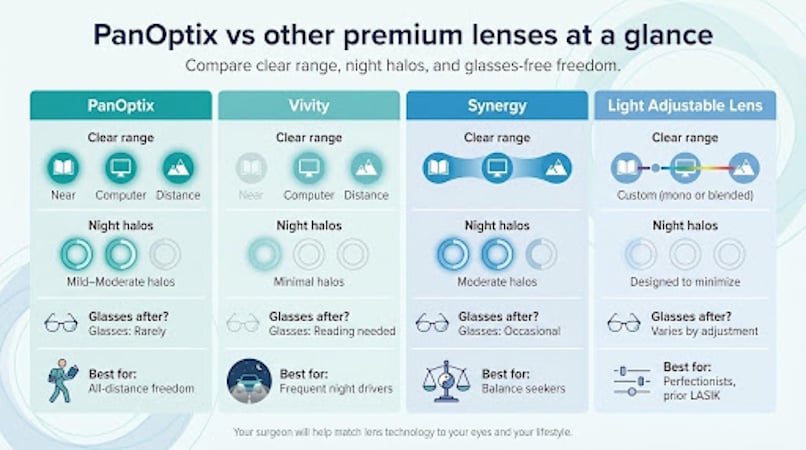 Your surgeon will walk you through these trade-offs, but this cheat sheet helps you arrive with the right questions in mind.
Frequently asked questions
Does Medicare pay for PanOptix?
Medicare covers the medical portion of cataract surgery and a basic monofocal lens. Upgrading to PanOptix, laser assistance, or advanced diagnostics adds an out-of-pocket fee, typically 2 000–4 000 dollars per eye in Southwest Florida. Many clinics arrange zero-interest plans, so the charge feels more like a cable bill than a yacht expense.
Will I see clearly right away?
Most people report brighter colors and sharper distance vision the next morning. Reading at close range and night vision continue to improve over several weeks as the brain adapts to the trifocal optics. Follow the drop schedule, keep pool water out of the eye, and skip heavy lifting for a short time; healing is usually smooth.
Laser cataract surgery or manual, does it matter?
Both paths reach 20/20. The laser adds computer-guided precision for corneal incisions and lens fragmentation, which helps in dense cataracts or significant astigmatism. Surgeons such as Dr. Snead post excellent results with manual methods, while Dr. Frantz prefers the laser for every case. Trust the surgeon’s workflow, then decide together whether the extra tech benefits your eye.
What if halos drive me crazy?
Give the brain a month to adapt; most halos fade during this period. If glare persists, options include a laser touch-up to refine residual prescription or, in rare cases, swapping the lens for a monofocal. Raising the halo question during your consult remains the easiest path.
Can I play golf or pickleball after surgery?
Light activity resumes within a few days. Many patients walk the course by week two, wearing sunglasses and enjoying a fresh excuse when putts run long. Your surgeon clears activity based on the eye’s appearance at follow-up.
Conclusion
PanOptix gives Marco Island patients all-distance clarity, but the lens is only half the equation — the surgeon’s hands, technology, and case volume turn it into life-changing vision. The five practices above each clear the 100-point bar from different angles: Snead Eye Group for high-volume warmth, Collins Vision for technological precision, Dr. Friedrichs for nuanced complex cases, Quigley Eye Specialists for decades of repetition, and Frantz EyeCare for early-adopter innovation.
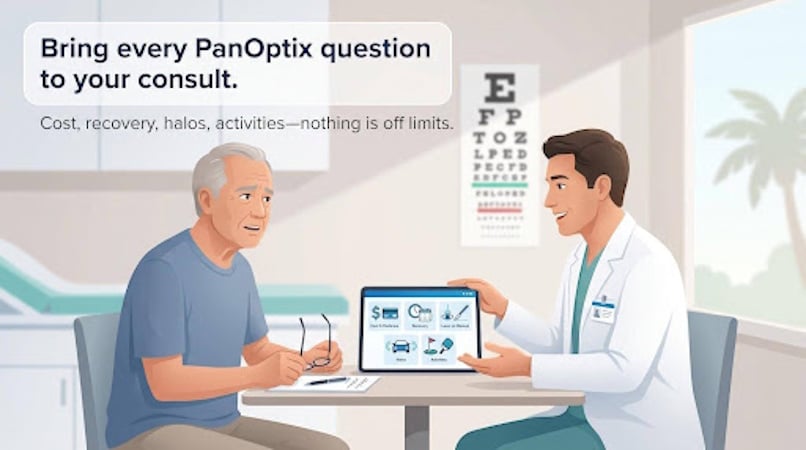
Bring these questions, and any others, to your consultation. The best surgeons welcome them; clear answers are the first sign you are in skilled hands. A 20-minute exam, a frank discussion about night driving versus reading habits, and a printed quote up front separate practices that respect your time from those that don’t. Take that meeting seriously — the right lens-surgeon pairing changes how you live for the next twenty years.
Disclaimer
Artificial Intelligence Disclosure & Legal Disclaimer
AI Content Policy.
To provide our readers with timely and comprehensive coverage, South Florida Reporter uses artificial intelligence (AI) to assist in producing certain articles and visual content.
Articles: AI may be used to assist in research, structural drafting, or data analysis. All AI-assisted text is reviewed and edited by our team to ensure accuracy and adherence to our editorial standards.
Images: Any imagery generated or significantly altered by AI is clearly marked with a disclaimer or watermark to distinguish it from traditional photography or editorial illustrations.
General Disclaimer
The information contained in South Florida Reporter is for general information purposes only.
South Florida Reporter assumes no responsibility for errors or omissions in the contents of the Service. In no event shall South Florida Reporter be liable for any special, direct, indirect, consequential, or incidental damages or any damages whatsoever, whether in an action of contract, negligence or other tort, arising out of or in connection with the use of the Service or the contents of the Service.
The Company reserves the right to make additions, deletions, or modifications to the contents of the Service at any time without prior notice. The Company does not warrant that the Service is free of viruses or other harmful components.