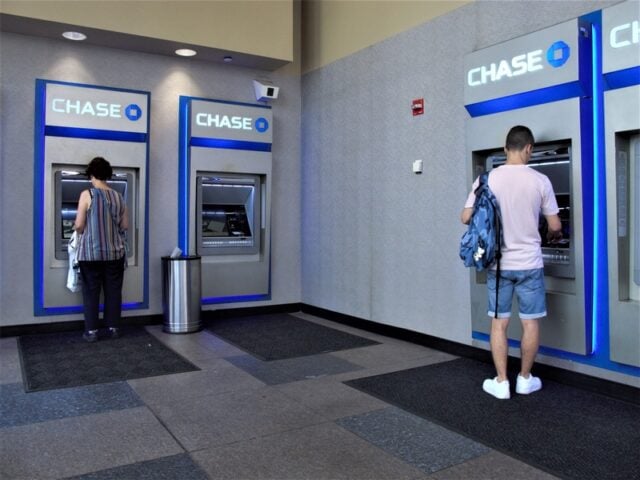
Imagine a scenario where the largest financial entities in the country decide they are tired of playing by the government’s rules, so they look into simply buying the infrastructure instead. According to a groundbreaking exclusive report by The Wall Street Journal, that is precisely what has been happening behind closed doors in the upper echelons of American banking. Wall Street heavyweights—including JPMorgan Chase, Bank of America, Wells Fargo, and PNC Financial Services Group—have been engaging in preliminary, highly sensitive talks to acquire a proprietary card processing network.
The motivation behind these discussions is straightforward: reclaiming billions of dollars in lost transaction revenue. For over a decade, traditional commercial banking institutions have operated under rigid statutory limits governing how much they can charge merchants when a consumer swipes a debit card. By acquiring a standalone network, these banking institutions believe they could successfully navigate a regulatory framework that exempts proprietary networks from federal price controls. If successful, this coordinated maneuver could profoundly reorder the fintech pipeline, redefine retail commerce economics, and fundamentally alter how money moves across the digital landscape.
The Intermediary Problem
To understand why the nation’s largest banks are willing to risk intense political scrutiny for a payments network, it is essential to trace the path a single dollar takes when you buy something with a card. In the traditional financial ecosystem, a transaction relies on a complex chain of intermediaries.
As shown in the traditional payment processing architecture above, when a buyer initiates a purchase, the data travels from the merchant through a payment service provider, hitting a payment gateway, before routing to an acquiring bank (the merchant’s financial institution). From there, it passes through an independent card network—traditionally dominated by giants Visa or Mastercard—which finally requests an approval decision from the customer’s issuing bank.

Every single stop along this journey extracts a minor toll. The most substantial of these tolls is the interchange fee (commonly known as a swipe fee), which the merchant’s bank pays to the cardholder’s bank to cover processing costs and fraud risks. Because Visa and Mastercard command over 80 percent of the market, they possess the power to set these fees across the entire ecosystem. For credit cards, these fees are highly lucrative profit engines for banks. But for debit cards, a strict legislative roadblock has capped that revenue stream for more than a decade.
The Catalyst: Deconstructing the Durbin Amendment
The root of the banking industry’s frustration dates back to the aftermath of the 2008 financial crisis. When Congress enacted the sweeping Dodd-Frank Wall Street Reform and Consumer Protection Act of 2010, lawmakers included a controversial provision known as the Durbin Amendment. Championed by Senator Richard Durbin (D., Ill.), the amendment sought to protect small businesses from what retail coalitions described as monopolistic pricing by dominant card networks.
The Durbin Amendment mandated that the Federal Reserve regulate debit card interchange fees for any financial institution possessing more than $10 billion in assets. The Fed clamped a hard ceiling on these fees, slashing them from an average of 45 cents per transaction down to a maximum cap of 21 cents plus a tiny fraction of the transaction value. For corporate banking giants, the financial blow was immediate, evaporating billions of dollars in highly predictable, recurring annual revenue.
For years, banks have fought a persistent battle against these regulations. They have frequently argued that government price controls have effectively starved them of the margins necessary to offer consumer-friendly checking accounts, free overdraft protection, and robust debit-card rewards programs. Yet, a crucial exemption exists within the statutory language of the Durbin Amendment: networks that handle their own closed-loop processing or operate under unique proprietary structures enjoy significant structural exemptions from these stringent fee caps.
The Capital One and Discover Blueprint
The sudden urgency among big banks to explore an infrastructure acquisition was sparked by a massive, competitive shockwave in the industry. When Capital One Financial completed its historic $50.6 billion acquisition of Discover Financial, the strategic landscape altered permanently.
By absorbing Discover, Capital One did not merely acquire millions of new credit card accounts; it bought an entire independent global payments network. This gave Capital One a distinct advantage: the capability to completely bypass external middlemen like Visa and Mastercard. More importantly, because Discover operates as a vertically integrated network that can contract directly with merchants, it opened an unprecedented path toward escaping federal debit fee ceilings.
As The Wall Street Journal detailed, “When Capital One Financial bought Discover Financial in a $50.6 billion deal, it got a network that cut out the need for a middleman in card transactions and allowed it to deal more directly with merchants.” Watching from the sidelines, rival banking institutions experienced immediate strategic envy. They recognized that Capital One had successfully engineered a model to systematically reclaim lost swipe fees, leaving them structurally disadvantaged unless they could secure a proprietary pipeline of their own.
Inside the Preliminary Fiserv Discussions
Determined not to be left behind, an informal coalition of top U.S. banks quietly mobilized to explore their structural options. According to individuals familiar with the matter cited by The Wall Street Journal, executives from JPMorgan Chase, Bank of America, Wells Fargo, and PNC Financial Services Group initiated tentative, highly preliminary discussions focused on a potentially transformative acquisition.
The targeted asset is an established payments network currently owned by the multinational financial technology corporation Fiserv. By purchasing a turnkey network infrastructure from a fintech powerhouse like Fiserv, the banking consortium aimed to instantly construct an autonomous payments superhighway. This asset would allow them to settle electronic transactions internally, completely bypassing external networks and freeing them to negotiate custom, higher-yield fee tiers directly with commercial retailers.
However, orchestrating a joint venture of this magnitude among fierce market competitors introduces extraordinary logistical and political friction. The Wall Street Journal notes that “there is no certainty a deal will happen,” and reveals that several institutions within the initial group have already walked away from the negotiating table, concluding that a formal deal is structurally unviable or politically complex.
The Threat of Political and Regulatory Backlash
The primary headwind slowing the deal is the acute fear of institutional backlash. Bank executives are hyper-aware that attempting to systematically bypass a bedrock consumer protection law could trigger a ferocious counter-offensive from lawmakers, federal regulators, and the merchant lobby.
The retail industry, represented by powerful advocacy organizations like the Merchants Payments Coalition, has spent years fighting to expand fee caps, not dismantle them. Merchants argue that swipe fees constitute their highest operational overhead behind labor, ultimately raising the baseline cost of everyday goods for working families. If a cartel of the nation’s absolute largest banks bought a network specifically designed to alter debit processing fees, small businesses and retail empires alike would instantly push back.
Furthermore, the legal optics are incredibly challenging. A joint acquisition of an essential payment utility by JPMorgan, Bank of America, and Wells Fargo would inevitably draw immediate antitrust scrutiny from the Federal Trade Commission (FTC) and the Department of Justice. Regulators would closely investigate whether such an alliance constitutes an anti-competitive monopoly designed to choke off open market competition and artificially inflate processing costs across the broader macroeconomy.
The Broader Payments Revolution
Even if the tentative discussions regarding the Fiserv network ultimately stall, the mere existence of these high-level negotiations underscores a broader truth: the global payments ecosystem is undergoing its most volatile, disruptive evolution in decades.
Driven by the widespread institutional exploration of decentralized digital assets, blockchain settlement mechanisms, and rapid adjustments in the fintech sector under the current administration, the traditional borders of banking are rapidly dissolving. Banks are fully aware that the legacy payment rails built in the 20th century are no longer guaranteed to protect their market dominance. To thrive in an environment increasingly crowded by tech monoliths and agile fintech upstarts, traditional lenders must transition from passive financial intermediaries into aggressive technology platform operators.
Ultimately, the high-stakes chess match over payments infrastructure will shape the daily financial realities of everyday consumers. If major banks successfully establish an independent processing network, it could signal the return of lucrative debit card cash-back rewards and premium account perks. Conversely, if merchants successfully block these maneuvers, retail prices may stabilize, but the costs of maintaining a standard checking account could creep steadily higher. For now, Wall Street’s titans remain locked in deep strategic deliberation, hunting for any viable edge to navigate federal constraints and maintain control over the highly lucrative plumbing of modern commerce.
Sources Used
- The Wall Street Journal: JPMorgan, Bank of America and Other Banks Explore a Deal to Shake Up Payments World
Disclaimer
Artificial Intelligence Disclosure & Legal Disclaimer
AI Content Policy.
To provide our readers with timely and comprehensive coverage, South Florida Reporter uses artificial intelligence (AI) to assist in producing certain articles and visual content.
Articles: AI may be used to assist in research, structural drafting, or data analysis. All AI-assisted text is reviewed and edited by our team to ensure accuracy and adherence to our editorial standards.
Images: Any imagery generated or significantly altered by AI is clearly marked with a disclaimer or watermark to distinguish it from traditional photography or editorial illustrations.
General Disclaimer
The information contained in South Florida Reporter is for general information purposes only.
South Florida Reporter assumes no responsibility for errors or omissions in the contents of the Service. In no event shall South Florida Reporter be liable for any special, direct, indirect, consequential, or incidental damages or any damages whatsoever, whether in an action of contract, negligence or other tort, arising out of or in connection with the use of the Service or the contents of the Service.
The Company reserves the right to make additions, deletions, or modifications to the contents of the Service at any time without prior notice. The Company does not warrant that the Service is free of viruses or other harmful components.