The Trump administration’s newly finalized framework peace agreement with Iran has triggered an unprecedented political firestorm, fracturing the Republican Party’s foreign policy establishment and exposing a bitter diplomatic rift with Israel. What began as a synchronized military campaign launched by U.S. and Israeli forces on February 28, 2026—dubbed Operation Epic Fury—has culminated in a highly controversial Memorandum of Understanding (MoU) that critics across the political spectrum are labeling an outright capitulation. As opposition intensifies, Vice President JD Vance has emerged as the administration’s chief defender, launching a high-stakes media blitz that includes sharp, direct rebukes of Israeli leadership for what the White House deems a profound lack of gratitude and cooperation.
The diplomatic backlash escalated dramatically following the digital signing of the interim agreement on Sunday. Brokered in large part by Pakistan, the deal aims to establish a permanent termination of military operations on all fronts, including Southern Lebanon, and initiates a 60-day negotiating window to secure a comprehensive long-term treaty. However, when the administration bowed to mounting pressure and released the full text of the MoU to journalists, the details fueled a growing rebellion among traditional GOP hawks and prominent Trump allies.
The Terms Driving the Conservative Revolt
For many right-wing lawmakers and conservative commentators, the concessions granted to Tehran appear extraordinarily lopsided. The text of the agreement outlines immense up-front economic wins for Iran in exchange for non-binding or easily reversible security pledges. Under the current framework, the United States has committed to lifting severe crude oil sanctions and initiating the unfreezing of vast financial assets to resuscitate the cratered Iranian economy. Furthermore, the agreement paves the way for the potential establishment of a staggering $300 billion international rehabilitation fund dedicated to Iran’s economic development.

In return, Iran has agreed to reopen the strategically vital Strait of Hormuz within 30 days and has reiterated its promise not to procure or develop nuclear weapons. The agreement also mandates that Iran’s current stockpile of highly enriched uranium—much of which is believed to be buried under rubble from intense coalition airstrikes—must be diluted under strict international supervision.
However, the fact that the deal allows Iran to retain its vast ballistic missile weaponry and leaves its extensive network of regional militant proxies completely off the negotiating agenda has driven a massive wedge through the Republican party. Prominent conservative radio host and staunch war defender Erick Erickson captured the fury of the hawkish right, flatly declaring the agreement “an American surrender.”
GOP Senators Sound the Alarm
On Capitol Hill, influential Republican senators who normally align with the administration are openly breaking ranks, expressing profound skepticism over the sudden shift from kinetic warfare to sweeping economic concessions.
Senator Roger Wicker
Senate Armed Services Committee Chairman Roger Wicker of Mississippi leveled some of the most severe criticism against the White House. In a scathing public statement, Wicker warned that the financial windfalls guaranteed to Tehran under the new agreement make previous diplomatic efforts look minor by comparison. Wicker argued:
“I am concerned that the memorandum of understanding negotiates away the victories of Operation Epic Fury in ways that are completely unacceptable. The money Iran stands to get from Trump’s deal makes Obama’s deal look like a pittance by comparison.”
Senator Ted Cruz
Texas Republican Senator Ted Cruz, a leading voice on conservative foreign policy and a potential 2028 presidential contender, also voiced deep misgivings about the diplomatic trajectory. Speaking to reporters outside the Senate floor, Cruz lamented the strategic pivot, stating, “I think the president, unfortunately, is receiving bad advice.” Cruz and other lawmakers argue that the administration is giving away its geopolitical leverage before ensuring that Iran’s nuclear infrastructure is completely dismantled.
Senator Lindsey Graham
South Carolina Senator Lindsey Graham, a perennial leader among congressional defense hawks, offered a more measured but explicitly cautious response. While Graham carefully avoided a total denunciation of the framework, he sent a clear warning to the administration regarding its constitutional boundaries. Graham reminded the White House that under federal law, any final, comprehensive nuclear deal with Iran must be formally transmitted to Congress for an official review and a binding vote. Trump has attempted to mollify these congressional hawks by stating that if Tehran fails to reach a final, verifiable nuclear agreement at the end of the 60-day window, it could face immediate, renewed military action.
Vance Steps Up as Chief Defender
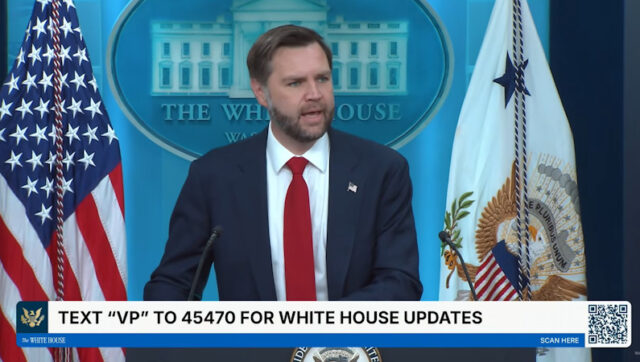
Faced with an escalating mutiny from traditional allies, Vice President JD Vance has aggressively stepped into the spotlight as the primary architect and public face of the peace agreement. Alongside Special Envoy Steve Witkoff and Jared Kushner, Vance was trusted by President Trump to spearhead the backchannel negotiations in Geneva, and he has spent the last 48 hours engaged in a relentless defensive media tour across major networks, including ABC, CBS, NBC, and Fox News.
                  THE TRUMP-VANCE MIDDLE EAST STRATEGIC SHIFT

   [ Kinetic Phase: Operation Epic Fury ] -> Launched Feb 28, 2026
                     │
                     ▼
   [ Economic De-escalation Framework ]  -> MoU Signed June 14, 2026
                     │
                     ├─► Strategic Goal: Reopen Strait of Hormuz & lower oil prices
                     ├─► White House Defense: Zero U.S. taxpayer dollars spent
                     └─► Diplomatic Reality: Deepening rift with regional allies
During an extensive, hour-long White House press briefing, Vance dismissed the mounting domestic criticisms as political theater, with his spokesperson, Luke Schroeder, issuing a statement calling it “unfortunate that some Republicans are attempting to undermine the President’s efforts to achieve peace.” Vance has centered his economic defense on the immediate relief the deal brings to global markets, noting that crude oil prices have already plummeted from a wartime high of $126 a barrel down to roughly $80 a barrel.
Crucially, Vance has pushed back against claims that the U.S. is writing a blank check to a state sponsor of terrorism. “We’re not giving them American money,” Vance stated flatly during his media blitz. “Not a single dollar of American money will go to Iran.” Instead, Vance argues that a new, war-weary generation of Iranian leaders is actively looking to “turn over a new leaf” and move past four decades of international isolation.
A Shocking Public Rift with Israel
The most volatile aspect of the escalating controversy is the severe, public fracturing of the U.S.-Israel alliance. Although the two nations closely coordinated the opening months of the war, deep structural disagreements emerged after a preliminary ceasefire in April. While Israeli Prime Minister Benjamin Netanyahu pushed to sustain an aggressive military campaign to permanently neutralize regional threats, President Trump moved rapidly to wind down a conflict that was highly unpopular with the American electorate and destabilizing to the global economy.
Tensions reached a boiling point over the inclusion of Southern Lebanon in the permanent ceasefire agreement. Israeli forces have mounted a sweeping, high-casualty ground offensive in the region, occupying a significant swath of territory. Netanyahu’s cabinet has fiercely resisted halting operations there, and Israeli officials have expressed “deep concern” that Trump’s envoys essentially sidelined them during the Geneva talks. Some Israeli media outlets and hardline politicians went so far as to accuse Kushner and Witkoff of selling out Israel’s national security for financial and diplomatic gain.
In response to these accusations, Vice President Vance used his White House briefing to launch an astonishingly candid attack on members of the Israeli government. Dropping standard diplomatic pleasantries, Vance delivered a blunt reality check regarding Israel’s global isolation and its total dependence on American military largesse.
“My message to them would be twofold,” Vance told a room of reporters. “Number one: Donald J. Trump is the only head of state in the entire world who is sympathetic to the nation of Israel at this moment in time. If I was in the cabinet of the Israeli government, I might not be attacking the only powerful ally that I have anywhere left in the entire world.”
Vance went on to remind the rebelling Israeli ministers that the very weapons keeping their country safe are tethered to American taxpayers. “Two-thirds of the defensive weapons that have protected Israel have been built by American hands and paid for by American tax dollars,” Vance noted sharply, adding that disgruntled politicians in Jerusalem desperately need to “wake up and smell the reality of the situation.”
Netanyahu’s Defiance and the Uncertain Path Forward
While Prime Minister Netanyahu has carefully avoided criticizing President Trump by name—publicly noting the importance of maintaining “the important relationship with our American friends who fought shoulder to shoulder with us”—his policy actions are directly threatening to collapse the fragile framework.
Breaking his silence on the matter, Netanyahu stated definitively that the Israeli military intends to remain entrenched in its occupied zone in southern Lebanon “as long as Israel’s security needs require it.” This stance directly violates the core tenets of the signed MoU, which demands an immediate, permanent cessation of military operations across all fronts, including Lebanon. Furthermore, far-right elements within Netanyahu’s coalition, such as National Security Minister Itamar Ben-Gvir, have openly declared that Israel is completely unbound by the text of Trump’s agreement.
With Israel refusing to cede its ground gains in Lebanon, Iran demanding immediate sanctions relief, and an increasingly vocal block of GOP senators threatening to block any finalized treaty, the Trump administration finds itself fighting a grueling two-front political war. In trying to rapidly close the book on a volatile foreign conflict, the White House has inadvertently opened a deep, unpredictable ideological chasm within its own party and pushed its closest Middle Eastern ally to the brink of an open diplomatic revolt.
Sources and Links:
- Time: ‘Wake Up and Smell the Reality’: JD Vance Warns Israel to Abide by Trump’s Iran Deal
- The Guardian: JD Vance tells Iran deal critics in Israel: Trump is your only ally left in the world
- The Guardian: US and Iran reach framework peace deal to end war
- Associated Press (AP News): JD Vance slams Israeli officials who criticized Iran deal, deepening rift between allies
- The Jerusalem Post: JD Vance pushes back on Israeli criticism of US-Iran MoU
- WRAL / Associated Press: Vance, skeptical of foreign wars, becomes the face of Trump’s Iran war deal
Disclaimer
Artificial Intelligence Disclosure & Legal Disclaimer
AI Content Policy.
To provide our readers with timely and comprehensive coverage, South Florida Reporter uses artificial intelligence (AI) to assist in producing certain articles and visual content.
Articles: AI may be used to assist in research, structural drafting, or data analysis. All AI-assisted text is reviewed and edited by our team to ensure accuracy and adherence to our editorial standards.
Images: Any imagery generated or significantly altered by AI is clearly marked with a disclaimer or watermark to distinguish it from traditional photography or editorial illustrations.
General Disclaimer
The information contained in South Florida Reporter is for general information purposes only.
South Florida Reporter assumes no responsibility for errors or omissions in the contents of the Service. In no event shall South Florida Reporter be liable for any special, direct, indirect, consequential, or incidental damages or any damages whatsoever, whether in an action of contract, negligence or other tort, arising out of or in connection with the use of the Service or the contents of the Service.
The Company reserves the right to make additions, deletions, or modifications to the contents of the Service at any time without prior notice. The Company does not warrant that the Service is free of viruses or other harmful components.