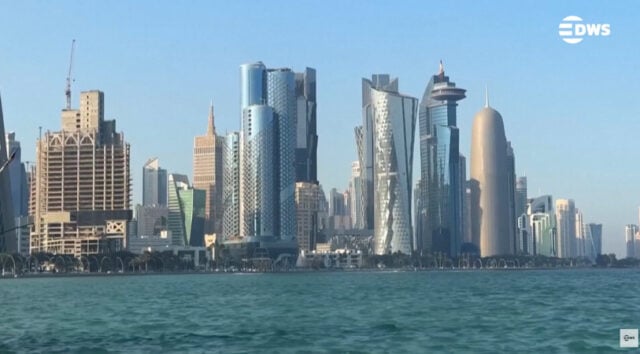
The diplomatic spotlight is shifting directly back to the Persian Gulf. Following months of intense geopolitical friction, missile exchanges, and shipping disruptions that brought global energy markets to the brink, the United States and Iran are preparing to sit down for high-stakes technical negotiations. The destination for these critical talks is Doha, Qatar—a glittering metropolis that has transformed itself into the essential neutral ground of modern Middle Eastern diplomacy.
With senior U.S. representatives including Jared Kushner and special envoy Steve Witkoff traveling to Doha, the world is watching to see if this temporary stand-down can evolve into a durable peace agreement.
The Road to Doha: How We Got Here
The upcoming meetings follow an incredibly turbulent sequence of events. Earlier this year, a sharp escalation between Washington and Tehran severely disrupted maritime traffic through the Strait of Hormuz, a vital global trade corridor responsible for the transit of roughly a fifth of the world’s petroleum. Following retaliatory airstrikes and threats to total regional energy supplies, international mediators launched an all-out effort to pull both nations back from the edge of a full-scale conflict.

An interim deal struck earlier this month established a critical 60-day window for broader negotiations. Under this framework, both sides agreed to a temporary stand-down, allowing commercial shipping vessels to once again “move freely” through the Strait of Hormuz. The baseline agreements require Tehran to dilute its stockpile of highly enriched uranium in exchange for the temporary waiver of certain U.S.-backed economic sanctions.
However, the path forward remains highly delicate. While U.S. President Donald Trump announced that Iran had requested the meetings to resume, Iranian officials have publicly downplayed expectations, with senior negotiators emphasizing that the immediate focus is testing the implementation of existing commitments rather than rushing into a final treaty. Adding to the tension is a public dispute over financial assets: Iranian President Masoud Pezeshkian claimed that $6 billion of frozen Iranian funds held in Qatari financial institutions would be released as a prerequisite for the talks, a claim that U.S. and Qatari officials have not yet publicly verified.
Why Doha? The Architecture of Qatari Diplomacy
To understand why these critical negotiations are taking place in Qatar, one must look at the unique foreign policy strategy that Doha has spent decades cultivating. For a relatively small peninsula jutting into the Persian Gulf, Qatar wields an outsized amount of diplomatic influence, often described by political scientists as the ultimate practitioner of “soft diplomacy.”
Mediation is not merely a political choice for Qatar; it is a core structural pillar of its identity. Article 7 of the Qatari Constitution explicitly mandates the peaceful resolution of international disputes as a primary foreign policy objective. This constitutional directive has driven the country to build a vast institutional network dedicated to conflict resolution, including specialized research bodies like the Doha Institute for Graduate Studies and the Qatar International Academy for Security Studies.
Over the past two decades, Doha has repeatedly served as the bridge between actors who refuse to speak to one another directly. The city famously hosted the complex, multi-year negotiations between the United States and the Taliban that culminated in the 2020 troop withdrawal agreement. It has hosted the political offices of various regional factions, facilitated delicate prisoner exchanges between Russia and Ukraine, and stepped in to manage volatile hostage crises across the globe.
By maintaining open communication channels with Western powers, regional heavyweights, and non-state actors alike, Doha offers a secure, tightly controlled environment where bitter adversaries can exchange messages without the political fallout of direct, public recognition.
A Disputed Neutrality
Despite its track record, Qatar’s role as a mediator is not without steep regional controversy. Critics argue that Doha’s willingness to engage with isolated or radical political factions crosses the line from objective mediation into active indulgence.
Historically, this tension culminated in the 2017 regional boycott, during which neighboring Arab states—including Saudi Arabia, the UAE, Bahrain, and Egypt—severed diplomatic ties with Qatar over allegations of regional destabilization and its relationships with figures in Iran and other Islamist movements. While those formal ties have since been restored, skepticism remains. Some regional observers and international critics argue that Qatar uses its massive wealth and diplomatic apparatus to shield destabilizing forces from the consequences of their actions, questioning whether any state can remain an entirely “honest broker” when balancing such deeply conflicting alliances.
Yet, for Washington and Tehran, the practical utility of Doha’s infrastructure outweighs the political optics. When traditional diplomatic channels are completely severed, a trusted intermediary with a secure operational footprint is an absolute necessity.
What is on the Table in the Technical Talks?
The upcoming round of meetings in Doha is technically classified as a lower-level diplomatic working group, designed to hammer out the dense logistics required before top leaders can consider signing a comprehensive treaty. The agenda is packed with complex, technical hurdles:
- Maritime Security: Establishing permanent protocols to guarantee the unhindered flow of commercial trade through the Strait of Hormuz, preventing future flashpoints between naval forces.
- Nuclear Compliance: Verifying the precise parameters and timelines under which Iran will dilute its enriched uranium stockpiles to satisfy international non-proliferation standards.
- Sanctions Relief and Asset Verification: Resolving the dispute over the status of frozen assets, determining exactly how and when economic relief will be administered if compliance metrics are successfully met.
While Pakistan emerged as a critical backchannel facilitator during the intense military exchange earlier this spring, the transition to Doha represents a shift toward formalizing the regulatory details of the framework.
The Stakes for the Middle East
The success or failure of the Doha working groups will reverberate far beyond Washington and Tehran. A stable, long-term agreement would provide immense relief to global energy markets, lowering shipping insurance premiums and stabilizing fuel costs worldwide. For the Middle East, it offers a temporary reprieve from a broader regional escalation that threatens to draw in neighboring states.
However, if the technical talks stall in the coming days, the fragile 60-day clock will continue to tick down, raising the very real prospect of a return to active hostilities. In the high-stakes theater of global diplomacy, Doha once again finds itself acting as the vital pressure valve keeping a volatile region from boiling over.
Sources and Links:
- CBS News: Live Updates: Path forward for U.S.-Iran talks unclear after weekend strikes
- Fox News: US says ships can ‘move freely’ in Strait of Hormuz amid ceasefire with Iran
- PBS NewsHour: Trump says Iran has requested a meeting with U.S., but Iranian officials say nothing has been scheduled
- Associated Press (AP News): Mediators worked through threats and strikes to broker the US-Iran deal, and challenges remain
- Qatar Ministry of Foreign Affairs (MOFA): Qatar’s Mediation Efforts
- Wikipedia: Qatar as a mediator in conflict
- The Jerusalem Post: Qatar can no longer hide behind the mask of mediation – opinion
Disclaimer
Artificial Intelligence Disclosure & Legal Disclaimer
AI Content Policy.
To provide our readers with timely and comprehensive coverage, South Florida Reporter uses artificial intelligence (AI) to assist in producing certain articles and visual content.
Articles: AI may be used to assist in research, structural drafting, or data analysis. All AI-assisted text is reviewed and edited by our team to ensure accuracy and adherence to our editorial standards.
Images: Any imagery generated or significantly altered by AI is clearly marked with a disclaimer or watermark to distinguish it from traditional photography or editorial illustrations.
General Disclaimer
The information contained in South Florida Reporter is for general information purposes only.
South Florida Reporter assumes no responsibility for errors or omissions in the contents of the Service. In no event shall South Florida Reporter be liable for any special, direct, indirect, consequential, or incidental damages or any damages whatsoever, whether in an action of contract, negligence or other tort, arising out of or in connection with the use of the Service or the contents of the Service.
The Company reserves the right to make additions, deletions, or modifications to the contents of the Service at any time without prior notice. The Company does not warrant that the Service is free of viruses or other harmful components.