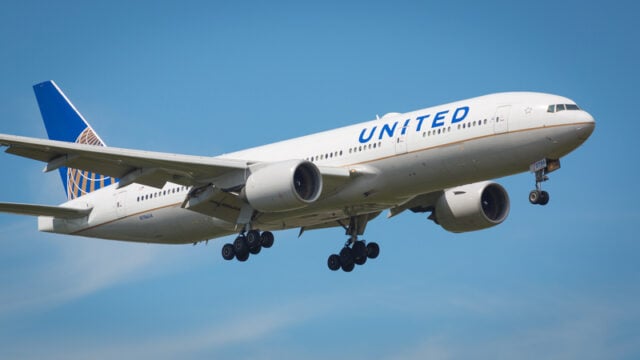
The global aviation industry stood at a standstill this week following reports of a potential tectonic shift in the competitive landscape. In a move that has sent shockwaves through Wall Street, regulatory corridors in Washington, and the terminals of major airports worldwide, the Chief Executive Officer of United Airlines has reportedly floated a proposal to combine with its primary rival, American Airlines.
According to a Bloomberg report, “United CEO has pitched possible combination with rival American,” signaling a potential end to the current “Big Three” era of American aviation and the birth of a singular, unprecedented domestic and international powerhouse. If realized, this merger would represent the largest consolidation in the history of commercial flight, fundamentally altering how the world travels.
The Genesis of a Mega-Merger
The pitch, while preliminary, comes at a time of extreme volatility and transformation for the airline sector. For decades, the industry has consolidated into the current landscape dominated by United, American, and Delta. However, as operational costs soar, labor shortages persist, and the push for decarbonization requires billions in new capital, the logic of “scale at all costs” has once again come to the fore.
Industry insiders suggest that the United CEO’s outreach to American Airlines is driven by a desire to create an entity with an unassailable network. By combining United’s strong presence in transatlantic routes and its West Coast gateways with American’s dominance in the Sun Belt and its extensive Latin American network, the resulting carrier would essentially control the most lucrative corridors in the Western Hemisphere.

Bloomberg notes that the discussions are in the earliest stages, characterized more as a strategic “pitch” rather than a formal board-approved offer. Nonetheless, the mere suggestion that two of the world’s largest airlines might merge has sparked an immediate debate over the future of market competition and the resilience of the aviation ecosystem.
Strategic Logic: Efficiency vs. Dominance
From a purely financial perspective, the merger of United and American offers a compelling, albeit controversial, narrative. The synergies involved would be measured in the billions. A combined fleet would create significant leverage in negotiations with aircraft manufacturers such as Boeing and Airbus. Furthermore, consolidating ground operations, maintenance facilities, and back-office technology could lead to a leaner, more profitable enterprise.
However, the primary driver appears to be network optimization. United and American currently compete head-to-head on thousands of routes. In a merged scenario, the “redundant” capacity could be shifted to underserved markets or used to increase frequency on high-demand business routes. For the carriers, this means higher load factors and higher yields. For the consumer, however, the narrative is often different.
The “Big Three” have long enjoyed a comfortable oligopoly, but removing one of them would leave only Delta Air Lines as a comparable peer. This would leave the U.S. market with two “mega-carriers” and a handful of low-cost alternatives like Southwest, JetBlue, and Spirit. Analysts argue that such a concentration of power would inevitably lead to higher ticket prices, as the competitive pressure to undercut fares on domestic routes would vanish.
The Regulatory Minefield
While the business case may have its proponents, the regulatory path for a United-American merger is fraught with peril. The Department of Justice (DOJ) and the Department of Transportation (DOT) have shown increasing hostility toward consolidation in recent years. The recent blocking of the JetBlue-Spirit merger and the dissolution of the Northeast Alliance between JetBlue and American Airlines serve as stark reminders that the federal government is currently in no mood to permit further concentration in the skies.
A combination of United and American would likely face “the mother of all antitrust battles.” Regulators would look at hub dominance in cities like Chicago, where both airlines maintain massive operations at O’Hare International Airport. A combined entity would essentially own the airport, making it nearly impossible for new entrants to secure gates or slots. Similar concerns would arise in Dallas/Fort Worth, Charlotte, Newark, and San Francisco.
To gain approval, the airlines would likely have to divest hundreds of slots and dozens of gates to competitors—a price that might undermine the very “synergies” the merger was intended to create. Moreover, the political optics of a massive airline merger during a period of heightened sensitivity toward consumer costs make the proposal a difficult sell for any administration.
Labor and Integration: The Human Element
Beyond the legal and financial hurdles lies the monumental task of cultural and operational integration. History is littered with the carcasses of failed or “painful” airline mergers. The 2010 merger between United and Continental was plagued by technology glitches and labor unrest for years. Similarly, American’s merger with US Airways required a decade of work to fully align seniority lists and work rules.
Combining United and American would involve merging two of the world’s largest workforces, each with its own deeply entrenched corporate culture and powerful labor unions. Integrating pilot seniority lists is notoriously the most volatile aspect of any airline deal. A disagreement over who gets to fly the largest wide-body jets on the most prestigious routes can lead to work slowdowns, strikes, and a total collapse in morale.
Flight attendants, mechanics, and ground crews would also need to be brought under a single contract. In the current labor market, where pilots and crews have significant leverage, the cost of “buying” labor’s support for a merger would be astronomical. The combined company would likely face significantly higher wage bills immediately upon closing the deal, eating into the projected cost savings.
Impact on the Passenger Experience
For the frequent flyer, a United-American merger presents a dual-edged sword. On one hand, the integration of the MileagePlus and AAdvantage programs would create the world’s most powerful loyalty currency. A traveler could earn miles on a flight from a small regional airport in Texas and redeem them for a Polaris business class seat to Tokyo. The network’s breadth would be unmatched, offering “one-stop” access to almost anywhere in the world.
On the other hand, the loss of competition is rarely a win for the passenger’s wallet. When airlines merge, they often “rationalize” their hubs. This can lead to reduced service in mid-sized cities and fewer non-stop options as the airline funnels more traffic through its primary hubs. Furthermore, with fewer players in the market, the incentive to invest in customer service or premium cabin innovations may wane.
There is also the “too big to fail” concern. A technical glitch at a combined United-American would not just be a corporate crisis; it would be a national security issue. A ground stop for such a massive entity would effectively freeze a third of the nation’s air traffic, causing a ripple effect that could take days or weeks to resolve.
The Global Competitive Landscape
The United CEO’s pitch must also be viewed through the lens of global competition. While the U.S. domestic market is consolidated, the international stage is becoming increasingly competitive. State-backed carriers in the Middle East and rapidly expanding airlines in Asia are putting pressure on U.S. carriers’ long-haul profitability.
A combined United and American would be a global “flag carrier” in all but name, capable of competing more effectively with the likes of Emirates, Qatar Airways, and Singapore Airlines. By pooling resources, the combined carrier could invest more heavily in the next generation of ultra-long-haul aircraft and sustainable aviation fuels, positioning the American aviation industry as a leader in the 21st-century green economy.
Conclusion: A Vision or a Pipe Dream?
The Bloomberg report that United CEO has pitched this combination suggests a leader thinking in decades, not quarters. It is a bold, perhaps audacious, attempt to preempt the next phase of industry evolution. However, the obstacles are so significant that many analysts view the proposal as a “non-starter” in the current political climate.
If the pitch moves toward a formal offer, it will spark a debate that touches on every aspect of American life: the price of a family vacation, the rights of unionized workers, the limits of corporate power, and the role of the government in regulating essential infrastructure. For now, the “Big Three” remain three, but the conversation has shifted. The possibility of a “Big Two” is no longer just a theoretical exercise in an MBA classroom; it is a proposal currently sitting on a boardroom table.
As the industry watches for American Airlines’ response, one thing is certain: the status quo in the skies is more fragile than it appears. Whether this pitch leads to a merger or serves as a catalyst for other types of partnerships, the trajectory of global flight has been permanently altered by this week’s revelations.
Sources:
Disclaimer
Artificial Intelligence Disclosure & Legal Disclaimer
AI Content Policy.
To provide our readers with timely and comprehensive coverage, South Florida Reporter uses artificial intelligence (AI) to assist in producing certain articles and visual content.
Articles: AI may be used to assist in research, structural drafting, or data analysis. All AI-assisted text is reviewed and edited by our team to ensure accuracy and adherence to our editorial standards.
Images: Any imagery generated or significantly altered by AI is clearly marked with a disclaimer or watermark to distinguish it from traditional photography or editorial illustrations.
General Disclaimer
The information contained in South Florida Reporter is for general information purposes only.
South Florida Reporter assumes no responsibility for errors or omissions in the contents of the Service. In no event shall South Florida Reporter be liable for any special, direct, indirect, consequential, or incidental damages or any damages whatsoever, whether in an action of contract, negligence or other tort, arising out of or in connection with the use of the Service or the contents of the Service.
The Company reserves the right to make additions, deletions, or modifications to the contents of the Service at any time without prior notice. The Company does not warrant that the Service is free of viruses or other harmful components.