As the sun rose over the Persian Gulf on Wednesday, April 15, 2026, the conflict that began on February 28 entered a new, more claustrophobic phase. What started as a series of high-intensity kinetic strikes has transformed into a comprehensive siege of the Iranian state. Following the collapse of marathon ceasefire negotiations in Islamabad over the weekend, the Trump administration has shifted from tactical engagement to a strategy of total economic and physical strangulation.
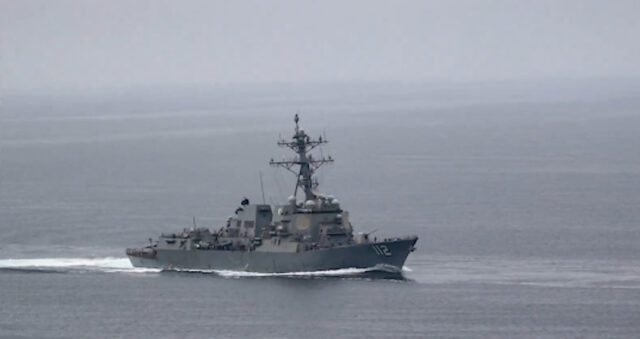
Thousands of U.S. service members, including 5,000 Sailors and Marines from the Abraham Lincoln Carrier Strike Group, are executing the mission to blockade ships entering and departing Iranian ports. 📽 of USS Abraham Lincoln (CVN 72) conducting flight operations in the Arabian… pic.twitter.com/Q07nAosJyq
— U.S. Central Command (@CENTCOM) April 15, 2026
In a flurry of activity that has sent shockwaves through global capitals, the White House has orchestrated a three-pronged offensive: a naval blockade enforced by U.S. Central Command (CENTCOM), a devastating “financial attack” designed to sever the remaining arteries of the Iranian economy, and a high-stakes geopolitical maneuver involving Beijing. Despite the escalating pressure, the administration maintains that the door to diplomacy remains ajar, signaling that a second meeting between U.S. and Iranian officials is not only possible but likely to occur within the week.
CENTCOM’s Warning: A Notice to All Mariners

On Monday, April 13, at 10:00 a.m. ET, U.S. Central Command officially initiated what the President described as a “brutal” naval blockade. The announcement, transmitted to mariners worldwide and disseminated via social media, represents the most significant maritime enforcement action since the Cuban Missile Crisis.
The CENTCOM statement was clear:
“The blockade will be enforced impartially against vessels of all nations entering or departing Iranian ports and coastal areas, including all Iranian ports on the Arabian Gulf and Gulf of Oman. CENTCOM forces will not impede freedom of navigation for vessels transiting the Strait of Hormuz to and from non-Iranian ports.”
However, the President’s own rhetoric added a layer of lethal intent to the official military directive. Writing on Truth Social, Trump warned that any Iranian “rapid strike” ships or merchant vessels attempting to breach the perimeter would be “ELIMINATED immediately,” citing the high-efficiency “kill systems” used in counter-narcotics operations.
By Wednesday, April 15, CENTCOM reported that six merchant vessels had already complied with directions to return to Iranian ports in the Gulf of Oman. While humanitarian shipments are technically exempt, the complexity of determining “neutral” status has led to a virtual standstill in traffic. The blockade has no defined geographic boundary, allowing the U.S. Navy to interdict vessels almost anywhere in international waters if their final destination is deemed to be an Iranian port.
The “Financial Attack”: Beyond Traditional Sanctions
Parallel to the physical blockade, the Trump administration has launched what officials are calling a “financial attack” on the Islamic Republic. This moves beyond the “Maximum Pressure” campaign of the past, aiming for the total decapitalization of the Iranian regime.
The strategy involves two primary components:
- Sovereign Liquidity Freeze: A global effort to freeze any remaining Iranian assets held in third-country banks, including those in jurisdictions that had previously resisted U.S. pressure.
- Infrastructure Targeting: The President has threatened to “completely obliterate” power plants, desalination facilities, and oil wells if a deal is not reached “shortly.” This threat to civilian-adjacent infrastructure serves as a financial deterrent, signaling that the cost of reconstruction will be so high as to make the Iranian state functionally insolvent.
Analysts suggest this “financial attack” is intended to induce a domestic crisis within Iran, as the population faces the prospect of a cashless economy and failing basic services. The aim is to force the leadership in Tehran to return to the negotiating table with significantly lowered expectations.
The China Card: Halted Weapons and Geopolitical Detente
In perhaps the most surprising development of the week, President Trump announced on Wednesday that Beijing has agreed to cease weapon shipments to Iran. The claim comes at a critical time, as U.S. intelligence recently reported that China was preparing to deliver advanced air defense systems, including MANPADS, to the Iranian military.
“China is very happy that I am permanently opening the Strait of Hormuz. I am doing it for them, also — and the World,” Trump stated. He claimed that President Xi Jinping has “agreed not to send weapons to Iran” and anticipated a “big, fat hug” when the two leaders meet in Beijing next month.
The diplomatic shift appears to be a “detente” aimed at preventing the Iran war from spiraling into a broader global conflict. China, as Iran’s largest oil purchaser, was initially infuriated by the blockade. However, the Trump administration seems to have leveraged the promise of a “permanently open” Strait—under U.S. guarantee—to secure Chinese neutrality. If true, this agreement removes Iran’s most significant source of advanced military resupply.
Diplomacy in the Shadow of War: The Second Meeting
Despite the “elimination” warnings and financial strikes, the White House is not walking away from the table. Vice President J.D. Vance, who has become a key voice in the administration’s foreign policy, indicated that the “big question” is whether the Iranians will show enough “flexibility” in a second round of talks.
The first round in Islamabad, mediated by Pakistan’s Field Marshal Asim Munir, hit an impasse over the timeline for uranium enrichment suspension. The U.S. demanded a 20-year freeze, while Iran offered only a 5-year freeze. However, sources close to the negotiations suggest that both sides are keeping the window of April 17 through April 19 open for a follow-up session.
The U.S. State Department continues to affirm that a “second meeting” is the goal before the current fragile ceasefire—set to expire on April 22—runs out. Islamabad remains the most likely venue, though Turkey has also offered to host. The administration’s dual-track approach—escalating military pressure while maintaining a direct line of communication—is a hallmark of the current “coercive diplomacy.”
Market Turmoil and the Price at the Pump
The global economy continues to reel from the volatility of the 2026 Iran war. After the initial shock in late February and March, when the Dow Jones Industrial Average plummeted 10%, markets have shown a remarkable resilience in April.
The Stock Market and Futures
The Dow rallied in early April on hopes of a de-escalation, briefly returning to positive territory for the year. However, the announcement of the blockade has introduced a new “fear premium” into futures markets. Investors are weighing the potential for a “quick win” via blockade against the risk of a long-term global recession. While the market rallied on Wednesday on the news of China’s cooperation, volatility remains extreme.
Crude Oil Prices
Crude oil remains the primary barometer of the conflict. In March, Brent crude averaged $100 per barrel. Following the recent ceasefire talks, prices dipped to the $80–$82 range. However, the restriction of traffic through the Strait of Hormuz has led the International Energy Agency to warn of significant supply disruptions. If the blockade persists without a diplomatic breakthrough, analysts predict prices will surge past $120 by May.
Gas Prices
For the average American, the war is most visible at the gas station. Since the conflict began on February 28, the average price of gasoline in the United States has risen by $1.16 per gallon. In many states, prices are rapidly approaching the $5.00 per gallon mark. The daily rise of 5 to 10 cents per gallon throughout March and April has placed immense political pressure on the White House to find a resolution.
Sources Used and Links:
- Institute for the Study of War (ISW): “Iran Update Special Report, April 14, 2026” – https://understandingwar.org/research/middle-east/iran-update-special-report-april-14-2026/
- Council on Foreign Relations (CFR): “Coercing Iran: Why Trump’s Hormuz Blockade Has a Short Fuse” – https://www.cfr.org/articles/coercing-iran-why-trumps-hormuz-blockade-has-a-short-fuse
- Anadolu Ajansi: “Trump says China agreed not to supply weapons to Iran, vows to permanently reopen Strait of Hormuz” – https://www.aa.com.tr/en/world/trump-says-china-agreed-not-to-supply-weapons-to-iran-vows-to-permanently-reopen-strait-of-hormuz/3906558
- The Washington Post: “Trump says China has agreed not to send weapons to Iran” – https://www.washingtonpost.com/national-security/2026/04/15/trump-china-iran/
- The Guardian: “US-Iran peace talks could resume in next two days, Trump says” – https://www.theguardian.com/world/2026/apr/14/us-iran-peace-talks-could-resume-in-next-two-days-trump-says
- The Guardian: “$30m an hour: big oil reaping huge war windfall from consumers” – https://www.theguardian.com/environment/2026/apr/15/big-oil-huge-war-windfall-consumers
- Wikipedia: “2026 Iran war fuel crisis” – https://en.wikipedia.org/wiki/2026_Iran_war_fuel_crisis
- The Motley Fool: “The Dow Is Back in Positive Territory for 2026” – https://www.fool.com/investing/2026/04/15/dow-positive-territory-2026-big-picture-volatility/
- PBS NewsHour: “Trump issues new threat to Iran’s energy infrastructure” – https://www.pbs.org/newshour/world/trump-issues-new-threat-to-irans-energy-infrastructure-if-a-ceasefire-isnt-reached-shortly
- The Straits Times: “US, Iran still see path to peace amid Hormuz blockade” – https://www.straitstimes.com/world/middle-east/us-and-iran-mull-second-meeting-in-bid-to-revive-ceasefire-talks
- TIME: “Officials Considering Second Round of U.S.-Iran Talks” – https://time.com/article/2026/04/14/us-iran-talks-war-ceasefire-trump-nuclear-enrichment-strait-hormuz/
- The Economic Times: “Trump says China ‘won’t send weapons to Iran,’ ‘very happy’ with Hormuz opening” – https://m.economictimes.com/news/international/world-news/trump-says-china-wont-send-weapons-to-iran-very-happy-with-hormuz-opening/articleshow/130283033.cms
Disclaimer
Artificial Intelligence Disclosure & Legal Disclaimer
AI Content Policy.
To provide our readers with timely and comprehensive coverage, South Florida Reporter uses artificial intelligence (AI) to assist in producing certain articles and visual content.
Articles: AI may be used to assist in research, structural drafting, or data analysis. All AI-assisted text is reviewed and edited by our team to ensure accuracy and adherence to our editorial standards.
Images: Any imagery generated or significantly altered by AI is clearly marked with a disclaimer or watermark to distinguish it from traditional photography or editorial illustrations.
General Disclaimer
The information contained in South Florida Reporter is for general information purposes only.
South Florida Reporter assumes no responsibility for errors or omissions in the contents of the Service. In no event shall South Florida Reporter be liable for any special, direct, indirect, consequential, or incidental damages or any damages whatsoever, whether in an action of contract, negligence or other tort, arising out of or in connection with the use of the Service or the contents of the Service.
The Company reserves the right to make additions, deletions, or modifications to the contents of the Service at any time without prior notice. The Company does not warrant that the Service is free of viruses or other harmful components.