The Internet of Things (IoT) is one of the fastest-growing areas in the IT industry today. Analysts predict $1.1 trillion worldwide will be spent on IoT in 2023. The growth rate in this area is evidenced by the fact that in 2021, users paid for IoT devices and related software solutions “only” 123 billion dollars.
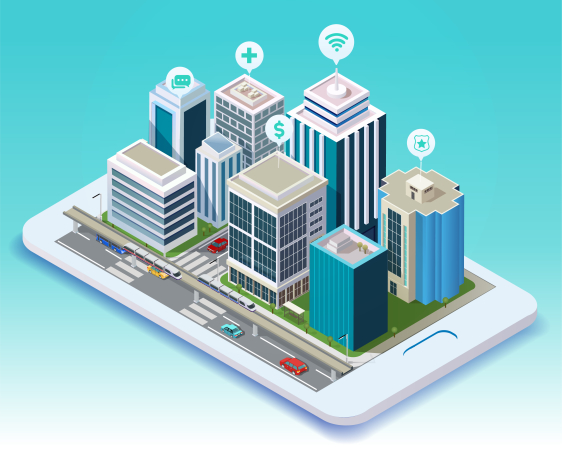
The sphere of application of the Internet of Things has long gone beyond smart homes. IoT is now the foundation for entire smart cities. So far, the amounts circulating in such cities are pretty comparable to the average in other IT sectors — $129.02 billion. However, statistics point to the exponential growth of this market.
High demand — high criteria
In this context, it is impossible to overestimate the role of a high-tech software testing outsourcing company, which is an essential and integral element in the process of bringing any IoT element to the market.
The growing demand for IoT products also gives rise to high user requirements for their quality. The success of any product in this market is impossible without the most comprehensive pre-release testing in authorized quality assurance agencies. Moreover, any company that neglects this stage is doomed to a quick and utterly predictable collapse.

It’s necessary to consider that today IoT devices all over the world operate on more than 620 platforms, and the technological chain of any device included on the Internet of Things can consist of dozens or even hundreds of the most diverse — hardware and software — links. Obviously, in such conditions, the role of experienced QA engineers becomes no less significant than that of developers and designers.
IoT product testing has some fundamental differences from the usual software testing. Therefore, when starting a conversation on this topic, it is essential to give an accurate usability testing definition for each stage of the quality assurance process.
Step by step
The specificity of testing methods is due mainly to the fact that any product of the Internet of Things, regardless of complexity, consists of three main blocks:
- The device itself, which is, in fact, a terminal.
- Cloud or server. The prerequisite here is a stable wireless connection, ideally supporting different protocols.
- Device’s management software.
The experience of leading QA companies shows that the main directions of testing an IoT product are as follows:
- Security
- Functionality
- Since IoT devices interact with many other hardware and software elements that make up a smart home or smart city, the issue of compatibility comes to the fore. The different platforms and operating systems in the shared network require the highest level of experience and qualifications from QA engineers.
- The convenience of use
- As the Internet of Things develops, more and more users and devices are connected to public networks. Scalability testing allows quality assurance agencies to test how a unit can handle quantitative and qualitative changes without sacrificing stability and performance.
- Fault tolerance
- Interaction with networks (including connections via various protocols)
- Compliance with regulations (generally accepted in a country or in the global community, for example, in the European Union, medical and other rules for the safe use of devices)
- Pilot testing. Testing the device’s performance in natural conditions by teams of testers.
- Checking for updates. At this stage of software testing projects, installing software updates and its clarification.
Of course, since the vast majority of IoT devices are mobile, the importance of Mobile Testing is one of the critical aspects in this area.
IoT — special requirements for mobility
Here, a special dashboard is used, which simulates the environment where the regular use of the product is supposed. All tests on this bench are usually carried out in an automatic mode.
The variety of obvious and latent vulnerabilities, which, in comparison with conventional software, in the case of IoT devices, can grow exponentially, requires high-tech equipment from the testing outsourcing company.
Therefore, only established market leaders such as TestFort, for instance, can guarantee a comprehensive device validation before launching it on the market.
If earlier the conversation about mobile IoT devices meant mainly fitness bracelets, nowadays, we are talking about entire infrastructure systems. For example, about the automatic monitoring of the patient’s condition and directly interacting with hospital services.
The necessary condition
Since the mobile use of IoT devices implies interaction with a lot of other elements of the Internet of Things universe, the risk of failure at any stage increases mono-fold. Moreover, it is complicated to establish the actual cause of the loss in such cases and even a specific bottleneck in the system. That is why the combined (both automated and manual) testing of IoT devices by experienced experts from a proven software testing outsourcing company is of paramount importance.
Disclaimer
Artificial Intelligence Disclosure & Legal Disclaimer
AI Content Policy.
To provide our readers with timely and comprehensive coverage, South Florida Reporter uses artificial intelligence (AI) to assist in producing certain articles and visual content.
Articles: AI may be used to assist in research, structural drafting, or data analysis. All AI-assisted text is reviewed and edited by our team to ensure accuracy and adherence to our editorial standards.
Images: Any imagery generated or significantly altered by AI is clearly marked with a disclaimer or watermark to distinguish it from traditional photography or editorial illustrations.
General Disclaimer
The information contained in South Florida Reporter is for general information purposes only.
South Florida Reporter assumes no responsibility for errors or omissions in the contents of the Service. In no event shall South Florida Reporter be liable for any special, direct, indirect, consequential, or incidental damages or any damages whatsoever, whether in an action of contract, negligence or other tort, arising out of or in connection with the use of the Service or the contents of the Service.
The Company reserves the right to make additions, deletions, or modifications to the contents of the Service at any time without prior notice. The Company does not warrant that the Service is free of viruses or other harmful components.