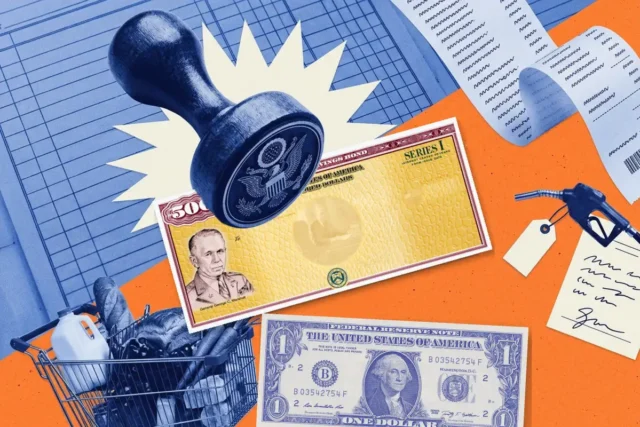
Series I Savings Bonds, aka I bonds, haven’t been this attractive for 20 years, and that’s great news if you’re looking for a safe way to beat inflation.
The U.S. Department of the Treasury set the new combined rate for I bonds to 5.51% on Friday, up from the previous rate of 4.26%. The new rate of return is in effect for all I bonds purchased until the end of April 2027.
The 1.25-point increase stems from elevated inflation over the past six months largely due to the war in Iran. The government-issued bonds are specifically designed to protect your savings from inflation, hence the “I” in I bonds. So when inflation increases, so do I bond rates.
This namesake perk is possible because the headline earnings rate is a combination of two separate rates.

At 5.51%, the new combined rate is the highest since November 2022. At the height of the pandemic-era inflation crisis, I bond rates hit 9.62% for the first time ever. While overall rates have since come down, the I bond’s lesser-known fixed rate now sits at 1.4%, which it has not reached since November 2006.
I bonds have an annual purchase limit of $10,000, and the funds cannot be withdrawn for the first year. Withdrawals within five years incur a three-month interest penalty.
What to know about new I bond rates
The new 5.51% rate is known as the combined or composite rate. This rate of return is guaranteed for six months as long as you make the purchase before the end of April 2027. The six-month clock starts the month you buy.
The combined rate has two key parts.
One rate changes every six months based on inflation trends during that period; it’s called the variable rate. This rate is predictable because it is always determined by inflation over the preceding six months, or in this case, from March to September.
The other, lesser-known rate is called the fixed rate. It is locked in for the life of the bond and is set directly by the Treasury Department, which has not publicly detailed exactly how it determines the rate. As mentioned, the fixed rate announced Friday is now 1.4%, the highest in 20 years, making I bonds a particularly attractive investment for anyone worried about inflation.
Combined, these rates are annualized to reach 5.51% — a solid return for any investment right now, let alone one that can guarantee outperforming inflation for 30 years.
“The key thing about I bonds is that they are an extremely safe investment, can never go down in value, allow deferral of federal taxes until redemption and have a flexible date for redemption,” David Enna, founder of an I bond-tracking site TIPS Watch, previously told Money. “They are a very good investment to use as a safe secondary emergency fund.”
Not every I bond is created equal, however, and the fixed rate is the reason why.
In 2022, when I bond rates exceeded 9%, the inflation-based variable rate was doing all of the lifting. The fixed rate was 0%. While the variable rate for bonds purchased back then is still keeping up with inflation, the fixed rate remains 0%.
As a result, the folks who still hold I bonds with a 0% fixed rate are now be earning less than the newly announced combined rate on those bonds. Their return is currently 4.08%.
On the other hand, those who purchased I bonds in May 2000 — when the fixed rate was at an all-time high of 3.6% — are now earning a whopping 7.75%.
When to buy I bonds
In addition to their inflation-hedging perks, I bonds have a unique purchase window. While rates change every six months in May and October, earnings are guaranteed for six months regardless of when you make the purchase.
To lock in the 5.51% rate for six months, you simply need to buy I bonds at any time before the end of April 2027. The bonds are only purchasable through TreasuryDirect.gov.
In effect, waiting until April 2027 would mean your six month earning window runs from April to October 2027, and then the bond’s variable rate would tick over to whatever rate gets announced in May 2027 while maintaining the 1.4% fixed rate.
When purchasing I bonds, keep in mind the annual purchase cap and withdrawal limitations.
The $10,000 annual cap resets with the calendar year, meaning folks who already hit the limit for 2026 will need to wait until January to buy more, but they will still have time to lock in the new 5.51% rate in 2027.
Disclaimer
Artificial Intelligence Disclosure & Legal Disclaimer
AI Content Policy.
To provide our readers with timely and comprehensive coverage, South Florida Reporter uses artificial intelligence (AI) to assist in producing certain articles and visual content.
Articles: AI may be used to assist in research, structural drafting, or data analysis. All AI-assisted text is reviewed and edited by our team to ensure accuracy and adherence to our editorial standards.
Images: Any imagery generated or significantly altered by AI is clearly marked with a disclaimer or watermark to distinguish it from traditional photography or editorial illustrations.
General Disclaimer
The information contained in South Florida Reporter is for general information purposes only.
South Florida Reporter assumes no responsibility for errors or omissions in the contents of the Service. In no event shall South Florida Reporter be liable for any special, direct, indirect, consequential, or incidental damages or any damages whatsoever, whether in an action of contract, negligence or other tort, arising out of or in connection with the use of the Service or the contents of the Service.
The Company reserves the right to make additions, deletions, or modifications to the contents of the Service at any time without prior notice. The Company does not warrant that the Service is free of viruses or other harmful components.