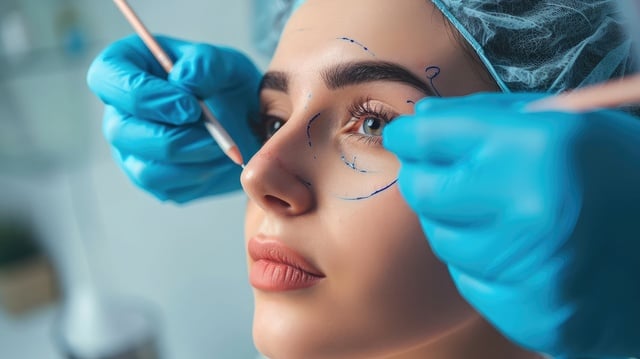
Blepharoplasty risks include swelling, bruising, infection, dry eyes, and eyelid movement problems. Most patients recover without serious issues, but rare complications can affect eye health or vision.
Your overall health, the surgeon’s technique, and proper aftercare all affect your recovery. Understanding these risks helps you prepare for surgery, recognize warning signs, and make informed treatment decisions.
What Are the Most Common Risks of Blepharoplasty?
Most common side effects of blepharoplasty include temporary swelling, bruising, and discomfort around the eyes. These symptoms often improve within two weeks, although complete healing takes longer. More serious problems can develop if bleeding, infection, or changes in eyelid position affect normal eye function.
Common blepharoplasty side effects include:

- Swelling and bruising around the upper and lower eyelids.
- Blurred vision caused by ointments or changes in tear production.
- Dryness, irritation, and light sensitivity.
- Mild pain, tightness, or temporary numbness.
- Difficulty closing the eyelids during early healing.
Most of these effects improve as the tissues heal. Still, if symptoms worsen or last longer than expected, have your surgeon check them. Early treatment can help prevent further problems.
Serious Blepharoplasty Surgery Complications
Although uncommon, blepharoplasty surgery complications can sometimes require additional treatment or corrective surgery. Problems may result from bleeding, infection, excess tissue removal, or poor wound healing. Knowing the warning signs can help patients seek care before a problem becomes severe.
Infection, Bleeding, and Scarring
An infection may cause redness, warmth, discharge, or increasing pain around the incision. Bleeding can also cause blood to collect beneath the skin, leading to swelling and pressure. Some patients develop visible scars or uneven healing that affects the appearance of the eyelid.
With proper care, most incisions heal with minimal visible scarring. Still, infections and unusual bleeding require medical attention. Your surgeon may recommend medication or further treatment based on the cause.
Eyelid Malposition and Difficulty Closing the Eyes
Removing too much eyelid skin during surgery can make it difficult to close your eyes completely. This may leave the eye surface exposed, causing dryness, irritation, or discomfort. In some cases, you may need additional treatment to protect the cornea.
Lower eyelid surgery can also cause ectropion, which means the eyelid turns outward. Another possible problem is eyelid retraction, where the lower lid sits too low. Both conditions may affect comfort, tear flow, and eye protection.
Vision Changes and Rare Eye Emergencies
Temporary blurred vision may occur after surgery, especially when patients use protective ointments. Serious vision problems are rare but require immediate medical attention. In very rare cases, bleeding behind the eye can increase pressure on the optic nerve and other eye structures.
Without urgent treatment, this pressure may cause permanent vision loss. Other warning signs include sudden double vision, severe eye pain, or rapidly increasing swelling around one eye. These symptoms require immediate emergency medical evaluation and should never be considered part of normal recovery.
Upper vs. Lower Blepharoplasty Risks
The risks of eyelid surgery depend partly on the area being treated. Upper eyelid surgery focuses on loose skin and, in some cases, excess fat. Lower eyelid surgery usually treats under-eye bags, fat deposits, and changes in skin support.
Risks Associated With Upper Eyelid Surgery
Upper blepharoplasty removes excess skin and sometimes reshapes fat around the upper lid. For patients whose loose skin blocks their peripheral vision, the procedure may also improve vision. Still, removing too much tissue can affect how well the eyelids close.
Other possible concerns include uneven eyelid folds, visible scars, or changes in eyelid shape. Careful planning helps reduce these problems while keeping the eyes comfortable and protected.
Risks Associated With Lower Eyelid Surgery
Lower eyelid surgery may involve removing or moving fat and tightening loose skin. Although these methods can reduce under-eye bags, they may also change eyelid position. Some patients develop ongoing puffiness, visible asymmetry, or lower eyelid retraction.
People with weak eyelid support may face a higher risk of these changes. Your surgeon should carefully examine the area before choosing a treatment method.
Who Has a Higher Risk of Complications?
Not everyone has the same risk of complications after eyelid surgery. Some medical conditions, medications, and lifestyle habits can affect healing. A detailed examination helps identify possible concerns before treatment.
Factors that may increase surgical risks include:
- Existing eye dryness or problems with tear production.
- Diabetes, thyroid eye disease, or poorly controlled blood pressure.
- Smoking or nicotine use, which can slow healing.
- Blood-thinning medications or supplements that increase bleeding.
- Previous eyelid surgery or changes in eyelid position.
Your surgeon should review your medical history, medications, and previous eye problems before recommending surgery. Some patients may also need an eye examination to check tear production and eyelid function. These steps help determine whether surgery is appropriate.
How to Reduce Risks Before Blepharoplasty
Choosing a qualified surgeon is a key step toward safer eyelid surgery. Experienced plastic surgeons and oculoplastic surgeons understand both eyelid appearance and eye function. They can assess your needs and recommend a suitable approach.
During a consultation with Dr. Kopelman, patients can discuss their goals, possible complications, and expected results. A personal examination helps determine whether upper, lower, or combined eyelid surgery is appropriate. This also gives patients an opportunity to ask about recovery and safety.
Before surgery, patients should:
- Share all medications, supplements, allergies, and health conditions with their surgeon.
- Follow medical advice about smoking, alcohol, and medication changes.
- Arrange transportation and home support during early recovery.
- Ask about anesthesia, surgical risks, and instructions for emergencies.
These steps cannot remove every risk, but they can help prevent avoidable problems. Following your surgeon’s pre- and post-treatment instructions also supports better healing.
Blepharoplasty Recovery: Risks and Aftercare
Understanding the recovery risks of eyelid surgery helps patients prepare for healing. Recovery usually involves swelling, bruising, and temporary sensitivity around the eyes.
Most symptoms improve over time when patients follow their post-operative care instructions.
The First Week After Surgery
During the first few days, your surgeon may recommend cold compresses or ice packs wrapped in clean cloth. This approach reduces swelling and can help ease discomfort when used correctly. Keeping your head elevated while resting may also limit fluid buildup around the eyes.
Avoid rubbing your eyes, heavy lifting, and strenuous exercise until your surgeon approves these activities. Prescribed eye drops or ointments may help protect the eye surface during healing. Follow-up visits allow your surgeon to check the incisions and identify possible problems.
Weeks Two Through Six
Most visible bruising and swelling improve during the second week. Some patients still notice tightness, mild redness, or uneven swelling as the tissues settle. These changes often continue to improve over the following weeks.
You may return to normal activities as your surgeon allows. You may need to avoid strenuous exercise, contact lenses, and eye makeup until healing has progressed. Complete recovery varies based on the procedure and your body’s response.
Long-Term Risks and Permanent Changes
Most patients enjoy lasting results, but some experience ongoing changes in eyelid comfort or appearance. Long-term concerns may include persistent dryness, visible scarring, uneven eyelids, or difficulty closing the eyes. In certain cases, revision surgery may be needed.
Natural aging also continues after cosmetic surgery. Skin can loosen again, and changes in facial structure may affect results over time. Surgery cannot guarantee perfect symmetry or prevent future signs of aging.
Discussing realistic expectations before treatment can help you understand these limits. Your surgeon should explain which concerns surgery can improve and which may remain afterward.
When Should You Contact Your Surgeon?
Some symptoms require immediate care because they may indicate bleeding, infection, or other eye problems. Mild discomfort and swelling are common, but don’t ignore sudden changes. Early treatment may help prevent lasting damage.
Seek emergency medical attention if you experience:
- Sudden vision changes or significant blurred vision.
- Severe eye pain or rapidly increasing swelling.
- Heavy bleeding or an eye that appears to protrude.
- New difficulty moving your eye normally.
Contact your surgeon promptly if redness, discharge, or discomfort continues to increase. Also have persistent problems closing your eyes checked. Never wait for a scheduled follow-up appointment if you develop sudden vision changes or severe pain.
Is Blepharoplasty Worth the Risks?
Blepharoplasty can improve eyelid appearance and, in selected cases, reduce vision problems caused by loose upper eyelid skin. Many patients are satisfied with their results and recover without major issues. Still, it’s important to weigh the potential benefits against the risks and limitations of surgery.
Cost also matters when planning treatment. Health insurance usually doesn’t cover cosmetic eyelid surgery, while functional surgery may qualify when vision problems are documented. The final price may include surgeon fees, anesthesia, facility costs, and follow-up care.
A qualified surgeon, such as Dr. Joel Kopelman, can explain the expected benefits and recommend alternatives when appropriate. A careful assessment helps you decide whether surgery matches your health needs and personal goals.
Blepharoplasty can offer meaningful improvements, but every operation carries some risk. Choosing an experienced surgeon, following recovery instructions, and recognizing warning signs can help protect your eye health. The goal is to achieve natural-looking results while keeping your eyes comfortable and functioning properly.
Disclaimer
Artificial Intelligence Disclosure & Legal Disclaimer
AI Content Policy.
To provide our readers with timely and comprehensive coverage, South Florida Reporter uses artificial intelligence (AI) to assist in producing certain articles and visual content.
Articles: AI may be used to assist in research, structural drafting, or data analysis. All AI-assisted text is reviewed and edited by our team to ensure accuracy and adherence to our editorial standards.
Images: Any imagery generated or significantly altered by AI is clearly marked with a disclaimer or watermark to distinguish it from traditional photography or editorial illustrations.
General Disclaimer
The information contained in South Florida Reporter is for general information purposes only.
South Florida Reporter assumes no responsibility for errors or omissions in the contents of the Service. In no event shall South Florida Reporter be liable for any special, direct, indirect, consequential, or incidental damages or any damages whatsoever, whether in an action of contract, negligence or other tort, arising out of or in connection with the use of the Service or the contents of the Service.
The Company reserves the right to make additions, deletions, or modifications to the contents of the Service at any time without prior notice. The Company does not warrant that the Service is free of viruses or other harmful components.