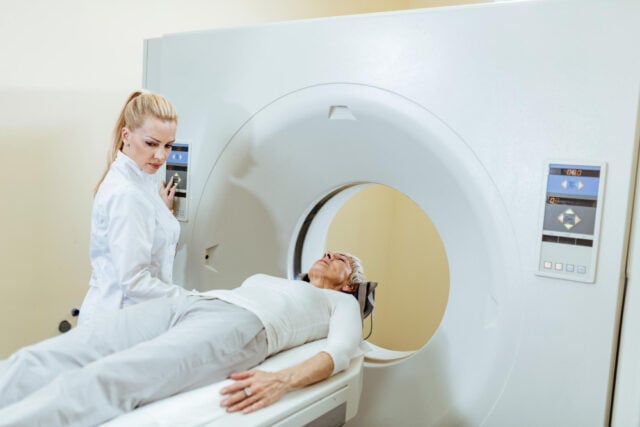
Breast cancer remains one of the most significant health challenges facing women worldwide, but advances in diagnostic imaging are changing the landscape of early detection. While mammography has long been the standard screening tool, magnetic resonance imaging with contrast enhancement has emerged as a powerful complementary technology, particularly for women at elevated risk or those with dense breast tissue where conventional screening methods may fall short.
Why Standard Screening Sometimes Isn’t Enough
Traditional mammography detects cancer by identifying differences in tissue density, but this approach has limitations. Dense breast tissue appears white on a mammogram, as do tumors, making abnormalities harder to spot. Studies indicate that mammography may miss up to 50% of cancers in women with extremely dense breasts. This is particularly concerning given that dense breast tissue itself is an independent risk factor for developing breast cancer.
In Scotland, screening services have adapted to pandemic challenges while continuing to serve women in the crucial 50-70 age bracket. However, younger women with genetic predispositions or those with previous breast cancer diagnoses often require more sensitive imaging technologies to monitor their breast health effectively.
How Contrast-Enhanced MRI Works
Magnetic resonance imaging of the breast uses powerful magnets and radio waves to create detailed cross-sectional images of breast tissue. The addition of a contrast agent—typically gadolinium-based—enhances the procedure’s diagnostic capability significantly. This contrast material is injected intravenously and highlights areas where blood vessels are more concentrated, which is characteristic of cancerous tissue.

Cancer cells stimulate the growth of new blood vessels to supply their rapid growth, a process called angiogenesis. These vessels are often irregular and more permeable than normal blood vessels. When contrast material enters the bloodstream, it leaks into these abnormal areas more readily and shows up as bright spots on the MRI images, allowing radiologists to identify suspicious areas that might be invisible on other imaging modalities.
Who Benefits Most from Advanced Breast MRI
Not every woman requires MRI screening, but specific populations benefit substantially from this technology. Women with BRCA1 or BRCA2 gene mutations face a lifetime breast cancer risk of 45-85%, making annual MRI screening a standard recommendation alongside mammography. Similarly, women with a strong family history of breast or ovarian cancer, those who received chest radiation therapy before age 30, or individuals with certain genetic syndromes such as Li-Fraumeni or Cowden syndrome are excellent candidates for enhanced MRI surveillance.
The technology also plays a crucial role in diagnostic scenarios beyond screening. When mammography or ultrasound reveals an abnormality but results remain inconclusive, MRI can provide additional clarity. It helps surgeons plan treatment by accurately measuring tumor size and detecting additional disease that might affect surgical approach. For women considering breast-conserving surgery, MRI can reveal the full extent of cancer within the breast and identify disease in the opposite breast that other methods missed.
Advanced Imaging in International Breast Care Centres
Leading healthcare facilities worldwide have integrated sophisticated imaging protocols into comprehensive breast care programs. For women in Abu Dhabi seeking advanced diagnostic services, Cleveland Clinic Abu Dhabi’s Breast Health & Cancer Program offers breast mri with contrast as part of a multidisciplinary approach that spans screening, diagnosis, and treatment planning. The facility’s designation as an Oncology Center of Excellence reflects its commitment to providing advanced diagnostic capabilities alongside surgical and medical oncology services, genetic counseling, and reconstruction options for patients navigating breast cancer care.
Understanding the Limitations and Trade-Offs
While contrast-enhanced breast MRI offers superior sensitivity for cancer detection—typically identifying 90% or more of breast cancers—it comes with trade-offs that patients and clinicians must consider. Its high sensitivity also means it detects many findings that appear suspicious but ultimately prove benign on further investigation. This can lead to additional biopsies and increased anxiety for patients, though most specialists agree the benefits outweigh these concerns for high-risk populations.
The procedure takes 30-45 minutes compared to the few minutes required for mammography, and patients must remain still while lying face-down with breasts positioned in a specialized coil. Some women find this positioning uncomfortable, particularly those with shoulder or back problems. Claustrophobia can be an issue, though modern open MRI systems have reduced this concern. The contrast agent itself is generally safe, but patients with severe kidney disease cannot receive it due to a rare but serious complication called nephrogenic systemic fibrosis.
Making Informed Decisions About Breast Health Screening
Understanding your personal risk profile is the foundation of appropriate breast cancer screening. Risk factors and screening guidelines help women and their healthcare providers determine the most suitable surveillance strategy. Age, family history, genetic mutations, breast density, and previous breast biopsies all contribute to individualized risk assessment.
Women should discuss their complete medical and family history with their GP or breast specialist. If you have two or more close relatives diagnosed with breast or ovarian cancer, particularly at young ages, consider requesting a referral to a genetics clinic for formal risk assessment. Document your family history for both maternal and paternal relatives, as BRCA mutations can be inherited from either parent.
The Future of Breast Cancer Detection
Research continues to refine MRI protocols and develop new imaging technologies. Abbreviated MRI protocols that reduce scan time to 10-15 minutes show promise for making this technology more accessible and cost-effective for broader screening populations. Artificial intelligence algorithms are being trained to analyze MRI images, potentially improving radiologists’ accuracy and reducing interpretation time. Combined imaging approaches that merge MRI data with mammography or molecular breast imaging may offer even better cancer detection while minimizing false positives.
For now, contrast-enhanced breast MRI represents one of the most powerful tools available for cancer detection in high-risk women and complex diagnostic scenarios. As healthcare systems worldwide work to balance the benefits of advanced screening against resource constraints and potential harms, clear communication between patients and clinicians remains essential. Women who understand their risk factors and the capabilities of different imaging modalities can work with their healthcare teams to develop screening strategies that provide the greatest benefit for their individual circumstances.
Disclaimer
Artificial Intelligence Disclosure & Legal Disclaimer
AI Content Policy.
To provide our readers with timely and comprehensive coverage, South Florida Reporter uses artificial intelligence (AI) to assist in producing certain articles and visual content.
Articles: AI may be used to assist in research, structural drafting, or data analysis. All AI-assisted text is reviewed and edited by our team to ensure accuracy and adherence to our editorial standards.
Images: Any imagery generated or significantly altered by AI is clearly marked with a disclaimer or watermark to distinguish it from traditional photography or editorial illustrations.
General Disclaimer
The information contained in South Florida Reporter is for general information purposes only.
South Florida Reporter assumes no responsibility for errors or omissions in the contents of the Service. In no event shall South Florida Reporter be liable for any special, direct, indirect, consequential, or incidental damages or any damages whatsoever, whether in an action of contract, negligence or other tort, arising out of or in connection with the use of the Service or the contents of the Service.
The Company reserves the right to make additions, deletions, or modifications to the contents of the Service at any time without prior notice. The Company does not warrant that the Service is free of viruses or other harmful components.