Implement these practical and highly effective tips today to reduce energy consumption and lower your monthly utility bills.
Rising energy costs remain a persistent concern for many homeowners, especially in regions with demanding climates where heating or air conditioning systems run nearly year-round. Fortunately, combating high utility bills does not always require a massive, expensive home renovation. Consumer Reports highlights several immediate, actionable steps you can take today to improve your home’s energy efficiency and keep more money in your wallet.
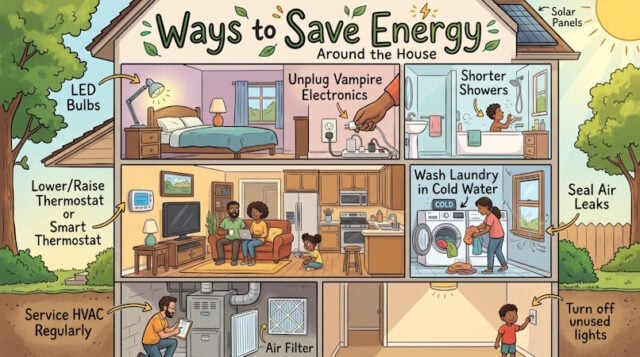
One of the most effective ways to cut costs is by optimizing your thermostat settings. During warmer months, raising the temperature by just a few degrees when you are away from home can yield significant savings. Investing in a programmable or smart thermostat takes the guesswork out of this process. These devices learn your schedule and automatically adjust temperature shifts, ensuring you are not needlessly cooling or heating an empty house.
Conditioned air escaping through small gaps around windows, doors, and baseboards forces your HVAC system to work overtime. Weatherstripping and caulking are inexpensive, highly effective, DIY-friendly solutions that instantly block these drafts. Homeowners should pay special attention to the attic and basement, as these are areas where major air leaks frequently occur and often go unnoticed.

A neglected heating and cooling system is inherently inefficient. Experts recommend replacing your air filters every one to three months to maintain proper, unobstructed airflow. A clogged filter makes the system work harder, driving up energy use. Additionally, scheduling a professional tune-up at least once a year keeps the system running at peak performance, which reduces its overall energy draw and extends the lifespan of the unit.
Finally, rethink your approach to lighting and daily appliance use. Upgrading old incandescent bulbs to LEDs is a quick win; they use a fraction of the energy and last significantly longer. In the laundry room, washing clothes in cold water rather than hot can save a surprising amount of energy, since heating water accounts for most of the machine’s power draw. Also, remember to unplug “vampire” appliances—electronics that draw standby power even when turned off—or plug them into smart power strips to easily cut their energy supply.
By taking a proactive approach to how your household consumes electricity, you can enjoy immediate financial relief without sacrificing comfort. Small, consistent changes in your daily routines, combined with minor home maintenance tasks, add up to substantial energy savings over the course of a year.
Sources
Disclaimer
Artificial Intelligence Disclosure & Legal Disclaimer
AI Content Policy.
To provide our readers with timely and comprehensive coverage, South Florida Reporter uses artificial intelligence (AI) to assist in producing certain articles and visual content.
Articles: AI may be used to assist in research, structural drafting, or data analysis. All AI-assisted text is reviewed and edited by our team to ensure accuracy and adherence to our editorial standards.
Images: Any imagery generated or significantly altered by AI is clearly marked with a disclaimer or watermark to distinguish it from traditional photography or editorial illustrations.
General Disclaimer
The information contained in South Florida Reporter is for general information purposes only.
South Florida Reporter assumes no responsibility for errors or omissions in the contents of the Service. In no event shall South Florida Reporter be liable for any special, direct, indirect, consequential, or incidental damages or any damages whatsoever, whether in an action of contract, negligence or other tort, arising out of or in connection with the use of the Service or the contents of the Service.
The Company reserves the right to make additions, deletions, or modifications to the contents of the Service at any time without prior notice. The Company does not warrant that the Service is free of viruses or other harmful components.