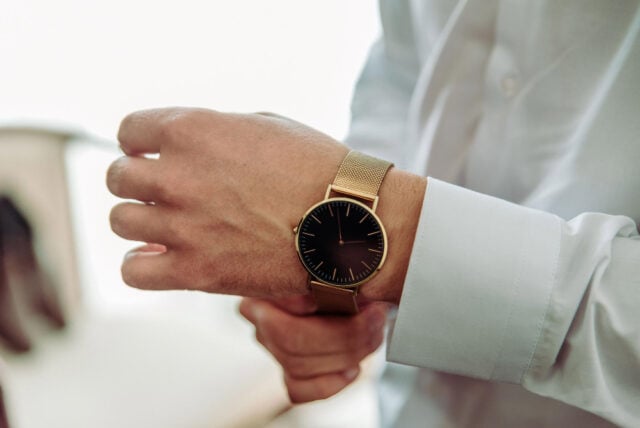
Not every watch lover owns a collection. Many people have one automatic watch they truly care about: a graduation gift, a milestone purchase or a piece that simply feels right on the wrist. For these owners, the goal is simple. The watch should be running, accurate and ready to wear every morning, without a daily ritual of winding and resetting. A good routine, a few care habits and, for many owners, a single watch winder make that goal easy to reach.
Owning one watch sounds like the easiest situation possible. In practice, a single automatic watch still runs into small problems. It stops over a long weekend, the date falls behind after a few days on the dresser, and the time needs adjusting more often than the owner expected.
Specialists in watch care, including Barrington Watch Winders, often point out that most of these problems have nothing to do with the quality of the watch itself. They come from the gap between how an automatic movement is designed to work and how people actually live with their watches day to day.
This guide explains why a single automatic watch still stops, what a stopped watch really costs in time and effort, and how a simple routine keeps one watch ready to wear whenever it is needed.

Why a Single Watch Still Stops
An automatic watch winds itself through the motion of the wrist. A rotor inside the case swings as the wearer moves and gradually tightens the mainspring. As long as the watch is worn regularly and actively, it keeps running. The trouble starts when daily life does not match that ideal.
The Weekend Gap
Most automatic movements store enough energy for roughly a day and a half to two days, although some modern calibers offer more. A watch taken off on Friday evening may run through Saturday and stop sometime on Sunday. On Monday morning, the owner finds the hands frozen and the date out of step.
Quiet Days at the Desk
Even on days when the watch is worn, the mainspring may not get a full wind. Office work, long drives and evenings on the couch produce very little wrist motion. A watch that is worn from nine to five at a desk can end the day with less power than it started with, which makes the overnight and weekend gaps even more noticeable.
Why a Quick Shake Is Not Enough
Many owners restart a stopped watch by giving it a few shakes. This gets the balance moving, but it adds only a small amount of energy to the mainspring. The watch starts ticking, yet it has very little reserve and may run less accurately until it is fully wound. A watch restarted this way on Monday morning is often the one that stops again by Tuesday night.
The Small Frustrations of a Stopped Watch
A stopped watch is not damaged. Still, restarting it is more involved than many new owners expect, and the inconvenience adds up over months of ownership. Here is what a single stop usually means:
- Resetting the time: the watch must be wound or shaken to restart, then set to the correct time, ideally against an accurate reference.
- Correcting the date: if several days have passed, the date must be advanced day by day or through a quickset function.
- Avoiding the date-change window: many movements should not have the date adjusted when the hands are between roughly 9 p.m. and 3 a.m., when the date mechanism is engaged.
- Rebuilding power: a freshly restarted watch has little energy in reserve, so it may stop again sooner if the next day is not very active.
- Extra wear on the crown: frequent winding and setting puts more use on the crown and its gasket, the main seal that keeps moisture and dust out of the case.
For a simple three-hand watch, this takes a minute or two. For a watch with a day-date display, a moonphase or an annual calendar, it can take much longer and requires care to avoid mistakes.
A Simple Morning and Evening Routine
The easiest way to keep one watch running is to build a few habits around the moments when it comes off the wrist.
In the Evening
Take the watch off in the same place every night, ideally away from the edge of a nightstand and away from phones, speakers and other electronics with magnets. If the next day will be quiet, give the crown a few gentle turns to top up the mainspring, if the movement allows manual winding. Store the watch dial up or in a cushioned spot rather than on a hard surface where it can slide off.
In the Morning
Glance at the time before putting the watch on. A watch that is running a little fast or slow can be corrected in seconds, which is far easier than waiting until it drifts several minutes. Over time, this daily check also shows how the watch is performing, which helps decide when it needs a service.
On Weekends and Days Off
Weekends are where most single watches stop. Wearing the watch for at least a few hours on Saturday and Sunday is often enough to carry it into Monday. Owners who prefer a break from the watch on days off should plan for it: either wind it fully on Sunday evening or keep it on a winder so it is ready for the week.
Options for Keeping One Watch Running
Every owner of a single automatic watch ends up choosing one of a few approaches, whether consciously or not. The table below compares them.
| Approach | How it works | Main advantage | Main drawback | Best for |
| Wear it every day | Wrist motion keeps the mainspring wound | No extra equipment needed | Stops whenever the watch is skipped for a day or two | Owners who never take a break from the watch |
| Wind by hand | Crown is turned to wind the mainspring | Quick when done regularly | Easy to forget, more crown use | Owners with a fixed daily routine |
| Let it stop and reset | Watch is restarted and set when needed | Zero effort while it rests | Time and date must be reset each time | Simple watches worn only occasionally |
| Use a watch winder | Device rotates the watch when it is off the wrist | Always running, time and date stay set | Requires space and a power outlet | Owners who want the watch ready every morning |
Daily wear and hand winding work well until routines change.A winder is the most reliable way to keep a single watch running through weekends, travel and busy weeks without the owner having to think about it.
Using a Watch Winder for One Watch
Some people assume that a watch winder only makes sense for large collections. In reality, one-watch owners often benefit the most, because their single watch is also the one they reach for every day.
Why One Watch Still Benefits
A winder fills exactly the gaps described above: the nights, the weekends and the quiet days. The watch comes off in the evening, goes onto the winder and is running with the correct time and date in the morning. For watches with complications, this saves the longest and most error-prone resets.
Setting It Up Correctly
A winder works best when it is set to match the specific watch. Setup usually takes a few minutes:
- Wind and set the watch first. Give it a few turns of the crown or wear it for a while, then set the correct time and date.
- Check the recommended turns per day (TPD) for the movement in the manufacturer’s information or a TPD database.
- Select the rotation direction the movement needs: clockwise, counterclockwise or alternating.
- Choose the right cushion size so the bracelet or strap sits snugly without being stretched.
- Fasten the clasp around the cushion and place it firmly in the holder.
- Close the lid to keep dust off the watch while it rotates.
Where to Place It
A stable, level surface works best: a dresser, a closet shelf or a desk. Keep the winder away from direct sunlight, heaters and damp rooms such as bathrooms. If it will sit in a bedroom, a model with a quiet motor makes a real difference.
Keeping One Watch Accurate Over Time
A watch that is always running is easier to keep accurate, but timekeeping still depends on a few factors the owner can influence.
Resting Position Matters
Mechanical movements run at slightly different rates depending on their position. Many watches gain a little when resting dial up and lose a little when resting crown down, or the other way around. Owners who notice their watch running fast or slow can experiment with how it rests overnight. A few nights of observation usually reveal a position that balances out the daily variation.
Watch Out for Magnetism
Modern homes are full of magnets: phone cases, laptop lids, tablet covers, speakers and induction cooktops. A watch left on top of a laptop or next to a speaker can become magnetized and suddenly start gaining several minutes a day. A watchmaker can demagnetize it quickly, but keeping the watch a short distance away from electronics prevents the problem in the first place.
Track the Pattern, Not the Day
Daily accuracy naturally varies with temperature, activity and how fully the mainspring is wound. Instead of reacting to one unusual day, note the difference against an accurate reference once a week. A steady pattern gives a far better picture of how the watch is really performing.
Traveling With a Single Watch
For a one-watch owner, the same watch usually goes on every trip, which brings its own small challenges.
Packing and Wearing
The safest place for a watch while traveling is on the wrist. When it has to come off, for example at airport security or before a swim, a padded travel case protects it far better than a jacket pocket or a toiletry bag. Avoid leaving the watch in checked luggage or in a hot car, where heat and rough handling can do real harm.
Time Zones and Long Trips
Changing time zones is a good moment to check that the date and time are set correctly, especially on watches where the date is linked to the hour hand. On longer trips, a watch that stays on the dresser at home while the owner wears something else will stop within a couple of days. Leaving it on a winder means it is running and set to the correct time on the day the owner returns.
Everyday Care for a Watch Worn Almost Daily
A single watch carries the full load of everyday life, so a little regular care goes a long way.
Cleaning
Wipe the case and crystal with a soft microfiber cloth every few days. Bracelets collect skin oils and dirt between the links, so an occasional gentle clean with a soft brush and lukewarm water helps, as long as the watch is water resistant and the crown is fully closed.
Water, Heat and Shock
Check the water resistance rating before swimming or showering with the watch, and never operate the crown or pushers underwater. Avoid hot tubs and saunas, where heat and steam can stress the gaskets. Take the watch off for heavy sports, gym sessions with free weights or any work with tools, since strong impacts are a common cause of damage.
Servicing
Even a well-kept automatic watch needs a full service from time to time, typically every five to seven years depending on the brand and how it performs. Signs that it is time include a noticeable change in accuracy, a shorter power reserve or a crown that feels rough when winding.
Conclusion
Owning one automatic watch should feel effortless, and with the right habits it does. Understanding why the watch stops, building a simple evening and morning routine and taking care of the basics such as cleaning, water exposure and servicing keep a single timepiece accurate and dependable for years.
For owners who want their watch running every morning without thinking about it, Barrington Watch Winders offers the Oxford single winder, available in several colors. It uses a quiet Japanese motor, supports clockwise, counterclockwise and alternating rotation, and has an adjustable TPD range from 650 to 1950. Two cushion sizes cover both larger and smaller wrists, and the Gentle Rotation method runs the winding cycle over 12 hours, followed by a 12-hour rest. If the collection ever grows, single winders from Barrington Watch Winders can be stacked and connected with a supplied cable to run from one power source. For a single, treasured watch, that combination means one less thing to worry about each morning.
Disclaimer
Artificial Intelligence Disclosure & Legal Disclaimer
AI Content Policy.
To provide our readers with timely and comprehensive coverage, South Florida Reporter uses artificial intelligence (AI) to assist in producing certain articles and visual content.
Articles: AI may be used to assist in research, structural drafting, or data analysis. All AI-assisted text is reviewed and edited by our team to ensure accuracy and adherence to our editorial standards.
Images: Any imagery generated or significantly altered by AI is clearly marked with a disclaimer or watermark to distinguish it from traditional photography or editorial illustrations.
General Disclaimer
The information contained in South Florida Reporter is for general information purposes only.
South Florida Reporter assumes no responsibility for errors or omissions in the contents of the Service. In no event shall South Florida Reporter be liable for any special, direct, indirect, consequential, or incidental damages or any damages whatsoever, whether in an action of contract, negligence or other tort, arising out of or in connection with the use of the Service or the contents of the Service.
The Company reserves the right to make additions, deletions, or modifications to the contents of the Service at any time without prior notice. The Company does not warrant that the Service is free of viruses or other harmful components.