The hotel looks good. The route is saved. Then someone points out that arriving before dinner means leaving South Florida before sunrise and keeping every stop short.
That’s the part of the plan worth changing.
A trip to Texas shouldn’t depend on everyone sleeping well, traffic staying light and nobody needing an extra break. Before booking the overnight stop, look at what happens if the day runs late. Having somewhere else to stop is more useful than a promise to make up time.
Pick the stopping point before the dinner reservation
Start with the route, but don’t treat the arrival time on your phone as an appointment. Put meals, fuel stops and rest into the schedule yourself. If two adults will share the driving, discuss that before departure rather than assuming the passenger will take over whenever needed.

Choose an overnight town you can reach without pushing through fatigue. Check the hotel’s late arrival and cancellation terms while booking. It also helps to save another place to stay earlier along the route. You don’t have to book both. You just want an option that doesn’t require a fresh search when everyone is tired.
Keep the first evening in Texas loose. A prepaid activity or a restaurant booking can make stopping feel like losing money. A quiet dinner near the hotel leaves less pressure on the person behind the wheel.
The Texas Department of Transportation advises getting adequate sleep before a trip and watching for yawning, heavy eyes and drifting from your lane. If those signs appear, stop somewhere safe. Don’t turn the next town into a test of how much longer you can keep going.
Don’t squeeze a truck into your schedule
Leaving enough time matters when you reach a slow stretch of traffic. If you’re already worried about being late, a gap ahead of a truck can look like a chance to gain a few car lengths.
Leave it alone. TxDOT’s highway guidance warns against moving abruptly into a truck’s path or sitting too close behind it. A large truck needs more stopping room, and the empty space ahead of it serves a purpose.
When passing, wait until there is enough room to finish without cutting back in close to the truck. If traffic ahead is bunching up, don’t begin a pass that leaves you needing that space. Ease back and wait for a better opportunity.
Give the sides of the truck some thought too. Its driver has blind spots, so being alongside the cab or trailer doesn’t mean you’ve been seen. Avoid lingering there. Never assume a turn signal, mirror glance or another driver’s silence amounts to permission to move.
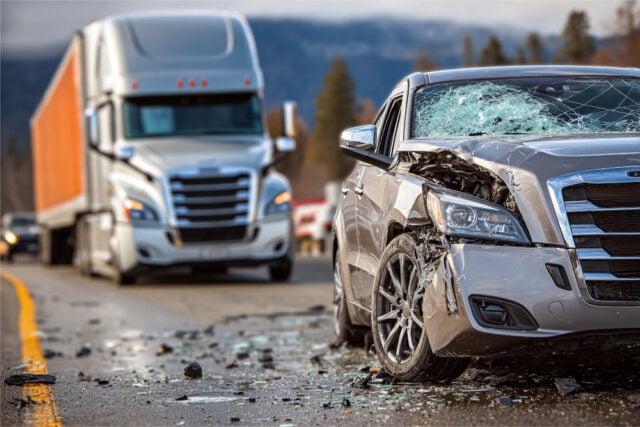
These are choices to make before the missed exit or the impatient passenger becomes a distraction. An extra stop is a much smaller inconvenience than a crash.
Let the passenger handle the changing plans
If another adult is traveling with you, give that person the phone tasks. They can check the hotel, find a lunch stop and tell the family you’ll arrive later. The driver doesn’t need a running discussion about how many minutes the trip has lost.
Traveling alone takes a different plan. Save the addresses you need before leaving, and pull into a suitable parking area before changing the route or answering messages. A highway shoulder isn’t a place for routine trip planning.
Keep water, medications and charging cables where you can reach them during a stop, without unpacking the whole trunk. Put the insurance card and roadside assistance details somewhere easy to find too. None of that needs a complicated packing system. A small folder and one accessible bag will do.
If a crash interrupts the trip, deal with the scene first
Forget the hotel for the moment. Check whether anyone is hurt and call 911 if someone needs emergency help. Follow the dispatcher’s directions. TxDOT advises calling police when there are injuries, vehicles cannot be moved or a driver leaves the scene, among other circumstances.
If nobody is injured and the vehicle can be moved safely, get it clear of traffic. Don’t leave a movable car in a travel lane just to keep its position for a photograph.
Once you’re somewhere safe, exchange contact and insurance details and note the location. If police attend, ask how to obtain the report. Take photographs only where doing so won’t put you near moving traffic. You don’t need a better picture badly enough to step into a lane.
Write down what you remember when you can. Keep your own observations separate from things another person told you. If you didn’t see what happened before the impact, say so rather than filling in the gap.
Keep one set of records when you get home
A crash away from home can leave the paperwork scattered across a phone, a suitcase and an email inbox. Save the report details, insurer messages, medical records and receipts together. Keep notes of calls, including who you spoke with and what they asked you to send.
Responsibility for a truck crash can extend beyond the driver. Texas Truck Accident Lawyer notes that the trucking company or the business that loaded the cargo may also share responsibility. Keep any company names and contact details you collected with the rest of the paperwork.
For the trip itself, make one decision before leaving. Agree that the overnight stop can change if the driver is tired. Tell anyone waiting for you in Texas the same thing. That way, stopping early is already part of the plan.
Disclaimer
Artificial Intelligence Disclosure & Legal Disclaimer
AI Content Policy.
To provide our readers with timely and comprehensive coverage, South Florida Reporter uses artificial intelligence (AI) to assist in producing certain articles and visual content.
Articles: AI may be used to assist in research, structural drafting, or data analysis. All AI-assisted text is reviewed and edited by our team to ensure accuracy and adherence to our editorial standards.
Images: Any imagery generated or significantly altered by AI is clearly marked with a disclaimer or watermark to distinguish it from traditional photography or editorial illustrations.
General Disclaimer
The information contained in South Florida Reporter is for general information purposes only.
South Florida Reporter assumes no responsibility for errors or omissions in the contents of the Service. In no event shall South Florida Reporter be liable for any special, direct, indirect, consequential, or incidental damages or any damages whatsoever, whether in an action of contract, negligence or other tort, arising out of or in connection with the use of the Service or the contents of the Service.
The Company reserves the right to make additions, deletions, or modifications to the contents of the Service at any time without prior notice. The Company does not warrant that the Service is free of viruses or other harmful components.