You might think your conversations with an artificial intelligence chatbot stay strictly between you and the screen. Recent findings reveal that your personal contact details can actually shape the promotions you see. According to 404 Media, advertisers can target users through uploaded email lists, phone numbers, and unique device identifiers. The findings show that AI companies are adopting commercial tactics used by social media giants. The tech publication ran its own test campaigns inside the platform to see how the system operates. They found that OpenAI lets marketers build custom audiences using contact lists. 404 Media reported, “OpenAI lets anyone inject ads into ChatGPT users’ sessions.”
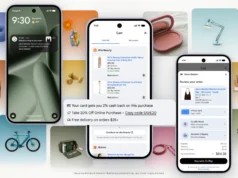
Advertisers can supply raw or hashed contact information to identify matching accounts. If a match exists within a qualifying audience, targeted commercial messages can follow. OpenAI requires audience lists to contain at least 25,000 matched users before running active inclusion campaigns. Company representatives noted that they delete uploaded customer records within 24 hours of processing. Targeting does not stop at uploaded phone numbers or email addresses. Advertisers can also use context hints to align promotions with specific user queries and conversation topics. When free or lower-tier users ask questions, relevant sponsor cards may appear right below the answer.
Privacy researchers have raised serious concerns about the lack of user awareness of these practices. Many consumers mistakenly assume their creative prompts and sensitive research queries remain completely confidential. Zach Edwards of DecryptAds warned that big tech firms often monetize audiences quietly without clear consumer warnings. As 404 Media noted, users may not realize that personal data marketers upload reaches OpenAI systems. Third-party tools have already sprung up to track sponsored messages and catalogue promotional patterns. These tracking databases show commercial placements appearing across everyday queries, software searches, and product evaluations.
Users can opt out of personalized advertising by adjusting their account preferences. However, turning off personalization does not remove promotional material from your chatbot screen. The system can still display sponsored links based on the specific words in your active conversation. 404 Media highlighted that chat history and real-time inputs remain deeply tied to advertising outcomes. As artificial intelligence expands across daily workflows, ad-tracking models keep getting more sophisticated. Regularly checking your privacy settings helps you understand exactly how your information is used. Staying informed remains your best defense as AI platforms adopt traditional ad-tracking tools.

How to Disable Personalized Ads and Stop Data Sharing in ChatGPT
You can manage your ad preferences and limit how OpenAI handles your conversation history directly within your account settings. While turning off ad personalization will not remove sponsored cards entirely, it stops OpenAI and advertisers from matching promotions to your past chats, uploaded emails, or phone numbers. Disabling model training prevents OpenAI from using your future prompts to train generative AI models.
Sources Used
- 404 Media: https://www.404media.co/how-chatgpt-targets-ads-to-you-based-on-your-prompts-phone-number-and-email/?ref=daily-stories-newsletter
- OpenAI Help Center – Privacy Center in ChatGPT: https://help.openai.com/en/articles/20001488-privacy-center-in-chatgpt
- OpenAI Consumer Privacy Settings: https://openai.com/consumer-privacy/
- 404 Media – How ChatGPT Targets Ads: https://www.404media.co/how-chatgpt-targets-ads-to-you-based-on-your-prompts-phone-number-and-email/
Disclaimer
Artificial Intelligence Disclosure & Legal Disclaimer
AI Content Policy.
To provide our readers with timely and comprehensive coverage, South Florida Reporter uses artificial intelligence (AI) to assist in producing certain articles and visual content.
Articles: AI may be used to assist in research, structural drafting, or data analysis. All AI-assisted text is reviewed and edited by our team to ensure accuracy and adherence to our editorial standards.
Images: Any imagery generated or significantly altered by AI is clearly marked with a disclaimer or watermark to distinguish it from traditional photography or editorial illustrations.
General Disclaimer
The information contained in South Florida Reporter is for general information purposes only.
South Florida Reporter assumes no responsibility for errors or omissions in the contents of the Service. In no event shall South Florida Reporter be liable for any special, direct, indirect, consequential, or incidental damages or any damages whatsoever, whether in an action of contract, negligence or other tort, arising out of or in connection with the use of the Service or the contents of the Service.
The Company reserves the right to make additions, deletions, or modifications to the contents of the Service at any time without prior notice. The Company does not warrant that the Service is free of viruses or other harmful components.