Florida is known for warm weather, coastal living, and year-round sunshine, but those same conditions can be hard on a roof. Intense UV exposure, high humidity, heavy rain, tropical storms, and salt in the air all accelerate material deterioration.
For homeowners, this means that the expected lifespan of a roofing system can vary significantly depending on the material, the quality of installation, and the specific part of Florida where the property is located. A roof that performs well in a mild inland climate may experience much more stress in Tampa, Miami, Fort Lauderdale, or other coastal areas.
Understanding how Florida weather affects different roofing materials can help homeowners make better long-term decisions when repairing or replacing a roof.
Why Florida Roofs Age Differently
Roofing materials in Florida are exposed to several environmental pressures at the same time.

The first is sunlight. Strong UV radiation can gradually weaken certain roofing surfaces, fade finishes, and cause materials to become brittle over time.
Humidity is another major factor. Moisture remains in the air for much of the year, creating favorable conditions for algae, mildew, and corrosion if a roofing system does not have adequate protection.
Heavy rainfall also tests flashing, fasteners, seams, drainage systems, and roof penetrations. Small installation defects that may cause few problems in a dry region can become serious leaks during repeated Florida storms.
Wind is equally important. During tropical storms and hurricanes, roofing systems may be exposed to strong uplift forces. The quality of the roof deck, underlayment, fastening system, and roofing material all influence how well the structure performs.
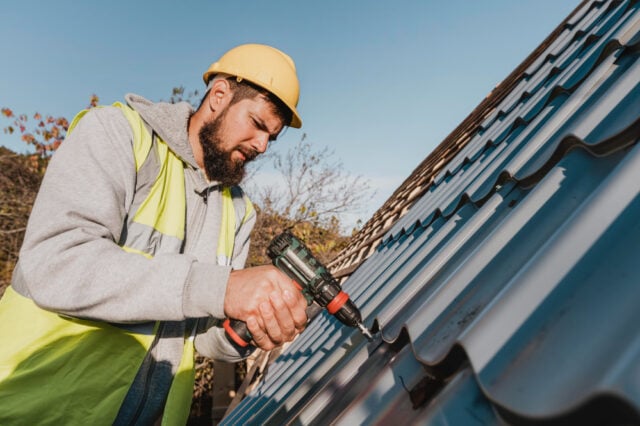
For homeowners considering metal roof replacement in Tampa, these climate factors should be evaluated together rather than looking only at the initial cost of the new roof.
Asphalt Shingles
Asphalt shingles remain common across Florida because they are widely available and relatively affordable.
However, the state’s climate can reduce their effective service life. Heat and UV exposure may gradually dry out asphalt components, while strong winds can loosen or remove damaged shingles. Repeated cycles of moisture and heat can also accelerate aging.
Higher-quality architectural shingles can perform better than basic products, but regular inspections are important, particularly after major storms.
Common signs of deterioration include:
- curling or cracked shingles;
- granule loss;
- discoloration;
- missing shingles after strong winds;
- exposed or damaged flashing.
Shingles can still be a practical option, but homeowners should consider their local exposure and maintenance expectations before choosing them.
Clay and Concrete Tile
Tile roofs are closely associated with Florida architecture and can provide excellent durability when properly installed.
Clay and concrete tiles are resistant to sunlight and generally hold up well in hot climates. They can also offer a distinctive appearance that works well with Mediterranean and coastal-style homes.
However, tiles are heavy and can crack from impact or foot traffic. Individual damaged pieces may need replacement, and the roofing structure must be capable of supporting the additional weight.
It is also important to remember that the visible tile is only part of the roofing system. Underlayment beneath the tiles plays a critical role in preventing water intrusion, and it may need replacement before the tiles themselves reach the end of their useful life.
Standing-Seam and Modular Metal Roofing
Metal roofing has become increasingly popular in Florida because it combines durability with relatively low weight.
A properly designed metal roofing system can resist moisture, UV exposure, and strong winds better than many traditional materials. Reflective finishes may also help reduce heat absorption, which can be useful in Florida’s long cooling season.
At the same time, not all metal roofs perform equally. Panel thickness, protective coatings, fastening systems, flashing details, and installation quality all matter.
In coastal regions, corrosion resistance is especially important because airborne salt can accelerate deterioration of unprotected metal surfaces.
Stone-Coated Steel Roofing
For Florida homeowners looking for a balance of durability, relatively low weight, and traditional appearance, stone-coated roofing can be one of the strongest options to consider.
Unlike heavier clay or concrete tile, stone-coated steel uses a steel core with protective coatings and a stone-chip surface. This gives the roof the appearance of more traditional materials while reducing structural weight.
For Florida conditions, this type of roofing has several practical advantages. It can provide strong resistance to wind and impact, does not absorb moisture in the same way as some traditional materials, and can be manufactured with protective coatings designed to reduce corrosion risk.
Its lighter weight can also be useful during roof replacement projects, particularly when homeowners want the look of tile without adding the same structural load.
For properties exposed to intense sun, heavy rain, humidity, and seasonal storms, stone-coated steel can therefore offer a particularly effective combination of performance, appearance, and long-term durability.
Why Coastal Properties Need Extra Protection
Homes near the Florida coast face additional challenges beyond heat and rain.
Salt carried through the air can gradually affect exposed metal components, fasteners, gutters, flashing, and other building materials. High humidity may also increase the risk of corrosion in areas where protective coatings have been damaged.
Because of this, coastal homeowners should pay close attention to product warranties, corrosion-resistant coatings, and approved installation methods.
Regular inspections are also important. Small scratches, loose fasteners, deteriorated sealants, or damaged flashing are usually easier and less expensive to address early.
The Role of Wind Resistance
Wind performance is one of the most important considerations for Florida roofing.
A roof does not fail only because of the roofing material itself. Problems can develop when wind reaches vulnerable edges, corners, flashing, or poorly secured sections of the roof.
Modern roofing systems are designed with these forces in mind. Strong roof-to-deck connections, appropriate fasteners, quality underlayment, and correct installation around ridges and penetrations can significantly improve performance during severe weather.
Homeowners replacing a roof should therefore consider the complete roofing assembly rather than comparing materials based solely on appearance.
Maintenance Still Matters
Even highly durable roofing materials require routine maintenance.
Florida homeowners should inspect their roofs periodically and after major storms. Gutters and drainage areas should be kept clear, damaged flashing should be repaired, and debris should not be allowed to accumulate.
Trees growing close to the roof may also need trimming. Falling branches and constant contact with roofing surfaces can cause damage over time.
Early maintenance can often extend the useful life of a roofing system and prevent minor problems from turning into expensive structural repairs.
Choosing the Right Roofing Material
There is no single roofing material that is ideal for every Florida property.
Homeowners should consider several factors:
- distance from the coast;
- exposure to strong winds;
- roof slope and architectural design;
- structural weight limitations;
- energy efficiency;
- expected ownership period;
- maintenance requirements;
- long-term cost.
Manufacturers such as Novatik US offer modern metal and stone-coated steel roofing systems intended for demanding climates, giving homeowners additional alternatives to traditional shingles and tile.
Before selecting a roofing material, it is worth comparing technical specifications rather than relying only on appearance or initial price.
Final Thoughts
Florida’s climate places unusual demands on residential roofing systems. Constant sunlight, high humidity, heavy rain, strong winds, and coastal salt exposure can all shorten the lifespan of materials that are not designed for these conditions.
Asphalt shingles, tile, and conventional metal roofing all have their place, but homeowners looking for a combination of durability, lower structural weight, wind resistance, and a more traditional appearance may find stone-coated steel especially well suited to Florida conditions.
The final choice should still depend on the property, location, roof design, and installation quality. However, for homeowners planning a long-term roof replacement, stone-coated steel is worth considering as one of the more balanced options for Florida’s demanding climate.
Disclaimer
Artificial Intelligence Disclosure & Legal Disclaimer
AI Content Policy.
To provide our readers with timely and comprehensive coverage, South Florida Reporter uses artificial intelligence (AI) to assist in producing certain articles and visual content.
Articles: AI may be used to assist in research, structural drafting, or data analysis. All AI-assisted text is reviewed and edited by our team to ensure accuracy and adherence to our editorial standards.
Images: Any imagery generated or significantly altered by AI is clearly marked with a disclaimer or watermark to distinguish it from traditional photography or editorial illustrations.
General Disclaimer
The information contained in South Florida Reporter is for general information purposes only.
South Florida Reporter assumes no responsibility for errors or omissions in the contents of the Service. In no event shall South Florida Reporter be liable for any special, direct, indirect, consequential, or incidental damages or any damages whatsoever, whether in an action of contract, negligence or other tort, arising out of or in connection with the use of the Service or the contents of the Service.
The Company reserves the right to make additions, deletions, or modifications to the contents of the Service at any time without prior notice. The Company does not warrant that the Service is free of viruses or other harmful components.