By TOM MARQUARDT and PATRICK DARR
Managing 20 grape varietals across 114 acres sounds like a nightmare to us, but to Ben Mayo, it’s unadulterated fun.
“It’s why I’m in this job,” the winemaker for Paso Robles’ Le Vigne Winery said. “It keeps me on my feet.”
Mayo’s palette of grapes includes the region’s favorites—Rhone varietals and cabernet sauvignon—but also Italian varietals such as sangiovese, barbera and nebbiolo. These are grapes that are gaining appeal not just with winemakers but also consumers.

Mayo and Le Vigne are riding a natural high after winning “USA Winery of the Year 2026” at the London Wine Competition—a contest Mayo didn’t even know the winery had entered—and previous awards as the 2025 Winery of the Year by the Central Coast Wine Competition and 2025 Paso Robles Winery of the Year by the New York International Wine Competition.
You can hang your medals on the wall, but they are usually forgotten in time. The only thing that matters is the wine in the barrel today. And that’s when Mayo’s fun is challenged.
Grape growers all over California are feeling the pain of a difficult harvest; Mayo estimates that in Paso Robles winemakers will see half as much tonnage harvested this year. The trouble started in the winter when the vines are expected to hibernate. “You need three freezing days,” Mayo said. “The temperature never went down.”
Cold weather allows the vines to store nutrients, lose excess water, suppress insect infestation and get ready to burst with energy for the spring budbreak. Absent this healthy shutdown, budbreak and flowering were uneven and premature—leading to shatter, where grape flowers fail to develop into fruit and fall off the vines. What grapes survived were uneven in size, a condition known as “shot berry.”

While all of this jargon sounds like a disaster, Mayo is confident he will still have good fruit to work with. He said his Rhone varietals fared better than sangiovese and other varietals.
“This is why winemaking is addictive,” he said with an upbeat tone. “You swing with the punches.”
Le Vigne Winery is one of the oldest in Paso Robles. It started as a family cattle ranch in the early 1960s. Vines were planted in the early 1980s. Today, Walter and Sylvia Filippini continue to uphold the family wine legacy. Le Vigne, Italian for “the vineyard,” pays tribute to Walter’s heritage.
Mayo, a Paso Robles native, has been witness to the region’s evolution. Working his first harvest for Creston Manor in 1990, he earned a degree in wine marketing from Cal Poly before working in Australia and then for 14 years as winemaker and partner at Eberle Winery.
Over time he has identified the grapes that do well in Paso Robles’ Mediterranean climate, where diurnal temperatures range from 50 degrees in the morning to 90-plus degrees in the afternoon. For instance, he said Rhone varietals grow best on the west side, which has richer soil and is cooler and wetter. The east side’s rolling, grassy hills have fewer nutrients, which favors cabernet sauvignon, cabernet franc and malbec. He marveled at the region’s ability to grow everything from olives to saffron.
He feels sorry for small farmers who are forced into ripping up vines, selling or even shutting down operations.
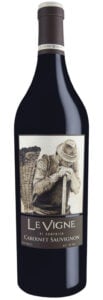
“Farming is a form of gambling,” he lamented.
Here are a few of the estate wines we enjoyed:
Le Vigne Winery Cabernet Sauvignon di Domenico 2021 ($51). Ripe and juicy currant and plum notes accented by chocolate, black pepper and herbs. All cabernet sauvignon.
Le Vigne Winery Cabernet Franc di Domenico 2021 ($51). We liked the spicy and black pepper nuances in this juicy wine with cherry and blueberry flavors.
Le Vigne di Domenico Nero d’Avola 2023 ($42). This wine debuted in 2022 and it’s a hit. Cherry and ripe plum notes with good concentration and a smooth mouthfeel.
Le Vigne Winery Petit Sirah 2021 ($51). One of our favorites from this producer, this petit sirah has guts. Hedonistic plum and blueberry flavors with a dash of spice and herbs. The firm tannins and body make it a good match for barbecued meats.
Le Vigne Winery Sangiovese 2022 ($42). Classic cherry and cranberry flavors with hints of vanilla.
Nerello mascalese
Our introduction to the Sicilian red wine grape nerello mascalese was at an Italian wine tasting in New York City many, many years ago. A few dozen Italian wine producers were showcasing their wares in hopes of finding a U.S. distributor and favorable press coverage. As we moved around the venue tasting the wines, we found ourselves consistently attracted to a particular red wine varietal that was new to us–nerello mascalese. We learned that this grape, which is believed indigenous to Sicily, is most often grown on the slopes of the very active Mt. Etna in the Mt. Etna DOC. Interestingly, DNA analysis indicates that one of this parents of this variety is sangiovese, the dominant grape in Tuscany’s red wines. We also learned that nerello mascalese was a key component in Corvo Red, a Sicilian wine that we discovered and enjoyed in the 1970s.
The grape is rarely bottled as a single varietal, but this may be about to change. More consumers are finding nerello mascalese bottled with a varietal label and at affordable prices.
The Vento Di Mare Nerello Mascalese Sicily IGT 2021 ($20-25) shows the potential of this grape. Grown organically, its style was somewhere between a pinot noir and merlot with bright cherry and raspberry notes in a lively and expressive package. We highly recommend that consumers check out this wine.
Mimosa treat
Granriviera Mimosa ($15). This is a real treat for the price—a wine to serve for a Sunday brunch or just enjoy on the deck. Only 6 percent in alcohol, it is a ready-to-drink blend of three parts Italian sparkling wine, 2 parts freshly squeezed orange from Sicily and a drop of Bergamot. No mixing necessary! No artificial preservatives, color or flavoring.
Wine picks
Nickel & Nickel De Carle Block Cabernet Sauvignon 2023 ($140). Sourcing grapes from the western side of the Rutherford Bench, this well-respected producer has a complex wine with gritty tannins, ripe blackberry and plum flavors with floral aromas. We also enjoyed the 2023 John C. Sullenger Vineyard cabernet sauvignon, another powerful wine meant to age. Nickel & Nickel will be holding a special tasting and culinary experience at the winery on Oct. 11 and 18.
Sequoia Grove Napa Valley Sauvignon Blanc 2025 ($30). Once available only in its tasting room, this excellent sauvignon blanc makes its inaugural debut nationally. The great texture benefits from 8 percent musque clone and 7 percent semillion grapes, not to mention extended aging on its lees. Broad, fresh citrus and tropical fruit notes with herbal notes. Complex and long in the finish, it’s one of the best sauvignon blancs we have tasted this year.
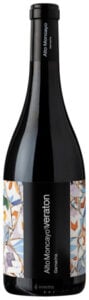
Alto Moncayo Veraton Garnacha 2021 ($30). This is an amazing old-vine garnarcha from the Campo de Borja region of Spain. Lots of fresh and easy black fruit, balsamic and vanilla flavors.
Disclaimer
Artificial Intelligence Disclosure & Legal Disclaimer
AI Content Policy.
To provide our readers with timely and comprehensive coverage, South Florida Reporter uses artificial intelligence (AI) to assist in producing certain articles and visual content.
Articles: AI may be used to assist in research, structural drafting, or data analysis. All AI-assisted text is reviewed and edited by our team to ensure accuracy and adherence to our editorial standards.
Images: Any imagery generated or significantly altered by AI is clearly marked with a disclaimer or watermark to distinguish it from traditional photography or editorial illustrations.
General Disclaimer
The information contained in South Florida Reporter is for general information purposes only.
South Florida Reporter assumes no responsibility for errors or omissions in the contents of the Service. In no event shall South Florida Reporter be liable for any special, direct, indirect, consequential, or incidental damages or any damages whatsoever, whether in an action of contract, negligence or other tort, arising out of or in connection with the use of the Service or the contents of the Service.
The Company reserves the right to make additions, deletions, or modifications to the contents of the Service at any time without prior notice. The Company does not warrant that the Service is free of viruses or other harmful components.