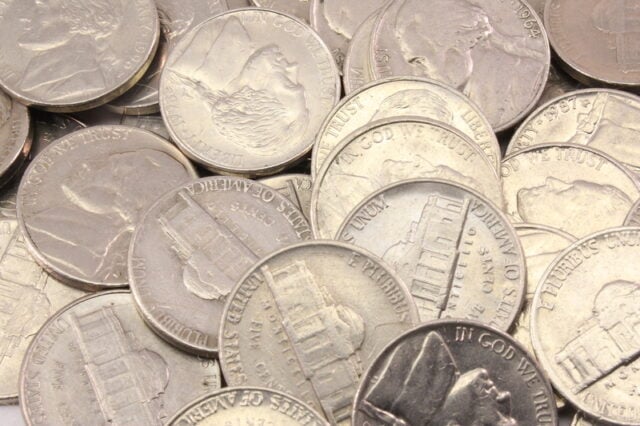
Take a look inside your wallet or couch cushions. You will probably spot a familiar shiny coin. It features Thomas Jefferson on the front. It promises five cents in purchasing power. Yet, that humble nickel is quietly draining money from taxpayers. Today, it costs about thirteen cents to make a single nickel. That upside-down math is sparking serious debate across Washington. Lawmakers and economists are asking a direct question. Is it finally time to retire the nickel for good?
The main culprit behind the soaring cost is raw metal. Nickels are actually made of 75 percent copper and 25 percent nickel. Global demand for both metals has surged dramatically in recent years. Electric vehicles and renewable energy grids need massive amounts of copper. Global supply chain crunches have also driven base metal prices higher. When metal prices climb, minting coins becomes an expensive chore. The gap between production cost and face value is called negative seigniorage. For the nickel, that gap has never looked wider or more alarming.
This is not just a minor accounting headache. The one-cent penny also costs over three cents to produce. However, the nickel creates a much larger dollar loss per unit. Every time the Mint stamps a five-cent piece, it loses eight cents. Over billions of coins minted each year, those losses add up fast. Taxpayers end up footing a bill worth tens of millions annually. As cash usage declines, paying extra to make pocket change makes little sense.
Other countries have already navigated this exact financial dilemma. Canada successfully phased out its physical penny over a decade ago. New Zealand and Australia eliminated five-cent coins with great success. Retailers simply rounded cash totals to the nearest ten cents. Digital payments and credit card transactions remained exact down to the cent. Consumers adapted quickly without any disruption to their daily budgets. Businesses even noticed faster checkout lines at registers.

Phasing out the coin still faces pushback from several industries. Vending machine operators and coin-operated laundromats rely on five-cent pieces. Some consumer advocates also worry about rounding costs affecting low-income shoppers. The Mint has researched lower-cost metal alloys to reduce manufacturing costs. However, alternative metals struggle to match the electrical signature in automated coin machines. Spending thirteen cents to make five cents is simply unsustainable. As digital wallets dominate modern commerce, the nickel’s days may be numbered.
Sources Used
- United States Mint: https://www.usmint.gov
- Federal Reserve Financial Services: https://www.frbservices.org
- U.S. Department of the Treasury: https://home.treasury.gov
- Congressional Research Service: https://crsreports.congress.gov
Disclaimer
Artificial Intelligence Disclosure & Legal Disclaimer
AI Content Policy.
To provide our readers with timely and comprehensive coverage, South Florida Reporter uses artificial intelligence (AI) to assist in producing certain articles and visual content.
Articles: AI may be used to assist in research, structural drafting, or data analysis. All AI-assisted text is reviewed and edited by our team to ensure accuracy and adherence to our editorial standards.
Images: Any imagery generated or significantly altered by AI is clearly marked with a disclaimer or watermark to distinguish it from traditional photography or editorial illustrations.
General Disclaimer
The information contained in South Florida Reporter is for general information purposes only.
South Florida Reporter assumes no responsibility for errors or omissions in the contents of the Service. In no event shall South Florida Reporter be liable for any special, direct, indirect, consequential, or incidental damages or any damages whatsoever, whether in an action of contract, negligence or other tort, arising out of or in connection with the use of the Service or the contents of the Service.
The Company reserves the right to make additions, deletions, or modifications to the contents of the Service at any time without prior notice. The Company does not warrant that the Service is free of viruses or other harmful components.