Ask any truck or bus driver in India about their experience, and they’ll always mention driving in different road conditions and different terrains.
Most importantly, they’ll always mention that the challenge changes every single time.
Real pictures? Let’s say that you’re crawling through peak-hour traffic in Mumbai on a Monday, and by Friday, you’re navigating a rutted hill trail somewhere near Coorg. Same vehicle. Same tires. Very different demands.
That’s Indian driving for you. And honestly, it’s why picking the best tires for Indian roads is so much trickier than people think. Whether it’s an all-terrain option or a focused off-roading tire built for tougher patches, every choice comes with a trade-off.

So, what’s the right direction to go? Here, let us break it down for you.
What Even Is the Difference?
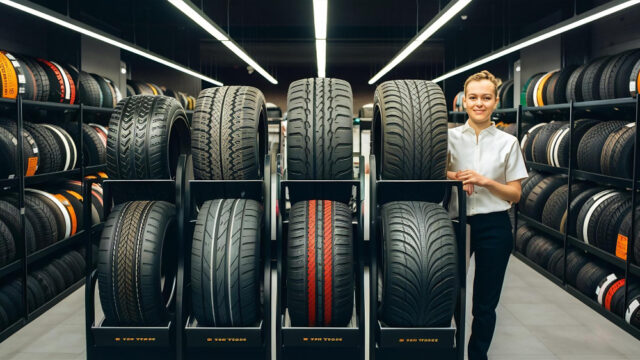
Off-road tires are built for one thing: raw grip in the wild. Deep lugs, wide voids, chunky tread patterns, they’re basically boots for your SUV. Brilliant on rocky Himalayan trails or waterlogged village tracks.
But drive them on a national highway for two hours, and you’ll feel the noise, the fuel drain, and the rough ride. They wear out fast on tarmac, too. That is where a proper off-roading tire shows both its strengths and its limits.
So, what about all-terrain tires? Think of them as the sensible middle child. Here’s how they are built:
The tire tread patterns are less aggressive but smarter; sipes (those tiny cuts in the rubber) help with wet grip during monsoons, while the tread is still open enough to shed mud. They handle a 70/30 road-to-trail split comfortably, which, let’s be honest, is most Indian SUV usage.
Comparing Them Head-to-Head (India Edition)
| What Matters | Off-Road Tires | All-Terrain Tires |
| Mud & Monsoon Grip | Excellent — lugs eject slush fast | Good — sipes handle wet roads well |
| Highway Fuel Efficiency | Poor — high rolling resistance | Better by 10–15% |
| Tire Durability on Pavement | Wears fast | Balanced, lasts longer |
| Ride Noise & Comfort | Loud and stiff | Noticeably quieter |
The tire durability gap is real. All-terrain tires can save you around 20% in replacement costs long-term, which adds up, especially for fleet vehicles or daily commuters who also like a weekend trail.
The Indian Terrain Factor
Here’s something most tire guides skip: India doesn’t have one type of road; it has about eleven.
You’ve got smooth expressways, monsoon slush, broken village roads, Rajasthan sand, Kerala laterite, and Ladakh altitude all in one country. So when people ask how to choose tires, the honest answer is: it depends on where you’re going most of the time.
If your drives are mostly city and highway with occasional gravel tracks, all-terrain wins. No contest. They resist heat cracking (important in summer), handle light off-road without chewing through rubber, and your passengers won’t feel like they’re sitting inside a drum kit.
But if your usage tilts heavily toward rugged tracks, an off-roading tyre set makes more sense even with its comfort trade-offs.
But if you’re a serious overlander or run a Mahindra Thar into actual wilderness more than 70% of the time, proper off-roading tires with deep tread are worth the trade-off in comfort and mileage. Just know what you’re signing up for.
So, How Do You Actually Choose?
Start simple. Ask yourself three things:
- What’s my road split? Mostly city/highway, or genuinely off-road heavy?
- What’s my vehicle? A Fortuner or Scorpio-N handles differently than a compact crossover.
- What’s my budget for replacements?
Check the load index on your tire sidewall; it needs to match your vehicle’s weight rating.
For most urban-to-rural mixed-use, Birla’s all-terrain range is worth a look, built with Indian road realities in mind, not just European highway specs.
One Last Practical Tip
Rotate your tires every 8,000 km. Seriously, half the people who complain about uneven wear are just skipping this. Also, adjust your tire pressure for terrain. Higher pressure for highways, a little lower for off-road to improve grip and absorb shock.
India’s roads aren’t getting simpler. Your tire choice shouldn’t be a gamble.
Explore terrain-tested options at BirlaTyres.com and find the fit that actually makes sense for how and where you drive.
Disclaimer
Artificial Intelligence Disclosure & Legal Disclaimer
AI Content Policy.
To provide our readers with timely and comprehensive coverage, South Florida Reporter uses artificial intelligence (AI) to assist in producing certain articles and visual content.
Articles: AI may be used to assist in research, structural drafting, or data analysis. All AI-assisted text is reviewed and edited by our team to ensure accuracy and adherence to our editorial standards.
Images: Any imagery generated or significantly altered by AI is clearly marked with a disclaimer or watermark to distinguish it from traditional photography or editorial illustrations.
General Disclaimer
The information contained in South Florida Reporter is for general information purposes only.
South Florida Reporter assumes no responsibility for errors or omissions in the contents of the Service. In no event shall South Florida Reporter be liable for any special, direct, indirect, consequential, or incidental damages or any damages whatsoever, whether in an action of contract, negligence or other tort, arising out of or in connection with the use of the Service or the contents of the Service.
The Company reserves the right to make additions, deletions, or modifications to the contents of the Service at any time without prior notice. The Company does not warrant that the Service is free of viruses or other harmful components.