Ravneet Chowdhury is a South Florida-based philanthropist, attorney, and business executive. She is the Founder and President of the Chowdhury Family Foundation, which supports children’s healthcare, education, and humanitarian programs in the United States, Colombia, India, and Nepal. Ravneet Chowdhury also holds an active role in her family’s wellness and beauty business, where she manages corporate operations, compliance, and international business functions across the United States and Latin America. She is a member of the Florida Bar and previously served on the board of Nicklaus Children’s Hospital, including a term as Board Chair. We spoke with Ravneet Chowdhury about her path from New Delhi to South Florida, the philosophy behind her foundation’s work, and how she balances a career in law and business with a full-time commitment to philanthropy.
You grew up in New Delhi and now live in South Florida. How did that move shape the way you approach your work today?
I attended the Convent of Jesus and Mary and Lady Shri Ram College for Women in New Delhi before coming to the United States to study at the University of Miami and later at Nova Southeastern University’s Shepard Broad College of Law. Living and studying on two continents gave me a working knowledge of how different systems, whether legal, business, or charitable, actually function on the ground. That dual perspective shapes how the Chowdhury Family Foundation designs programs in India and Nepal as much as it shapes how I approach the legal and operational side of our family business here in Florida.
You hold a law degree and are a member of the Florida Bar. Has your legal background changed how you run the foundation?

Yes, considerably. A law degree trains you to look closely at structure, accountability, and follow-through, and I apply that same scrutiny to the foundation’s programs. Before the Chowdhury Family Foundation commits to a partner organization in healthcare or education, I want to understand exactly how funds will be used and how outcomes will be measured. That habit came directly from legal training, not from philanthropy itself.
The Chowdhury Family Foundation works across four countries. What does that international footprint look like in practice?
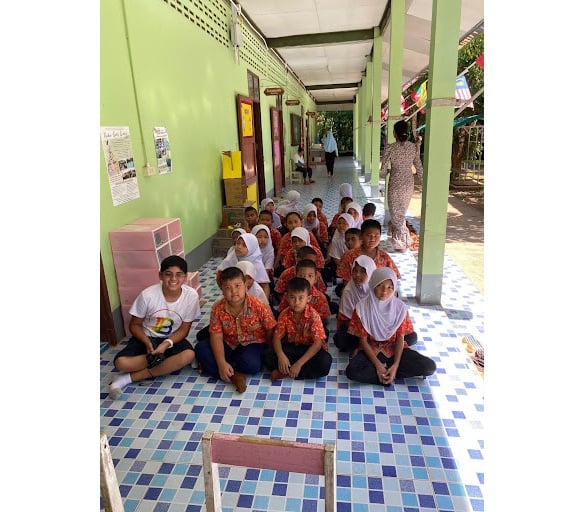
The foundation’s core focus is children’s healthcare, girls’ education, and women’s empowerment, and we carry that work into the United States, Colombia, India, and Nepal. In practice, that means different partners and different program designs in each place, because the needs of a hospital network in South Florida are not the same as the needs of a girls’ education program in a rural district in India. I spend a meaningful amount of time visiting these programs directly rather than managing them solely from reports, because seeing a classroom or a clinic in person reveals things a spreadsheet cannot.
You served on the board of Nicklaus Children’s Hospital for nearly a decade, including as Board Chair. What did that experience teach you about long-term philanthropic commitment?
I joined that board in 2010 and stayed through 2019, and the Board Chair role came only after years of consistent attendance. That experience taught me that meaningful philanthropic relationships are built the same way strong legal or business relationships are built, through consistency and trust over time rather than through a single large gift or a single high-profile event.
Beyond Nicklaus Children’s Hospital, you have supported organizations like Camillus House and the Rose Day program through Women of Tomorrow. What connects these different causes for you?
Each of those organizations works with people who are frequently overlooked in broader philanthropic conversations, whether that is families facing homelessness through Camillus House or young women who need mentorship and scholarship support through Women of Tomorrow. I am drawn to organizations that reach the communities most likely to be left off other people’s lists.
You also manage corporate operations and compliance for your family’s wellness and beauty business, which operates across the United States and Latin America. How do you divide your attention between that role and the foundation?
I treat them as two full-time responsibilities rather than one primary job with a side project. The business side requires ongoing attention to compliance and operations across multiple countries, and the foundation requires the same level of attention to program design and partner accountability. I protect dedicated blocks of time for each so that neither one receives only partial attention.
You are a member of YPO Miami and have served on the board of the Florida Grand Opera. Why get involved in organizations outside of healthcare and education specifically?
Community leadership is not limited to the causes closest to my foundation’s mission. YPO Miami connects me with other business leaders navigating similar operational and governance questions, and my time with the Florida Grand Opera reflects a belief that cultural institutions deserve the same level of committed board leadership as healthcare or education nonprofits.
What is a belief you hold about philanthropy that you find yourself explaining or defending often?
That investing in girls’ education produces returns that compound across generations in a way most other forms of giving do not. It is often treated as a feel-good cause rather than a serious, high-yield investment, but the long-term data on outcomes for families and communities makes a strong case for prioritizing it.
Speaking Hindi, Punjabi, and Spanish, how much has language shaped your ability to do this work across different countries?
It matters more than people expect. Being able to speak directly with program partners in India or with our teams in Latin America, without relying entirely on a translator, changes the quality of the relationship. It signals that you are present in a real way, not just funding from a distance.
What advice would you give to someone early in their career who wants to build both a professional career and a serious philanthropic commitment at the same time, the way you have?
Do not wait until you feel completely ready to take on a leadership role, whether in your career or in a nonprofit boardroom. I held back at points earlier in my career, assuming I needed more time or more credentials first, and I look back on that as time I could have used differently. Readiness tends to develop through the work itself, not before it.
Ravneet Chowdhury continues to lead the Chowdhury Family Foundation while maintaining her role in her family’s business operations across the United States and Latin America.
Disclaimer
Artificial Intelligence Disclosure & Legal Disclaimer
AI Content Policy.
To provide our readers with timely and comprehensive coverage, South Florida Reporter uses artificial intelligence (AI) to assist in producing certain articles and visual content.
Articles: AI may be used to assist in research, structural drafting, or data analysis. All AI-assisted text is reviewed and edited by our team to ensure accuracy and adherence to our editorial standards.
Images: Any imagery generated or significantly altered by AI is clearly marked with a disclaimer or watermark to distinguish it from traditional photography or editorial illustrations.
General Disclaimer
The information contained in South Florida Reporter is for general information purposes only.
South Florida Reporter assumes no responsibility for errors or omissions in the contents of the Service. In no event shall South Florida Reporter be liable for any special, direct, indirect, consequential, or incidental damages or any damages whatsoever, whether in an action of contract, negligence or other tort, arising out of or in connection with the use of the Service or the contents of the Service.
The Company reserves the right to make additions, deletions, or modifications to the contents of the Service at any time without prior notice. The Company does not warrant that the Service is free of viruses or other harmful components.