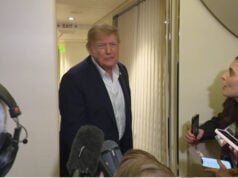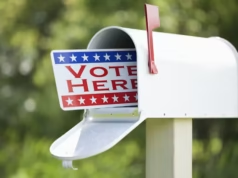
If you’ve been keeping an eye on the news lately, election policy has taken center stage in a big way. President Donald Trump is mounting a powerful, two-pronged strategy ahead of the midterm elections to overhaul how citizens register and cast their ballots nationwide. On Capitol Hill, he is demanding that the Senate pass the Safeguard American Voter Eligibility (SAVE) Act. Simultaneously, his administration has made an urgent request to the U.S. Supreme Court, asking the justices to clear the way for new restrictions on mail-in voting.
The Fight Over the SAVE Act
Let’s start with what is happening in Congress. The SAVE Act—and its expanded counterpart, the SAVE America Act—passed the House of Representatives earlier this year, but it has stalled in the Senate. Trump has made passing this bill one of his primary political priorities, calling on Senate leadership to push it through or even attach it to must-pass federal legislation.
At its core, the proposed law would require voters to present physical proof of U.S. citizenship, such as an original birth certificate or a valid passport, when registering to vote or updating their registration details. It would also establish strict photo identification mandates at polling places. Proponents argue these measures are necessary safeguards to guarantee that only citizens participate in federal elections. However, opponents contend that noncitizen voting is already illegal and extremely rare, warning that the rigid documentation requirements will create major hurdles for millions of eligible American voters who lack immediate access to those documents.
Taking Mail-In Voting to the High Court
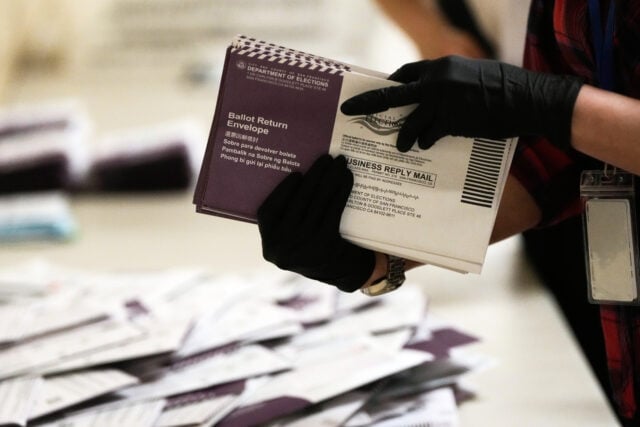
While Congress debates the SAVE Act, the administration is fighting a separate legal battle over executive action. In March, Trump signed an executive order aimed at overhauling mail-in balloting. The order directs the Department of Homeland Security to construct official lists of eligible voters and instructs the U.S. Postal Service to restrict mail-in ballots exclusively to voters on those state lists. It also mandates tracked barcode envelopes and penalizes non-compliant states by withholding federal funds.

After nearly two dozen states filed lawsuits, a federal judge in Massachusetts and the 1st U.S. Circuit Court of Appeals blocked key provisions of the order, ruling that the U.S. Constitution grants individual states—not the executive branch—the power to run elections. In response, the Justice Department appealed directly to the Supreme Court, asking the justices to lift the injunction so the policies can be implemented before the November midterms.
Looking Ahead
These twin efforts represent one of the most aggressive federal pushes regarding voting rules in recent memory. With control of Congress on the line in the midterms, the decisions made by the Senate and the Supreme Court over the coming weeks could redefine how millions of Americans vote.
Sources and Links:
- Washington Post: Trump administration asks Supreme Court to allow new limits on mail ballots
- CBS News: Trump asks Supreme Court to step into dispute over mail-in voting executive order
- Courthouse News Service: Trump administration urges Supreme Court to allow order targeting mail-in voting before midterms
- Center for American Progress: The SAVE Act May Be Stalled in Congress, But State Versions Are Being Advanced All Across the Country
- Bipartisan Policy Center: Six Things to Know About the SAVE America Act
- News From The States: Trump administration sustains defeat on vote-by-mail order in federal appeals court
Disclaimer
Artificial Intelligence Disclosure & Legal Disclaimer
AI Content Policy.
To provide our readers with timely and comprehensive coverage, South Florida Reporter uses artificial intelligence (AI) to assist in producing certain articles and visual content.
Articles: AI may be used to assist in research, structural drafting, or data analysis. All AI-assisted text is reviewed and edited by our team to ensure accuracy and adherence to our editorial standards.
Images: Any imagery generated or significantly altered by AI is clearly marked with a disclaimer or watermark to distinguish it from traditional photography or editorial illustrations.
General Disclaimer
The information contained in South Florida Reporter is for general information purposes only.
South Florida Reporter assumes no responsibility for errors or omissions in the contents of the Service. In no event shall South Florida Reporter be liable for any special, direct, indirect, consequential, or incidental damages or any damages whatsoever, whether in an action of contract, negligence or other tort, arising out of or in connection with the use of the Service or the contents of the Service.
The Company reserves the right to make additions, deletions, or modifications to the contents of the Service at any time without prior notice. The Company does not warrant that the Service is free of viruses or other harmful components.