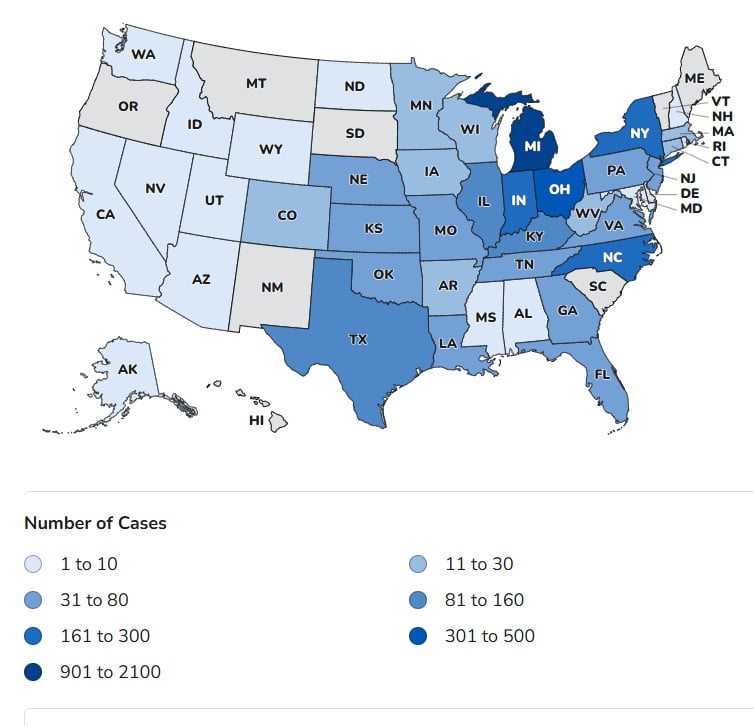
If you have been keeping an eye on public health news lately, you might have noticed a concerning rise in reports of a lesser-known foodborne illness: cyclosporiasis. The U.S. Food and Drug Administration (FDA) and the Centers for Disease Control and Prevention (CDC) are currently investigating multiple clusters of Cyclospora infections nationwide, with thousands of cases reported across 41 states.
Here is a breakdown of what Cyclospora is, why cases are climbing, how federal agencies are responding, and what you can do to protect your household.
What Is Cyclospora?
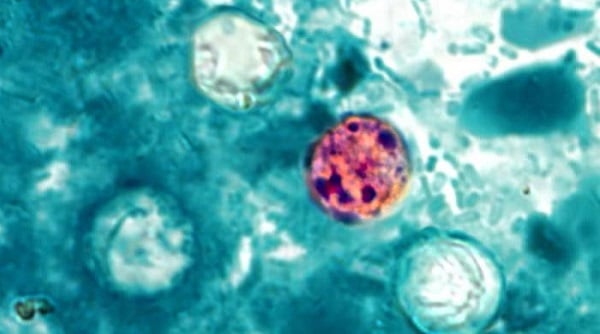
Cyclospora cayetanensis is a microscopic, single-celled parasite that infects the small intestine, leading to an intestinal illness known as cyclosporiasis. Unlike typical bacterial food poisoning from E. coli or Salmonella that strikes within hours, Cyclospora usually takes about one week after ingestion to cause symptoms.
Common symptoms include:

- Frequent, watery diarrhea (which can linger for weeks or resolve and return)
- Severe abdominal cramps and bloating
- Extreme fatigue, nausea, and appetite loss
- Unintended weight loss
The parasite spreads when people consume food or water contaminated with human feces containing Cyclospora. Because the parasite requires time outside the human body—often days to weeks—to become infectious, direct person-to-person transmission is extremely rare.
Scope of Current FDA Investigations
During warm summer months, Cyclospora infections historically trend upward. However, recent data indicates a significant surge compared to prior years. The CDC has logged over 4,000 lab-confirmed domestic cases, with thousands of additional potential cases currently undergoing laboratory analysis and traceback investigation.
The FDA’s Coordinated Outbreak Response and Evaluation (CORE) team is actively investigating several outbreak clusters. Major investigation points include:
- Fresh Produce Supply Chains: Public health officials have concentrated traceback efforts on fresh produce, including recent voluntary recalls of shredded iceberg lettuce sourced from Mexico.
- Regional Hotspots: States in the Midwest—such as Michigan, Ohio, and Indiana—have reported unusually sharp spikes in local cases.
- Multiple Active Clusters: Federal investigators are simultaneously tracking multiple distinct clusters to determine if multiple food items or suppliers are involved.
Why Tracing Cyclospora Is Challenging
Investigating Cyclospora outbreaks is notoriously difficult for public health agencies. First, because symptoms take up to two weeks to appear, patients often struggle to recall exactly what fresh produce they consumed or where it was purchased. Second, standard medical stool tests frequently miss Cyclospora, requiring healthcare providers to specifically order targeted PCR or molecular testing. Finally, fresh produce moves rapidly through distribution networks, meaning contaminated batches are often long gone by the time illnesses are connected.
Practical Prevention Steps
While washing produce under running water is always recommended, chemical sanitizers and washing alone may not completely eliminate Cyclospora parasites. To reduce risk:
- Stay updated on active FDA recalls and avoid implicated products.
- Thoroughly rinse all raw fruits and vegetables before eating.
- Request a specific Cyclospora diagnostic test from your doctor if you experience persistent watery diarrhea after consuming produce.
Final Takeaway
Foodborne parasite outbreaks are frustratingly complex, but staying informed is your best defense. By keeping an eye on recall notices, practicing food hygiene, and acting quickly if symptoms appear, you can protect your health while enjoying fresh, healthy produce.
Sources and Links:
- CIDRAP (Center for Infectious Disease Research and Policy): FDA identifies new Cyclospora outbreak with unknown source
- CDC (Centers for Disease Control and Prevention): Surveillance of Cyclosporiasis
- CDC Health Alert Network (HAN): Domestically Acquired Cyclosporiasis Cases in Multiple U.S. States
- CBS News: Maryland’s cyclospora outbreak surpasses 100 cases, as FDA continues to investigate the source
- Washington Examiner: FDA investigates at least four cyclosporiasis clusters as potential sources multiply
- Food Safety Magazine: CDC Reports Up to 7,000 Cyclosporiasis Cases Across U.S., Identifies Large Midwestern Outbreak Cluster
Disclaimer
Artificial Intelligence Disclosure & Legal Disclaimer
AI Content Policy.
To provide our readers with timely and comprehensive coverage, South Florida Reporter uses artificial intelligence (AI) to assist in producing certain articles and visual content.
Articles: AI may be used to assist in research, structural drafting, or data analysis. All AI-assisted text is reviewed and edited by our team to ensure accuracy and adherence to our editorial standards.
Images: Any imagery generated or significantly altered by AI is clearly marked with a disclaimer or watermark to distinguish it from traditional photography or editorial illustrations.
General Disclaimer
The information contained in South Florida Reporter is for general information purposes only.
South Florida Reporter assumes no responsibility for errors or omissions in the contents of the Service. In no event shall South Florida Reporter be liable for any special, direct, indirect, consequential, or incidental damages or any damages whatsoever, whether in an action of contract, negligence or other tort, arising out of or in connection with the use of the Service or the contents of the Service.
The Company reserves the right to make additions, deletions, or modifications to the contents of the Service at any time without prior notice. The Company does not warrant that the Service is free of viruses or other harmful components.