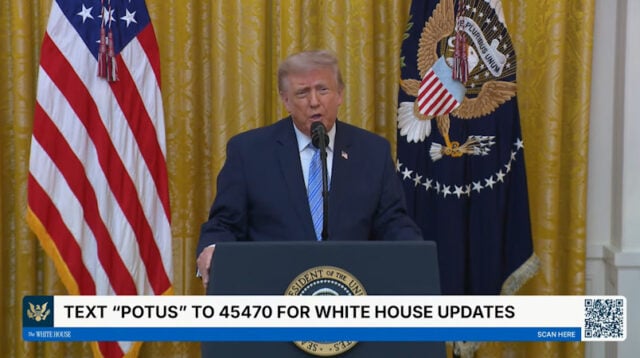
In a highly anticipated primetime address delivered from the White House at 9:00 PM ET on Thursday, July 16, 2026, President Donald Trump unveiled newly declassified intelligence documents to accuse China of carrying out the largest election security breach in American history. Focusing heavily on themes of foreign meddling and systemic electoral weakness, Trump asserted that foreign adversaries—specifically the People’s Republic of China—have persistently targeted domestic voting frameworks to alter the landscape of American political debate. Central to the president’s address was a sweeping warning regarding electronic voting machines and data breaches, paired with an announcement that the Department of Homeland Security (DHS) will release highly explicit technical guidance regarding underlying electoral vulnerabilities tomorrow morning.
The Chinese “Data Nightmare” Alleged by the White House
During his address, Trump detailed an alleged Chinese state cyber campaign that spanned from 2020 through 2023, resulting in the illicit capture of roughly 220 million U.S. voter registration files. According to the newly unsealed papers, these compromises yielded access to individual citizen names, residential addresses, contact numbers, party preferences, and military status records. Trump labeled the operation “an unprecedented election security nightmare” and leveled heavy criticism against intelligence gatekeepers from previous cycles who allegedly kept the scale of the intrusion masked from both the public and congressional oversight committees.
He went on to assert that the declassified files demonstrate Beijing “fought like hell” to prevent his return to office during the 2020 presidential race, pointing to a highly contested minority dissenting assessment within previous intelligence summaries. White House officials traveling with the president confirmed prior to the speech that while hundreds of pages of raw intelligence were being pushed live to the executive website, the provided documents do not contain direct evidence that any individual machine was manipulated or that vote totals themselves were modified by foreign actors during counting.
DHS Friday Briefing to Highlight Voting Machine Vulnerabilities
Shifting focus from past vulnerabilities to imminent operational safety, Trump highlighted upcoming emergency measures drafted by the Department of Homeland Security. He revealed that DHS Secretary Markwayne Mullin is scheduled to anchor a comprehensive intelligence briefing on Friday, July 17, 2026. The briefing is expected to expose distinct cyber vulnerabilities tied to active electronic voting machines across multiple key jurisdictions.

“We are actively engaging with state governors and local administrators to push immediate software patches and security reinforcements before the 2026 midterm cycle opens up,” Trump stated, noting that the administration intends to compel strict defensive compliance. Furthermore, Trump specified that he has legally authorized the DHS to execute data-matching mandates across all 50 states, forcing immediate audits to flag and remove any noncitizens currently registered on regional voter lists.
This incoming Friday brief builds upon a broader administrative push to reshape local voting mechanics. Just last week, DHS tied the distribution of its massive $1 billion Homeland Security Grant Program directly to compliance with federally directed election mandates. Under those rules, states risk losing 20% of their critical counterterrorism and disaster preparedness funds unless they formally commit to transitioning away from electronic barcode or QR-code reading machines toward hand-marked paper ballots, implementing manual 5% ballot audits, and opening voter databases to federal citizenship verification tools like the Systematic Alien Verification for Entitlements (SAVE) database.
Intelligence Community Contrast and Political Pushback
The dramatic claims delivered during the primetime speech instantly sparked intense counter-assessments from intelligence historians and legislative leaders. Official consensus from the broader U.S. Intelligence Community—including foundational assessments by the National Intelligence Council (NIC)—has maintained with high confidence that while China engaged in public opinion monitoring, they did not alter technical ballot processes or compromise physical infrastructure during past cycles. Experts like David Becker from the Center for Election Innovation & Research quickly pointed out that the vast majority of voter registration data is legally designated as public information, commercially accessible, and fundamentally separate from actual vote-counting systems, meaning acquisition does not equal voter fraud capability.
The speech met with rapid condemnation across Capitol Hill. House Democratic Leader Hakeem Jeffries dismissed the speech as a collection of unfounded conspiracy theories designed to erode public trust in upcoming elections, labeling the claims entirely meritless. Rep. Ro Khanna, the ranking Democrat on the House China Committee, voiced deep irritation that Congress was left completely unbriefed on these purported findings prior to a mass public broadcast.
Concurrently, nonpartisan groups like the Brennan Center for Justice warned that the administration’s aggressive tone on foreign threats contrasts sharply with recent domestic policies. They noted that since early 2025, downscaling initiatives have cut nearly one-third of the workforce at the Cybersecurity and Infrastructure Security Agency (CISA) and entirely unseated leadership at the U.S. Election Assistance Commission (EAC), shifting the massive burden of cyber defense entirely onto underfunded local election offices.
Sources and Links:
- CBS News (Live Updates): Trump gives primetime speech on elections as White House alleges Chinese access to voter data
- CBS News (Politics): Trump to allege Chinese meddling in U.S. elections in primetime speech, sources say
- CBS News (Analysis): Trump zeroes in on election security. His team has cut thousands of election-focused federal workers.
- U.S. Department of Homeland Security (Official Release): DHS Requires States to Adopt Common-Sense Election Security Measures Before Receiving Federal Funds
- Washington Examiner: DHS makes counterterrorism grants dependent on states’ election security policies
- Nextgov/FCW: Feds tie counterterrorism grants to election security measures
- Democracy Docket: DHS relaunches voter purge database in 4 red states
- Brennan Center for Justice: Threat of Foreign Influence on U.S. Elections Remain as Federal Defenses Recede
- The Guardian (Live Coverage): Democratic senator says Trump speech likely to be more ‘election denialism’
Disclaimer
Artificial Intelligence Disclosure & Legal Disclaimer
AI Content Policy.
To provide our readers with timely and comprehensive coverage, South Florida Reporter uses artificial intelligence (AI) to assist in producing certain articles and visual content.
Articles: AI may be used to assist in research, structural drafting, or data analysis. All AI-assisted text is reviewed and edited by our team to ensure accuracy and adherence to our editorial standards.
Images: Any imagery generated or significantly altered by AI is clearly marked with a disclaimer or watermark to distinguish it from traditional photography or editorial illustrations.
General Disclaimer
The information contained in South Florida Reporter is for general information purposes only.
South Florida Reporter assumes no responsibility for errors or omissions in the contents of the Service. In no event shall South Florida Reporter be liable for any special, direct, indirect, consequential, or incidental damages or any damages whatsoever, whether in an action of contract, negligence or other tort, arising out of or in connection with the use of the Service or the contents of the Service.
The Company reserves the right to make additions, deletions, or modifications to the contents of the Service at any time without prior notice. The Company does not warrant that the Service is free of viruses or other harmful components.