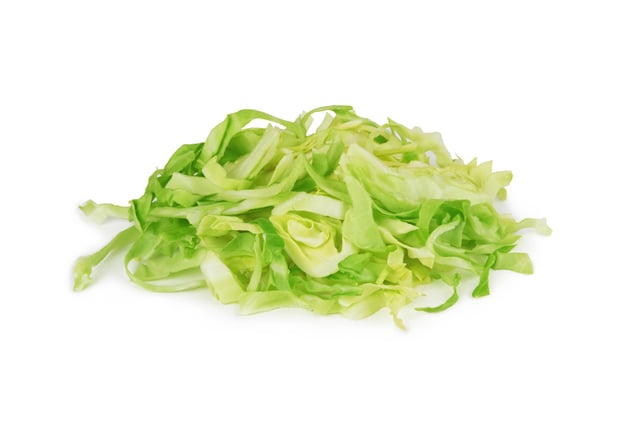
If you’ve driven past a local Taco Bell lately and noticed signs warning that they’re temporarily out of lettuce, tomatoes, or guacamole, you aren’t alone. We finally have a major breakthrough in the mystery behind the massive stomach bug that’s been sweeping the country this summer. Federal investigators have officially pointed their fingers at a specific culprit: contaminated shredded iceberg lettuce.
According to sources close to the ongoing investigation by the Food and Drug Administration (FDA) and the Centers for Disease Control and Prevention (CDC), the tainted greens were traced back to Taylor Farms, a massive produce giant that supplies a huge portion of the fast-food industry. Specifically, the issue stems from shredded iceberg lettuce sent to Taco Bell locations across multiple states, which has been linked to a single supplier operating down in Mexico.
It’s an alarming situation, and if you’ve been tracking the sheer scale of this parasitic outbreak, the newly uncovered details show just how easily a single node in our global food supply chain can impact dinner tables across the nation.
The Reality on the Ground: Let’s Look at the Numbers
To really understand why health officials are scrambling, you have to look at the sheer velocity of this outbreak. The parasite responsible for all of this is Cyclospora, a microscopic bug that causes a pretty miserable gastrointestinal illness called cyclosporiasis. While the official federal numbers are high, local state data reveals that the true scope of the crisis is even more massive than initially reported.

Here is exactly where things stand right now based on the latest health updates:
| Outbreak Tracker | Official CDC Count | Real-Time State & Local Data |
| Confirmed Cases | 1,645 lab-confirmed cases | 6,756+ total cases |
| Geographic Spread | 34 states affected | 38 states affected |
| Hospitalizations | 141 to 145 people | 145+ people |
| The Backlog | 5,100 cases pending analysis | — |
| Hardest-Hit Area | Southeastern Michigan (4,300+ cases) | Entire State of Michigan |
As you can see, the gap between what’s officially logged by the CDC and what local clinics are experiencing is pretty wide. The CDC explicitly notes that there’s a backlog of over 5,100 cases currently under analysis, meaning these numbers will keep climbing well into the end of August. Michigan has borne the brunt of this wave, reporting an unprecedented surge that has overwhelmed local health departments.
How Investigators Cracked the Case
You might wonder how detectives figure out that a single ingredient in a fast-food meal is causing thousands of people to get sick hundreds of miles away. It turns out it comes down to old-school interviews mixed with modern data science.
When health departments started noticing an unusual spike in people reporting severe stomach issues, they began interviewing patients about what they ate in the days leading up to their symptoms. A massive pattern quickly jumped off the page: a remarkably high percentage of the sick individuals reported eating at Taco Bell. When investigators dug into the specific menu items these patients ordered, one common denominator popped up constantly—shredded iceberg lettuce.
Once the FDA followed the paperwork trail from those specific Taco Bell franchises, the tracks led straight to Taylor Farms. Taylor Farms is essentially the titan of North American salad greens, operating dozens of processing facilities and supplying everything from your local supermarket meal kits to massive fast-food chains. In this specific instance, the tainted batches of lettuce distributed to Taco Bell locations in at least five states—Indiana, Kentucky, Michigan, Ohio, and West Virginia—were all tied back to that single Mexican agricultural source.
Why Can’t We Just Wash the Lettuce?
Here is the frustrating reality of Cyclospora: it is a remarkably tough little parasite. A lot of people assume that if you just give your vegetables a good rinse under the kitchen tap, you’ll wash away any potential danger. But as food safety experts point out, you literally cannot rinse your way out of a Cyclospora problem.
When the parasite is out in the environment, it forms a protective, double-layered shell called an oocyst. This shell acts like a microscopic suit of armor. It makes the parasite completely immune to standard chlorine washes, chemical rinses, and food-grade sanitizers used by commercial processors. Once those sticky oocysts attach themselves to the jagged edges of shredded iceberg lettuce leaves, they hold on tight. The only absolute way to kill the parasite is by cooking the food to high temperatures, which obviously isn’t an option for a crisp taco topping.
How Taco Bell and Consumers are Responding
The good news is that once the pattern became clear, action was swift. Even before official federal advisories hit the press, Taco Bell moved proactively to safeguard its customers. A company spokesperson confirmed that they voluntarily pulled the potentially impacted lettuce from their supply chains across the select affected states. They’ve committed to completely replacing the ingredient nationwide from alternative suppliers within a 24-hour window.
If you happen to love fresh greens, health officials are recommending a bit of extra caution over the next few weeks while the supply chain clears out. If you’re prepping salads at home, buying a whole head of lettuce and discarding the outer leaves is generally safer than buying pre-bagged, pre-shredded mixes right now. And if you do start experiencing that signature watery, explosive diarrhea, severe fatigue, or stomach cramps, don’t just try to tough it out—reach out to a healthcare professional, as a simple course of antibiotics can clear it right up.
Sources and Links:
- Business Insider: Shredded lettuce supplied to Taco Bell identified as a source of cyclospora that causes watery diarrhea https://www.businessinsider.com/cyclospora-outbreak-cause-identified-contaminated-lettuce-2026-7
- The Washington Post: Lettuce supplier identified as potential source of cyclosporiasis outbreak https://www.washingtonpost.com/health/2026/07/16/lettuce-supplier-is-potential-source-cyclosporiasis-outbreak-investigators-say/
- The Guardian: Cyclosporiasis: officials looking at Taco Bell lettuce supplier as potential source of outbreak https://www.theguardian.com/us-news/2026/jul/16/taco-bell-lettuce-cyclosporiasis-outbreak
- FOX 13 News: CDC investigates rising Cyclospora parasite cases https://www.fox13news.com/news/source-cyclosporiasis-outbreak-possibly-linked-lettuce-sold-taco-bell-supplier-report
Disclaimer
Artificial Intelligence Disclosure & Legal Disclaimer
AI Content Policy.
To provide our readers with timely and comprehensive coverage, South Florida Reporter uses artificial intelligence (AI) to assist in producing certain articles and visual content.
Articles: AI may be used to assist in research, structural drafting, or data analysis. All AI-assisted text is reviewed and edited by our team to ensure accuracy and adherence to our editorial standards.
Images: Any imagery generated or significantly altered by AI is clearly marked with a disclaimer or watermark to distinguish it from traditional photography or editorial illustrations.
General Disclaimer
The information contained in South Florida Reporter is for general information purposes only.
South Florida Reporter assumes no responsibility for errors or omissions in the contents of the Service. In no event shall South Florida Reporter be liable for any special, direct, indirect, consequential, or incidental damages or any damages whatsoever, whether in an action of contract, negligence or other tort, arising out of or in connection with the use of the Service or the contents of the Service.
The Company reserves the right to make additions, deletions, or modifications to the contents of the Service at any time without prior notice. The Company does not warrant that the Service is free of viruses or other harmful components.