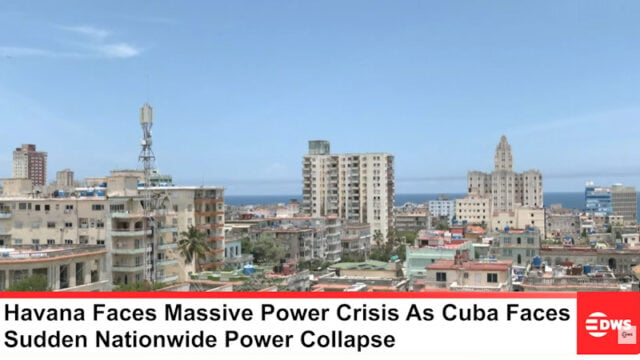
HAVANA — On Monday, July 6, 2026, the fragile reality of daily life in Cuba dissolved into total darkness once again. In a swift, systemic failure, the island’s National Electrical System (SEN) suffered a complete and catastrophic disconnection. The sudden collapse plunged nearly 10 million people into a blackout, leaving the capital city of Havana with barely 1% of its normal power capacity—just enough to keep a select few critical hospitals and food-processing plants from going dark.
This latest disaster is not an isolated malfunction; it represents the third total grid collapse of 2026 alone, and the eighth major nationwide blackout since October 2025. For an exhausted population already grappling with chronic shortages of food, clean water, and basic medicine, the failure of the electrical grid has pushed the island into its deepest humanitarian and economic crisis since the “Special Period” of the 1990s.
The Anatomy of a Chronic Deficit
The fundamental problem tearing apart Cuba’s energy sector is a massive, structural mismatch between supply and demand. During peak evening hours, the island requires roughly 3,000 megawatts (MW) of electrical power to keep residential appliances, lights, and basic air conditioning running. However, by mid-2026, actual generation has frequently plummeted to between 1,200 MW and 1,300 MW.
This leaves a staggering deficit of over 1,700 MW unmet during peak hours. To manage this shortfall and protect the physical wires of the grid from melting under severe load imbalances, the state-run Electric Union (UNE) has resorted to aggressive rolling blackouts. In the eastern provinces, these deliberate outages frequently stretch between 18 and 24 consecutive hours, rendering normal human activity nearly impossible.

| Date of Major Grid Event | Technical or Geopolitical Trigger | Extent of National Impact |
| October 2024 | Unexpected shutdown at Antonio Guiteras Plant | Total nationwide grid collapse; multi-day blackout. |
| December 2024 | Automated safety trip due to frequency instability | Complete national shutdown; schools and non-essential work suspended. |
| March 5, 2026 | Sudden frequency drop and localized grid disconnection | Total national collapse; power slowly restored over 48 hours. |
| March 16, 2026 | Severe boiler leak at the Antonio Guiteras facility | Island-wide blackout lasting over 29 hours from Camagüey to Pinar del Río. |
| May 15, 2026 | Complete depletion of imported Russian fuel reserves | Collapse of the eastern provincial sub-grids; rolling 24-hour outages. |
| July 6, 2026 | Unspecified major plant failure and cascading disconnect | Total nationwide collapse; less than 1% of Havana was initially powered. |
A Crumbling Foundation: Aging Thermal Infrastructure
To understand why a single equipment failure can cause an entire country to lose power simultaneously, one must look at Cuba’s highly centralized, antiquated infrastructure. The backbone of the island’s electricity generation relies on a network of large, heavy-oil-fired thermoelectric power plants built decades ago with Soviet and Soviet-bloc assistance.
The flagship of this system is the Antonio Guiteras plant located in Matanzas. Because these facilities have long outlived their intended operational lifespans, they require constant, intensive maintenance. However, due to a severe lack of foreign currency reserves and restricted access to international supply chains, routine maintenance is chronically delayed. Essential spare parts are nearly impossible to secure.
Compounding this mechanical decay is the composition of the fuel being utilized. Lacking lighter, cleaner imported crude oil, Cuba has been forced to burn its own domestic crude in these aging plants. Domestic Cuban crude is exceptionally heavy and dense, with an incredibly high sulfur content. When burned, this sulfur creates highly corrosive byproducts that aggressively eat away at the internal plumbing, boilers, and turbines of the power plants. The result is a never-ending cycle of boiler leaks, tube ruptures, and automated safety trips. Because the grid lacks built-in redundancy or modern automated frequency stabilizers, when a mega-unit like Antonio Guiteras abruptly goes offline, the sudden drop in electrical frequency triggers a cascading domino effect that automatically shuts down every other connected plant on the island within minutes.
The Geopolitical Stranglehold on Oil Imports
While mechanical failures spark these blackouts, a severe, artificial fuel shortage is the underlying cause of the crisis. Historically, Cuba relied heavily on deeply subsidized crude oil shipments from its close political ally, Venezuela. However, the geopolitical landscape shifted dramatically in early 2026.
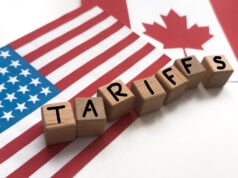
The U.S. administration intensified economic pressure on the Cuban government by threatening to impose steep tariffs on any country or shipping company that sells, transports, or supplies oil to the island. This aggressive energy blockade successfully disrupted Cuba’s traditional supply chains:
- Venezuela: Shipments were sharply curtailed as maritime transport companies avoided Cuban ports to escape financial blacklisting.
- Mexico: Planned emergency energy exports to the island were suspended due to the risk of sweeping trade penalties.
- Russia: While a Russian tanker successfully delivered 730,000 barrels of oil to the island in late March 2026, those reserves were entirely consumed by the end of April, leaving the island completely exposed to the sweltering summer heat.
With oil imports temporarily dropping to near-zero levels during parts of early 2026, the Cuban government has found itself utterly paralyzed, unable to purchase alternative fuel on the open global commodities market due to a total lack of international credit.
The Human Toll and Social Friction
Behind the sterile data of megawatts and fuel barrels lies a profound human toll. The rolling blackouts make it nearly impossible for ordinary citizens to sleep or work in the intense tropical heat. Without electricity, domestic refrigerators fail, causing hard-to-find food rations to spoil instantly. Water distribution networks, which rely heavily on electric pumps to move water into urban neighborhoods, have ground to a halt, forcing families to carry heavy buckets of water across city streets.
“We cannot live like this anymore,” whispered one Havana resident during a recent outage. “It is not just the dark; it is the heat, the mosquitoes, the food spoiling, and the uncertainty of not knowing if the lights will come back on tomorrow or next week.”
This mounting desperation has translated into visible social unrest. In mid-May 2026, massive crowds of residents took to the streets in several Havana neighborhoods and eastern provinces. In a collective expression of anger known as cacerolazos, citizens banged empty pots and pans together in the dark and set fire to trash containers to protest the government’s handling of the energy grid. In response to the growing public pressure, Cuban officials have engaged in preliminary bilateral talks with U.S. representatives to seek humanitarian pathways to ease the energy embargo, though concrete diplomatic breakthroughs remain elusive.
The Search for a Sustainable Alternative
As a long-term solution to its centralized vulnerability, Cuba is heavily betting on an energy transition backed by Chinese investment. The center of this initiative is a comprehensive program to install 92 massive solar parks across the island by the year 2028, aiming to introduce over 2,000 MW of renewable capacity.
By the first half of 2026, 34 of these solar parks had been successfully synchronized with the national grid, providing roughly 560 MW of power during peak daylight hours. While this renewable energy helps alleviate the strain on thermal plants during the day, it fails to address the root of the residential crisis. Solar generation naturally drops to zero precisely during the evening peak between 7:00 PM and 10:00 PM—the exact window when residential energy demand spikes as families return home to cook and run appliances. To bridge this nighttime gap, Cuba requires billions of dollars worth of industrial battery storage systems, an investment that the cash-strapped government simply cannot afford without substantial foreign aid.
Until structural renovations, reliable fuel access, or massive battery storage networks are secured, the island remains caught in a exhausting loop of systemic failures. For the citizens of Cuba, the immediate future holds little promise of structural relief, leaving a nation of 10 million people to navigate their lives one unpredictable blackout at a time.
Sources and Links:
- Electric Choice: “Cuba Electricity: 2026 Crisis, Grid Overview & History” — https://www.electricchoice.com/blog/cuba-electricity-crisis/
- Encyclopaedia Britannica: “Why did Cuba lose electrical power in 2026?” — https://www.britannica.com/question/Why-did-Cuba-lose-electrical-power-in-2026
- The University of Alabama at Birmingham (Institute for Human Rights): “Cuba’s Electricity Crisis: What’s Happening and What Comes Next” — https://sites.uab.edu/humanrights/2025/10/10/cubas-electricity-crisis-whats-happening-and-what-comes-next/
- GV Wire / Reuters: “Cuba Begins to Restore Power to Havana Following Nationwide Blackout” — https://gvwire.com/2026/07/06/cuba-begins-to-restore-power-to-havana-following-nationwide-blackout/
- Devdiscourse: “Cuba’s Power Struggle: Grid Failures and Sanctions Cripple an Island” — https://www.devdiscourse.com/article/science-environment/3946137-cubas-power-struggle-grid-failures-and-sanctions-cripple-an-island
- PBS NewsHour / Associated Press: “Cuba faces another island-wide blackout as fuel reserve dwindles and aging grid crumbles” — https://www.pbs.org/newshour/world/cuba-faces-another-island-wide-blackout-as-fuel-reserve-dwindles-and-aging-grid-crumbles
- The Mighty 790 KFGO / Reuters: “Cuba begins to restore power to Havana following nationwide blackout” — https://kfgo.com/2026/07/06/cubas-national-electric-grid-collapses-reason-unknown/
- WLRN Public Media / Associated Press: “Cuba’s power grid collapses and plunges eastern provinces into a major blackout” — https://www.wlrn.org/americas/2026-05-15/cubas-power-grid-collapses-and-plunges-eastern-provinces-into-a-major-blackout
Disclaimer
Artificial Intelligence Disclosure & Legal Disclaimer
AI Content Policy.
To provide our readers with timely and comprehensive coverage, South Florida Reporter uses artificial intelligence (AI) to assist in producing certain articles and visual content.
Articles: AI may be used to assist in research, structural drafting, or data analysis. All AI-assisted text is reviewed and edited by our team to ensure accuracy and adherence to our editorial standards.
Images: Any imagery generated or significantly altered by AI is clearly marked with a disclaimer or watermark to distinguish it from traditional photography or editorial illustrations.
General Disclaimer
The information contained in South Florida Reporter is for general information purposes only.
South Florida Reporter assumes no responsibility for errors or omissions in the contents of the Service. In no event shall South Florida Reporter be liable for any special, direct, indirect, consequential, or incidental damages or any damages whatsoever, whether in an action of contract, negligence or other tort, arising out of or in connection with the use of the Service or the contents of the Service.
The Company reserves the right to make additions, deletions, or modifications to the contents of the Service at any time without prior notice. The Company does not warrant that the Service is free of viruses or other harmful components.