The Gathering Storm in Ankara
As heads of state and global defense ministers converge on the Beştepe Presidential Compound in Ankara, Türkiye, for the highly anticipated NATO Summit, the war in Ukraine stands at its most complex geopolitical crossroad since the full-scale invasion began. Chaired by NATO Secretary General Mark Rutte, the alliance arrives at this summit facing profound strategic choices.

The meeting occurs against a backdrop of deep internal transformations within transatlantic defense postures, severe military attrition on the Eastern Front, and a high-stakes diplomatic campaign orchestrated directly from the White House. For NATO’s 32 member states, the priority remains clear: structuring the long-term defense of the European continent while navigating a fluid, highly unpredictable diplomatic environment where tactical developments on the ground shape the parameters of potential negotiations.
Trump’s White House Disclosures and the Diplomatic Blitz
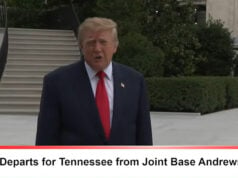
On Monday, July 6, 2026, U.S. President Donald Trump dramatically shifted the pre-summit narrative during a press briefing at the White House. Expressing an unprecedented level of optimism regarding a negotiated settlement, President Trump signaled to reporters that a breakthrough might be far closer than external observers expect.
“Well, I think he [Putin] does feel pressure. He wants to end it, and Ukraine wants to end it, and we’re in talks, and we’ll see if we can get it ended,” President Trump stated. “I think we’re getting much closer than people realize. President Putin wants it to end. I will tell you that very strongly. And President Zelenskyy actually wants it to end now.”
This public optimism follows an intense weekend of leader-to-leader communications. On Sunday, July 5, President Trump held an extensive 85-minute phone conversation with Russian President Vladimir Putin. While the call was formally tied to Putin offering congratulations to the American people on the historic 250th anniversary of U.S. Independence Day, the discussion quickly pivoted to the core parameters of the Ukrainian war.
According to Kremlin details, Putin utilized the call to reiterate Moscow’s foundational ultimatum demands for a settlement, shifting blame onto Kyiv for prolonging the conflict while simultaneously boasting about Russia’s localized tactical advances. Simultaneously, Trump confirmed his administration’s readiness to dispatch special envoys Steve Witkoff and Jared Kushner to Moscow at an opportune moment to facilitate direct mediation.
Trump’s diplomatic maneuverings have not been unilateral. On July 4, Ukrainian President Volodymyr Zelenskyy also spoke at length with Trump to extend his congratulations on the semi-quincentennial of American independence. The two leaders reviewed the status of the theater of war, with Zelenskyy characterizing the discussion as “very good.”
Behind the scenes, a senior U.S. official remarked that Washington views the current military landscape with a profound sense of urgency, noting that the 1,200-kilometer battlefield has effectively “frozen” over the past few months with neither side achieving structural breakthroughs. As Trump prepares to meet face-to-face with Zelenskyy in Türkiye this week, the American president is also expected to deliver a stern, in-person demand to European allies to fundamentally increase their defense spending to secure their own regional parameters.
The Fog of War in Kostiantynivka
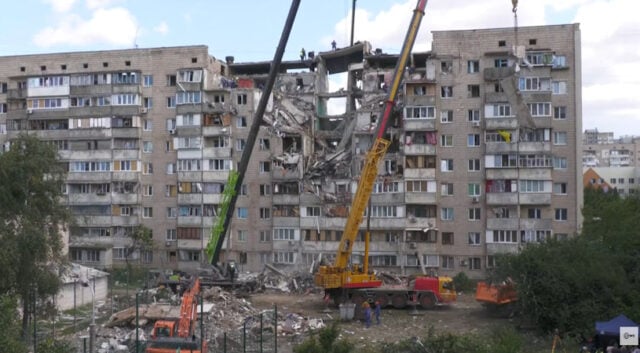
While diplomats prepare their briefs in Ankara, the immediate focus of the fighting has narrowed to the strategic industrial hub of Kostiantynivka in Ukraine’s Donetsk Oblast. Serving as a crucial backbone of Ukraine’s defensive “fortress belt,” the city has become the site of savage, close-quarters urban combat.
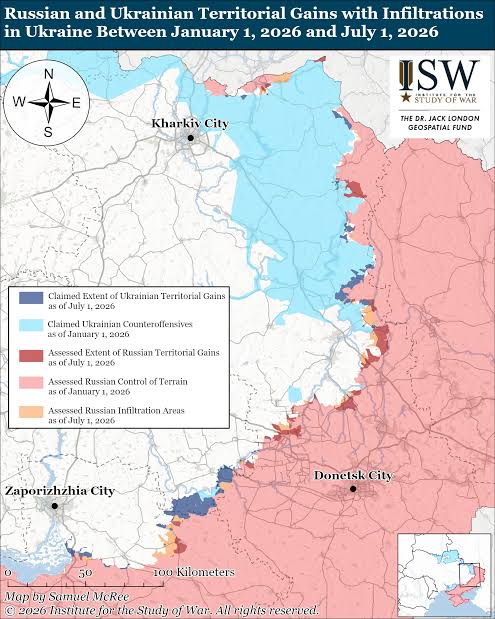
Late on July 3, Vladimir Putin met with Chief of the General Staff Valery Gerasimov to formally announce the full capture of Kostiantynivka, framing it as a milestone in the complete annexation of the broader Donbas region. However, this triumphant declaration has been flatly rejected by both Ukrainian commanders and independent Western intelligence agencies.
Ukraine’s General Staff and the Khortytsia Operational and Strategic Group of Forces issued immediate refutations, clarifying that while Russian units have successfully penetrated the outer urban fabric, the city has not fallen. Frontline geolocations paint a picture of a fragmented, hyper-fluid “grey zone.”
Russian tactical elements have pushed along the H-20 Donetsk-Kramatork highway, infiltrating southern and eastern districts, and reaching as far as the central metallurgical plant, the zinc plant, and parts of the local railway station. Ukrainian forces, particularly elements of the 24th and 28th Mechanized Brigades, continue to hold defensive pockets, deploying anti-drone netting over vital supply lines and employing precision-strike drone operations to prevent the Russian military from consolidating its foothold.
The information warfare surrounding the city culminated in a direct challenge from Zelenskyy, who labeled Putin’s triumphalism an outright lie. Zelenskyy remarked that if Russian forces genuinely controlled Kostiantynivka, Putin should have no reservations about meeting him directly inside the embattled city to forge a diplomatic solution.
The Humanitarian Trap: The July 6 Ceasefire Maneuver
Underscoring the complex hybrid tactics characterizing the conflict, the Russian Ministry of Defense proposed a localized ceasefire inside Kostiantynivka, scheduled for July 6 between 12:00 and 18:00 Moscow time. Moscow framed the proposed suspension of hostilities as a humanitarian gesture intended to facilitate the collection and transfer of the bodies of fallen Ukrainian servicemen back to Kyiv’s control.
Ukraine ultimately rejected the short-term proposal—a move that Russian state media immediately seized upon to portray the Ukrainian government as an obstinate and unwilling negotiator. However, tactical analysts at the Ukrainian military monitoring group DeepState, alongside the Institute for the Study of War (ISW), strongly warned that the proposal was a deceptive tactical trap.
Independent analysts concluded that Russia’s primary objective was to temporarily halt the highly effective Ukrainian drone strikes that are currently preventing Russian infantry from entrenching themselves within downtown Kostiantynivka. A localized pause would allow the Russian military a risk-free window to conduct essential troop rotations, move heavy logistics forward, and fortify fragile forward positions without conceding any genuine diplomatic ground.
The Broader Strategic Picture: Attrition and Shrinking Geography
Beyond the immediate intensity of the urban fighting, broader data compiled by international institutions reveals the staggering structural costs Russia continues to endure to sustain its military momentum. According to estimates published by the Center for Strategic and International Studies (CSIS), Russian forces have suffered approximately 1.4 million total battlefield casualties—including killed, wounded, and missing personnel—since the launch of the full-scale invasion in February 2022.
The scale of this attrition is reinforced by daily updates from the General Staff of Ukraine, which reported an additional 1,420 Russian casualties on July 6 alone, bringing the aggregate personnel losses tracking close to the 1.41 million threshold.
Crucially, CSIS data indicates that the Russia-Ukraine casualty ratio has surged dramatically in the first half of 2026, hovering near an unprecedented 8:1 asymmetry. This massive spike is largely attributed to Ukraine’s sophisticated, AI-enabled drone interdiction campaigns, which have systematically devastated Russian logistics, armored assets, and exposed infantry formations far behind the immediate contact lines.
Perhaps most telling of Moscow’s systemic vulnerabilities is the physical contraction of its occupied footprint. Despite launching high-intensity offensives across multiple axes, Russia’s net territorial control in Ukraine actually shrank during the spring of 2026, suffering a net loss of roughly 400 square kilometers across April and May. This contraction represents Russia’s first sustained monthly net loss of territory since August 2024, highlighting the profound limits of its current offensive doctrine on the eve of the Ankara summit.
Sources and Links
- NATO Event Programme: NATO Summit 2026 – Ankara, Türkiye
- Anadolu Ajansı: Trump says Putin, Zelenskyy both want Ukraine war to end
- Times of India: ‘Closer than people realise’: Trump says both Putin, Zelenskyy want war to end
- Ukrainska Pravda: Putin congratulates Trump on 250th US Independence Day and boasts about Russia’s “capture” of Kostiantynivka
- Ukrainska Pravda: Russia loses 1,420 soldiers over past day
- The New Voice of Ukraine / DeepState: DeepState explains why Russia’s ceasefire proposal for Kostiantynivka is a trap
- Center for Strategic and International Studies (CSIS): Russian Blood and Treasure: The Ballooning Costs of Putin’s War
- Institute for the Study of War (ISW): Russian Offensive Campaign Assessment, July 5, 2026
Disclaimer
Artificial Intelligence Disclosure & Legal Disclaimer
AI Content Policy.
To provide our readers with timely and comprehensive coverage, South Florida Reporter uses artificial intelligence (AI) to assist in producing certain articles and visual content.
Articles: AI may be used to assist in research, structural drafting, or data analysis. All AI-assisted text is reviewed and edited by our team to ensure accuracy and adherence to our editorial standards.
Images: Any imagery generated or significantly altered by AI is clearly marked with a disclaimer or watermark to distinguish it from traditional photography or editorial illustrations.
General Disclaimer
The information contained in South Florida Reporter is for general information purposes only.
South Florida Reporter assumes no responsibility for errors or omissions in the contents of the Service. In no event shall South Florida Reporter be liable for any special, direct, indirect, consequential, or incidental damages or any damages whatsoever, whether in an action of contract, negligence or other tort, arising out of or in connection with the use of the Service or the contents of the Service.
The Company reserves the right to make additions, deletions, or modifications to the contents of the Service at any time without prior notice. The Company does not warrant that the Service is free of viruses or other harmful components.