Washington experienced one of its most chaotic legislative and foreign policy days in recent history on Wednesday, June 24, 2026. In a rapid succession of events, President Donald Trump upended months of bipartisan congressional negotiations on domestic policy, requested tens of billions of dollars in new military funding, engaged in a highly publicized closed-door shouting match with a member of his own party, and face-to-face confronted the shifting realities of an ongoing war in the Middle East.
The day’s events highlighted a stark reality in Washington: the administration is increasingly willing to deploy aggressive, unconventional leverage across entirely unrelated issues to force its agenda through a fractured Congress. From holding a popular housing affordability package hostage to pressure the Senate on voting restrictions, to demanding immediate emergency funds for an exhausting war with Iran, the presidency is leaning heavily on brinkmanship as the 2026 midterm elections approach.
Chronology of a Day of Attrition
The breakneck pace of the day’s developments left lawmakers, market analysts, and foreign diplomats scrambling to adjust to rapidly changing policy baselines. The following timeline outlines how the day’s major events unfolded across Washington:
Just hours before a scheduled bipartisan signing ceremony at the Capitol, President Trump takes to social media to abruptly cancel the event. He declares that the 21st Century ROAD to Housing Act will be held up until Congress passes the highly restrictive SAVE America Act, calling the voter proof-of-citizenship bill a “National Emergency.”

Trump hosts newly appointed NATO Secretary-General Mark Rutte in the Oval Office. Amid deep international unease regarding American military actions, Rutte offers public praise for Trump’s war posture against Iran, reinforcing the alliance’s tactical alignment with Washington.
Trump arrives at the U.S. Capitol for a closed-door luncheon with Senate Republicans. The meeting rapidly descends into a fierce, high-decibel shouting match with Louisiana Senator Bill Cassidy over the length, strategy, and lack of transparency surrounding the four-month-old Iran war.
The White House formally transmits a massive emergency supplemental funding request to Congress. The $87.6 billion package explicitly seeks billions to cover ongoing operations in the Iran conflict, alongside relief funds for domestic farmers heavily impacted by the war’s inflationary shockwaves.
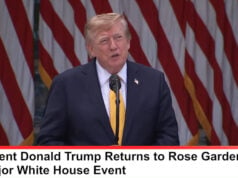
Trump delivers a brief, 27-minute, deeply partisan speech on the National Mall. Originally framed as a non-partisan pre-celebration of the nation’s upcoming 250th anniversary, the address focuses heavily on personal grievances before Trump abruptly exits the stage.
The Housing Bill Hostage Situation: Domestic Policy Upended
The morning began with a legislative shockwave that reverberated across both Wall Street and working-class American neighborhoods. For months, lawmakers from both sides of the aisle had painstakingly negotiated the 21st Century ROAD to Housing Act, widely hailed as the most comprehensive piece of housing affordability legislation introduced in decades. The sweeping package aimed to tackle the country’s severe inventory crunch and skyrocketing costs through a multi-pronged approach:
- Restricting Institutional Investors: The bill featured rigorous structural barriers that prevented large private equity firms and Wall Street landlords (such as Blackstone and Cerberus) from buying up single-family homes, a practice that has systematically priced out first-time homebuyers.
- Regulatory Streamlining: It aimed to dramatically accelerate the construction of affordable housing by expanding categorical exclusions and streamlining environmental reviews under the National Environmental Policy Act (NEPA).
- Whole-Home Repair Pilots: The creation of a HUD competitive grant program to fund state, local, and tribal whole-home repairs, allowing low-income homeowners and landlords to renovate aging, unsafe properties.
- Supply Incentives: A $200 million annual competitive grant program designed to incentivize local municipalities to implement density bonuses, permit streamlining, and zoning reforms.
The political consensus behind the bill was overwhelmingly clear. On Monday, the Senate cleared the legislation in an 85–5 vote, followed immediately on Tuesday by a crushing 358–32 victory in the House. It was viewed as a rare, signature triumph of bipartisan governance.
The Canceled Ceremony and the SAVE Act Lever
A formal press conference and bill-signing ceremony were scheduled at the U.S. Capitol for Wednesday morning. Instead, Trump utilized his social media platform to unilaterally scrap the event, explicitly linking the execution of the housing relief bill to a highly controversial, stalled piece of election legislation known as the SAVE America Act.
“Today’s Housing News Conference and Signing is hereby cancelled until such time as we pass the desperately needed SAVE AMERICA ACT, which I consider to be a National Emergency,” Trump posted.
The SAVE America Act is a core legislative priority for Trump’s base but has faced fierce opposition from voting rights groups and congressional Democrats, who label it one of the most restrictive voting measures ever proposed. The bill mandates that individuals provide explicit documentary proof of U.S. citizenship (such as a passport or birth certificate) to register to vote in federal elections, requires states to establish monthly purges of their voter registries, and compels local authorities to submit registration records to the Department of Homeland Security (DHS).
Later in the day, when pressed by reporters on whether he intended to officially veto the housing package, Trump deflected from the details of the bill itself, pointing instead to macroeconomics and his own background in real estate.
“I said I’m not signing the housing bill, I want to see what happens with SAVE,” Trump stated. “Look, the housing bill is—I made billions of dollars with housing. I know housing better than maybe anybody anywhere. It’s all about the interest rate. Lower the interest rates, you can have all the housing you want.”
Under constitutional rules, if the president declines to sign or formally veto a bill passed by Congress, it automatically becomes law after 10 days (excluding Sundays), provided Congress remains in session. House Speaker Mike Johnson moved quickly to manage the fallout, telling reporters that Trump was simply maximizing his strategic leverage. “He has a window of time before he has to sign a bill, and he’s going to use a little bit more of that window of time,” Johnson explained, signaling that a pocket veto or formal veto remains a volatile wild card.
Market Volatility and Political Backlash
The immediate economic impact of the president’s announcement was felt directly on the stock market. Because the 21st Century ROAD to Housing Act contained strict provisions aimed at curtailing Wall Street landlords’ ability to acquire single-family homes, corporate real estate developers and large home-construction groups viewed the sudden delay as a major reprieve.
Without the imminent threat of corporate acquisition limits, institutional demand expectations surged, driving major homebuilder stocks sharply higher.
| Corporate Homebuilder Stock | Wednesday Trading Surge |
| KB Home | +17.1% |
| PulteGroup | +9.6% |
| Toll Brothers | +8.8% |
| Lennar | +7.0% |
| DR Horton | +7.0% |
While corporate real estate entities celebrated the delay, the political response from progressive and moderate lawmakers was swift and unsparing. Progressive Congresswoman Summer Lee issued an aggressive public statement condemning the administration’s tactical maneuver.
“Now, after months of bipartisan and bicameral negotiations, and this bill passing both chambers of Congress with overwhelming bipartisan support, President Trump is holding urgently-needed housing relief hostage to pressure Congress into passing the SAVE Act,” Lee stated. “Families struggling with rising rents, housing costs, and unsafe conditions should never be treated like bargaining chips. If President Trump is serious about taking on Wall Street landlords and making housing more affordable, he should stop playing games with people’s lives and sign this bill.”
Senator Elizabeth Warren echoed these concerns in a sharp rebuke on CNBC, accusing the president of showing “complete indifference” to the severe cost squeeze crushing average American families. “We want homes for people, not corporations,” Warren noted, pointing to the stark contrast between the administration’s populist rhetoric and the immediate multi-billion-dollar windfall handed to corporate landlords by the delay.
The Boiling Point: Shouting Matches and Party Fracture
The domestic legislative standoff served as the tense backdrop for Trump’s arrival at the Capitol on Wednesday afternoon, where he attended a closed-door luncheon with Senate Republicans. What was intended to be a routine strategic meeting ahead of upcoming primary contests rapidly disintegrated into an explosive, high-decibel shouting match that put the deep internal fractures of the Republican Party on full display.
The flashpoint of the confrontation was the administration’s handling of the ongoing war with Iran. On Tuesday, the Senate had passed a highly consequential War Powers Resolution intended to legally compel the executive branch to cease unauthorized military hostilities against Iranian forces. Strikingly, four Republican senators broke ranks with the White House to join Democrats in passing the resolution, signaling a profound erosion of legislative patience regarding the executive’s unilateral war-making.
The Cassidy Confrontation
According to multiple inside accounts confirmed by senators present, the atmosphere turned toxic when Trump directly confronted the lawmakers over the vote, demanding to know: “Why would anybody vote for the War Powers Act?”
Senator Bill Cassidy, a Republican from Louisiana who recently lost a primary election to a Trump-backed challenger, stood up to directly challenge the president. The exchange quickly escalated into an intense shouting match, with both men raising their voices to near-deafening levels. Sources indicated that Cassidy grew furious over the administration’s complete lack of transparency regarding the scope and timeline of the conflict. Cassidy reportedly described the state of the military campaign as a “total cluster f***”, prompting Trump to lose his temper, scream back, and label Cassidy a “lunatic” when the senator refused to sit down and remain silent.
Following the lunch, Cassidy walked out to reporters to provide his explicit side of the story, refusing to back down from the exchange.
“I stood and said, ‘You have not told the American people what’s going on. It was supposed to last four weeks, it’s lasted four months. Our original objectives have not been achieved, and I want to know what’s going on,'” Cassidy told the press corps.
Reflecting on the breakdown in decorum, Cassidy acknowledged his own anger but defended the necessity of the confrontation. “He did not particularly care for my comments and raised his voice. I lost my temper. That’s not appropriate, it’s the Irish in me… but I make no apologies for standing up to the president, if you will, trying to demand that more information be shared with the Senate and more information be shared with the American people. I am sticking up for the American people, even if I’m speaking to the president.”
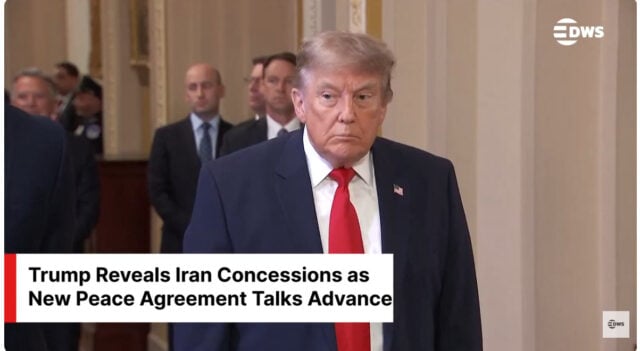
When Trump emerged from the closed-door room moments later, he attempted to project absolute control, offering a radically different spin on the meeting to the assembled media. He insisted the luncheon was “great” and declared that the Republican Party remains “really well unified.” However, he could not entirely conceal his lingering resentment. “We like everybody really in the room,” Trump muttered. “I don’t like a few people, but that’s okay, I think you know who they are.”
The Sovereign Cost: $87.6 Billion and an Unchecked War
The underlying driver of the rage exhibited during the Senate luncheon became fully clear just hours later. The White House formally submitted a massive, sweeping $87.6 billion emergency supplemental funding request to Congress, exposing the astronomical fiscal toll of the administration’s military operations against Iran.
The emergency funding request arrives at a moments of acute economic pain for the country. The military campaign against Iran has triggered a significant global energy disruption, resulting in an inflation surge that has severely degraded American consumer sentiment and caused Trump’s domestic approval ratings on the economy to slide heavily. A recent nationwide poll revealed that a striking 68% of registered voters actively disapprove of the administration’s handling of inflation and the cost of living.
The requested $87.6 billion is distributed across three urgent, competing priorities designed to stabilize both the military front and the domestic political fallout:
- Direct Iran War Costs: The vast majority of the capital is earmarked for ongoing naval, air, and logistics operations in the Persian Gulf theater, where the conflict has ground into a grueling war of attrition with no clear exit strategy.
- Agricultural Subsidies for U.S. Farmers: A multi-billion-dollar block of the funding is designated as emergency relief for American agricultural producers, who have been walloped by cascading geopolitical shockwaves, closed export corridors, and spiking fertilizer and fuel costs tied directly to the war.
- Ebola Response: A portion of the package is directed toward handling a burgeoning international Ebola response, adding a complex public health challenge to an already overextended federal budget.
Compounding the administration’s problems are serious, unresolved questions regarding the conduct of the war itself. Earlier in the afternoon, officials admitted that the U.S. has still not officially determined who bombed a prominent girls’ school in Minab on the very first day of American strikes against Iran—an incident that has fueled intense anti-war protests domestically and complicated diplomatic posturing abroad.
Furthermore, the prospects for a near-term diplomatic resolution to the war suffered a devastating blow on Wednesday. Israeli defense officials announced that the Israel Defense Forces (IDF) intend to maintain a prolonged military presence in southern Lebanon. This unilateral deployment directly undermines fragile, back-channel peace negotiations between Washington and Tehran, effectively locking the United States into a broader regional quagmire.
The NATO Alliance and the National Mall Gridlock
Amid intense domestic pushback and internal party revolt, Trump sought validation through international diplomacy. Midday, the president hosted newly minted NATO Secretary-General Mark Rutte for an official meeting in the Oval Office.
For Rutte, navigating the volatile American political landscape represents a high-stakes balancing act. In a public display of alignment, Rutte explicitly praised Trump’s aggressive military actions against Iran, a move designed to secure goodwill with an administration that has historically questioned the value of the transatlantic alliance.
Yet, even as Rutte sought to project absolute unity in the Oval Office, Trump’s broader unilateral approach to global affairs continued to alienate other traditional allies. As a blistering summer heatwave melted cities across Western Europe, Trump spent part of the day publicly urging the United Kingdom to immediately scrap its wind turbines and aggressively drill for more oil, a stance that drew immediate condemnation from European climate ministers and underscored the deep ideological chasm between Washington and its European partners.
A Partisan Finale on the National Mall
The exhausting, highly combative day concluded on the National Mall, where the White House had organized an event billed as a non-partisan celebration marking the upcoming 250th anniversary of the founding of the United States.
The event, titled the “Great American State Fair,” quickly shed any semblance of non-partisan unity. Appearing before an audience consisting heavily of ardent supporters, cabinet officials, and political aides, Trump delivered a brief, deeply partisan 27-minute speech. Rather than focusing on a unifying historical narrative for the nation’s semiquincentennial, the address mirrored the tone of a standard campaign rally, dominated by familiar electoral boasts, attacks on corporate landlords, warnings regarding voter registration, and intense grievances aimed at congressional detractors.
The event ended as abruptly as the housing bill ceremony had been canceled. Before the U.S. military band could even conclude its rendition of his traditional exit song, “YMCA,” Trump exited the stage and vanished into the White House complex, leaving a gridlocked Capitol and an unresolved web of domestic and international crises in his wake.
Sources and Links:
- Rep. Summer Lee Press Office: Official Statement on Housing Bill Hostage Situation
- PBS NewsHour: Trump Scraps Housing Bill Signing to Pressure Senate GOP on SAVE Act
- Democracy Docket: Trump Threatens to Sabotage Bipartisan Housing Bill
- Financial Times: Donald Trump Scraps Signing of US Housing Affordability Bill
- PBS NewsHour Politics: White House Seeks $87.6B from Congress for Iran War Costs and Domestic Relief
- Hindustan Times: Trump and Sen. Bill Cassidy Shouting Match Over Iran Policy
- The Guardian: Live Politics Coverage: Trump Shouting Match Amid Standoff Over Housing and War Powers
- Bipartisan Policy Center: Inside the Deal: Legislative Breakdown of the 21st Century ROAD to Housing Act
- CBS News: Trump Cancels Bipartisan Housing Bill Signing, Demands SAVE Act Progress
Disclaimer
Artificial Intelligence Disclosure & Legal Disclaimer
AI Content Policy.
To provide our readers with timely and comprehensive coverage, South Florida Reporter uses artificial intelligence (AI) to assist in producing certain articles and visual content.
Articles: AI may be used to assist in research, structural drafting, or data analysis. All AI-assisted text is reviewed and edited by our team to ensure accuracy and adherence to our editorial standards.
Images: Any imagery generated or significantly altered by AI is clearly marked with a disclaimer or watermark to distinguish it from traditional photography or editorial illustrations.
General Disclaimer
The information contained in South Florida Reporter is for general information purposes only.
South Florida Reporter assumes no responsibility for errors or omissions in the contents of the Service. In no event shall South Florida Reporter be liable for any special, direct, indirect, consequential, or incidental damages or any damages whatsoever, whether in an action of contract, negligence or other tort, arising out of or in connection with the use of the Service or the contents of the Service.
The Company reserves the right to make additions, deletions, or modifications to the contents of the Service at any time without prior notice. The Company does not warrant that the Service is free of viruses or other harmful components.