A massive shift is quietly reshaping the American retail landscape, triggering a high-stakes race to lower shelf prices and win over inflation-weary shoppers. Following a landmark U.S. Supreme Court ruling earlier this year, billions of dollars in federal tariff refunds are flowing back into corporate coffers. Instead of pocketing the cash to boost bottom lines or reward shareholders, some of the nation’s largest retailers are weaponizing these unexpected windfalls to launch broad-based price reductions.
The strategy represents a dramatic turning point in global supply chain economics. For years, import duties acted as a direct tax on retail operations, squeezing margins and forcing companies to pass elevated costs down to the checkout counter. Now, as the federal government unwinds these collections on a massive scale, the mechanics of international trade are flowing in reverse. From membership warehouse clubs to national cosmetics brands, corporate leaders are discovering that returning tariff money to the consumer is not just a gesture of goodwill—it is a critical defensive maneuver in a tightening retail economy.
Inside the Supreme Court Decision That Unlocked Billions
The catalyst for this sudden financial reallocation occurred on February 20, 2026, when the Supreme Court handed down its decision in Learning Resources, Inc. v. Trump. The nation’s highest court ruled that the executive branch had overstepped its legal bounds by using the International Economic Emergency Powers Act (IEEPA) to impose sweeping, country-specific tariffs without explicit congressional approval. The majority opinion clarified that the power to levy tariffs falls squarely under Congress’s constitutional taxing authority.
The legal fallout was immediate. The U.S. Court of International Trade promptly issued a nationwide “Refund Order,” instructing U.S. Customs and Border Protection (CBP) to return billions in unlawfully collected duties to the recognized Importers of Record. To manage the sheer volume of claims, CBP launched a specialized, digital portal known as the Consolidated Administration and Processing of Entries (CAPE) platform.

The scale of this federal reversal is staggering. Industry data reveals that more than $20.6 billion in direct tariff refunds have already been processed and distributed, with analysts projecting up to $85 billion in ongoing or unresolved corporate claims still moving through the system. For companies that heavily rely on international sourcing networks, this legal victory suddenly converted historical supply chain expenses into liquid cash assets.
BJ’s Wholesale Club Leads the Membership Rollbacks
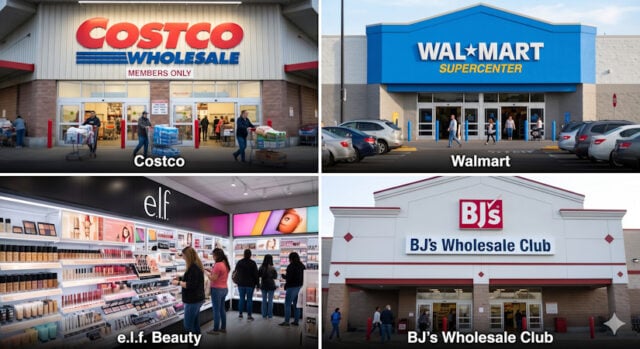
Among the warehouse club giants, BJ’s Wholesale Club has emerged as one of the most aggressive early movers, leveraging its tariff refunds to expand its competitive moat. During an investor call, BJ’s President and CEO Bob Eddy revealed that the company has systematically directed its government rebates into direct store price reductions, effectively lowering overall retail prices across its clubs by approximately half a percentage point.
According to BJ’s Chief Financial Officer Laura Felice, these tariff recoveries provided a substantial 50-basis-point lift to the company’s merchandise margin last quarter, injecting roughly $20 million back into operations. Rather than retaining that margin boost to inflate short-term earnings, leadership immediately transferred the savings back to product tags.
“We will continue to use any source of gain that we can to really bring that value back to our members so that we can build the franchise for the long term,” Eddy told investors.
By applying a blanket price reduction of approximately 0.5%, BJ’s aims to widen its historical price advantage over traditional grocery chains and regional supermarkets. For warehouse operations that thrive entirely on member retention and high-volume sales, passing the savings along is a calculated strategy to lock in long-term consumer loyalty.
The Corporate Landscape: Windfalls at Walmart and e.l.f. Beauty
BJ’s is far from alone in this strategic price-cutting movement. The scale of tariff refunds varies dramatically by corporate size and sourcing strategy, resulting in massive capital injections across several retail subsectors.
Walmart, the world’s largest traditional retailer, is positioned to receive a staggering $2.4 billion in anticipated tariff rebates. Walmart CFO John David Rainey confirmed that the retail giant intends to prioritize these recoveries explicitly for aggressive price rollbacks. Because low- and middle-income households are facing persistent pressure from elevated everyday costs, Walmart is using its multi-billion-dollar rebate to further compress its margins, forcing smaller competitors to match its downward pricing trajectory.
Meanwhile, the beauty industry is seeing even sharper adjustments. Mass-market cosmetics brand e.l.f. Beauty revealed it expects to receive approximately $58.5 million in total tariff refunds. The company had previously been disproportionately affected by international trade policy, grappling with a steep 55% tariff on certain imported components that forced retail price hikes over the past several quarters. With those costs officially invalidated, e.l.f. is deliberately deploying its millions to lower consumer prices, aiming to supercharge its sales volumes and capture market share from premium department-store brands.
Tracking the Retail Influx
The strategic deployment of these funds varies significantly by sector, as highlighted by reported figures and corporate guidance:
| Retailer | Anticipated / Received Refund | Primary Strategic Allocation | Target Impact |
| Walmart | $2.4 Billion | Targeted price rollbacks on everyday goods | Enhanced market share, low-income consumer relief |
| e.l.f. Beauty | $58.5 Million | Direct item price reductions and growth reinvestment | Increased sales volume, offsetting past 55% tariff hikes |
| BJ’s Wholesale | $20 Million (Last Quarter) | 0.5% blanket retail price drop across store inventory | Widening value gap against standard grocery rivals |
| Costco Wholesale | Undisclosed | Legacy consumer reconciliation and legal reserves | Addressing class-action liabilities, member retention |
The Oaktree Legal Feud: Monetizing Claims Before the Portal
The rush to secure and deploy these massive sums has also triggered fierce backroom legal battles over the ownership of the refund rights themselves. A high-profile lawsuit filed in the New York Supreme Court exposes the intense financial engineering surrounding these multi-million-dollar government claims.
In April, alternative investment firm Oaktree Capital Management filed a breach-of-contract lawsuit against BJ’s Wholesale Club. According to legal filings, before the federal government established a clear timeline for the payout process, BJ’s had allegedly entered into an agreement with Oaktree to sell its private claim for roughly $29 million in expected tariff refunds. Under the terms of the private deal, Oaktree agreed to purchase the claim at a 70-cent-on-the-dollar discount, providing BJ’s with an immediate, guaranteed cash injection of approximately $20 million while shifting the risk of government delays or non-payment onto the investment firm.
However, the litigation alleges that BJ’s abruptly backed out of the private transaction after U.S. Customs and Border Protection announced on April 10 that it would debut its streamlined, automated online portal. The launch of the CAPE system meant importers could bypass expensive secondary financial brokers and collect 100% of their owed monies directly from the federal government within a predictable 60-to-90-day window. Oaktree’s lawsuit claims BJ’s wrongfully abandoned the signed contract to capture the remaining 30% spread for itself—a move that underscored just how valuable direct access to liquid tariff cash had suddenly become to retail executives.
The Unjust Enrichment Trap: A Wave of Consumer Class Actions
While retailers view general shelf-price reductions as an effective way to redistribute their windfalls, plaintiffs’ law firms are presenting a far more radical legal argument: the money belongs directly to the specific shoppers who paid the inflated prices in the first place.
Since early March, a wave of more than 80 consumer class action lawsuits has been filed across the United States against major corporations, including retail heavyweights like Amazon, Costco, Nike, and IKEA. The core legal theory driving these cases centers on “double recovery” and unjust enrichment.
Plaintiffs argue that when tariffs were initially enacted, these companies systematically increased their retail prices to insulate their profit margins, downloading the entire financial burden of the import duties directly onto regular consumers. Consequently, if a company successfully claws back those exact duties from the federal government while simultaneously pocketing the historical price premium paid by shoppers, it has effectively recovered the same operational cost twice.
[Tariff Enacted] --> [Retail Prices Raised] --> [Consumer Pays Premium]
                                                          |
[Tariff Voided]  --> [Govt Refunds Retailer] --> [Retailer Keeps Both? (Lawsuit Flashpoint)]
This legal distinction is creating significant operational headaches. Under current trade laws, only the Importer of Record possesses the legal standing to demand a refund from U.S. Customs and Border Protection. Everyday consumers have zero recovery rights against the federal government. To bridge this gap, class-action attorneys are targeting corporate bank accounts directly, demanding retroactive cash distributions or point-of-sale register refunds for loyalty members.
Can Retailers Truly Deliver Clean Refunds to Consumers?
The legal push for direct consumer reconciliation faces severe practical limitations, according to retail operations and marketing experts. While tracking purchases is relatively straightforward for warehouse clubs like Costco and BJ’s due to mandatory member loyalty profiles, the vast majority of traditional retail transactions are completely anonymous.
“Consumers may see some price relief, but it is highly unlikely to show up as clean ‘refunds’ at the register,” notes Tanya Thorson, a revenue and customer growth leader at StrategiX Marketing. “Tariff refunds are fundamentally a one-time injection of money. While a store can use the proceeds to compress margins and drop prices temporarily, those prices will inevitably adjust once the pool of refunded capital is entirely depleted.”
Other industry experts point out that many mid-sized retailers never actually passed the full cost of the tariffs to consumers in the first place. Instead, they absorbed the financial hit internally, freezing hiring, pausing expansion plans, or accepting lower corporate margins to keep their products competitive on the shelf. For those companies, government refunds are being directed toward restoring historical corporate health, rendering consumer price cuts highly improbable.
The Long-Term Economic Outlook for Shoppers
For the everyday consumer, the ongoing unwinding of IEEPA tariffs provides an undeniable, if uneven, deflationary tailwind. In an era when corporate pricing practices are under intense public scrutiny, major brands are highly incentivized to demonstrate they are actively passing supply chain savings back to consumers.
However, shoppers should view the current wave of retail price cuts as a temporary window of relief rather than a permanent structural reset. Because these multi-million-dollar government payouts represent one-time corporate events, the downward pressure on shelf pricing will last only as long as the cash surpluses do. Furthermore, as the Department of Justice signals its intent to appeal the nationwide refund orders’ broad scope, the speed and scale of future retail price rollbacks remain tied to the volatile legal dynamics of global trade policy.
Sources and Links:
- Retail Dive: BJ’s Wholesale Club uses tariff refunds to cut prices
- Supply Chain Dive: BJ’s Wholesale Club uses tariff refunds to cut prices – Deep Dive Analysis
- Holland & Knight LLP: Tariff Consumer Class Actions: What Businesses Need to Know
- RetailWire: Will Consumers See Price Relief From Major Retailers as Tariff Refunds Roll Out?
- U.S. Customs and Border Protection / UPS Trade Advisory: IEEPA Tariff Refund Request Process and CAPE Platform Framework
Disclaimer
Artificial Intelligence Disclosure & Legal Disclaimer
AI Content Policy.
To provide our readers with timely and comprehensive coverage, South Florida Reporter uses artificial intelligence (AI) to assist in producing certain articles and visual content.
Articles: AI may be used to assist in research, structural drafting, or data analysis. All AI-assisted text is reviewed and edited by our team to ensure accuracy and adherence to our editorial standards.
Images: Any imagery generated or significantly altered by AI is clearly marked with a disclaimer or watermark to distinguish it from traditional photography or editorial illustrations.
General Disclaimer
The information contained in South Florida Reporter is for general information purposes only.
South Florida Reporter assumes no responsibility for errors or omissions in the contents of the Service. In no event shall South Florida Reporter be liable for any special, direct, indirect, consequential, or incidental damages or any damages whatsoever, whether in an action of contract, negligence or other tort, arising out of or in connection with the use of the Service or the contents of the Service.
The Company reserves the right to make additions, deletions, or modifications to the contents of the Service at any time without prior notice. The Company does not warrant that the Service is free of viruses or other harmful components.