By TOM MARQUARDT and PATRICK DARR
The St. Laurents face steep odds in Oregon’s Rogue Valley: hardscrabble volcanic soil, spring frosts that can strike after bud break, summer heat spikes that can scorch the fruit, scarce water without melting snowcaps, and wildfires that once wiped out half of one year’s crop. The only thing missing is a plague of locusts.
Alex St. Laurent, the third generation on this 1,500-acre estate in the Medford foothills, thrives on those challenges. After a career in business and entertainment in Los Angeles, he answered his father’s call to help run the family farm. His grandfather had bought the property to escape Florida’s overheated real estate market, and Alex’s dad turned it into a grass-fed Angus beef operation supplying high-end distributors. That business still looks promising, but Alex—now 35– has set his sights on wine.
In 2005, when Alex was just 15, his father hired a surveyor to test the soil.

“The first guy said, ‘you can never grow grapes here,’” Alex said. “My dad pointed out several vines nearby that we’re doing well. So, he called another surveyor who said, ‘no way.’ Finally, the last guy said yes, you can grow grapes in this soil.”

After years of painstaking research, they planted 25 acres of pinot noir. Their inaugural release, a 2019 estate pinot noir sourced from its Block One planting of Pommard and Dijon clones. Two years later, its pinot noir won Double Gold at the Oregon Wine Experience.
They sold fruit to Erath and A to Z, and things went smoothly until Erath canceled its contract in 2023, leaving them with 70 tons of unsold grapes. Undeterred, Alex and his team decided to make their own Rogue Valley wine, a mix of Block One and Two plantings, priced at around $20 a bottle—a rare value in a market where pinot noirs typically fetch well over $50. For now, their focus is pinot noir and rosé, with plans to add more varieties down the road.
The 2023 Domaine St. Laurent Pinot Noir is an incredible deal at $20—bright and lively with tart strawberry notes. The belle of the group is the 2023 Domaine St. Laurent Estate Block One Pinot Noir ($45) with its riper strawberry and plum flavors. It has more layers and sophistication and still a good deal in a category that includes pinot noir twice the price. We also liked the 2023 Domaine St. Laurent Rose de Pinot Noir ($35), a minerally spring quaff with white peach and strawberry notes.
Though overall wine sales have slipped back to pre-COVID levels, Alex believes a small producer like Domaine St. Laurent is better positioned to weather the downturn than high-volume wineries. He hopes his sons will join the enterprise someday. And if the wine business falters further? Well, there are still 500 heads of cattle to fall back on.
Roblar wines
Among our favorite regions in California, Santa Barbara stands apart. Its coastal mountains run east to west, creating a natural funnel that draws cool marine air in from the Pacific. The result is a longer growing season, one that lets grapes hold onto their natural acidity while slowly building complex flavor. That same geography yields a remarkably diverse climate and soil, hospitable to everything from syrah to cabernet sauvignon.
Kevin Gleason has long understood what that diversity makes possible. In 2004, he acquired land in Santa Ynez Valley for Refugio Ranch Vineyards, planting it to Rhône varieties. In 2017, he added Roblar Winery, with its Bordeaux plantings. Today, his family is devoted to making Roblar Winery & Vineyards a destination in its own right—anchored by an award-winning restaurant drawing from an impressive on-site farm of seasonal vegetables and herbs.
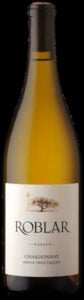
Gleason brought aboard winemaker Max Marshak, who previously work on the winemaking team of Jonata, to refine the wine program at both Robar and Refugio Ranch. The wines we recently tasted were impressive.
Roblar Chardonnay Reserve 2024 ($60). Sourced from several Santa Ynez vineyards, this lush chardonnay shows ripe pineapple and peach flavors with toasty oak notes.
Roblar Cabernet Franc Gold Collection 2023 ($80). Using estate grapes, this nicely textured cabernet franc is blended with 16 percent cabernet sauvignon to provide more layers of black fruit. Blackberry aromas and dark cherry flavors abound. Hints of dried rosemary, mint and sage with a dash of chocolate on the finish.
Roblar Grace & Grit 2021 ($98). This is a blend of 74 percent cabernet sauvignon, 21 percent cabernet franc and 5 percent merlot. It took a while to open, but eventually there emerged a boatload of blueberry, black cherry and raspberry notes.
Roblar Sangre de Dioses 2023 ($70). The producer makes sangiovese as the base of this blend. Cabernet sauvignon (34 percent) and merlot (3 percent) bring along body and adds dark fruit to sangiovese’s strawberry and raspberry notes. Fresh and delicious.
Grillo
The white grillo grape, probably native to Sicily or maybe Puglia, is a relative newcomer to the American wine market. Often priced in the ($15-25 range, this refreshing wine is ideal for lighter styled foods and summer quaffing.
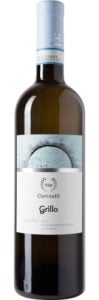
Grillo was originally used in making the fortified wine marsala. Sicilian producers now offer a table wine version of the varietal that is quickly gaining appeal to the U.S. wine market. We find the grillo grape to range in flavor somewhere between pinot grigio and chenin blanc; they are usually not oaked.
We recently tasted a trio of grillos and following are our impressions:
CVA Canicatti Grillo Aquilae 2023 Sicilia DOC ($18). This sample reminded us of a well-made California chenin blanc, sporting peach and melon notes and a hint of lime.
Valle Dell’Acate Zagra Grillo Sicilia DOC 2023 ($26). A nicely complex white wine featuring a bit of flowers, lemon and melon elements. Very nice.
Di Giovanna Helios Grillo 830 Matri Sicilia DOC 2024 ($30). Smooth and rich in the mouth with apple, pear and citrus notes. Very harmonious.
Wine picks
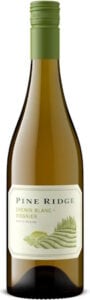
Pine Ridge Chenin Blanc Viognier California 2024 ($15). Pine Ridge has been delivering exceptional, classic chenin blanc for years. This blend with viognier is no exception. Rich and round peach and white plum notes with a slight floral element. Smooth finish and a great value.
Biltmore Reserve North Carolina Rosé 2024 ($25). Although this is an unconventional blend—cabernet sauvignon, cabernet franc and a bit of muscat canelli, chardonnay and malbec—it comes together beautifully in the mouth. Loads of raspberry and melon flavors with a hint of key lime
The Paring Pinot Noir 2024 ($25). From the Santa Barbara County AVA, this wine is another good value from the same house that produces The Hilt and Jonata wines. Bold but vibrant with youthful cherry fruit and a dollop of spice.
Disclaimer
Artificial Intelligence Disclosure & Legal Disclaimer
AI Content Policy.
To provide our readers with timely and comprehensive coverage, South Florida Reporter uses artificial intelligence (AI) to assist in producing certain articles and visual content.
Articles: AI may be used to assist in research, structural drafting, or data analysis. All AI-assisted text is reviewed and edited by our team to ensure accuracy and adherence to our editorial standards.
Images: Any imagery generated or significantly altered by AI is clearly marked with a disclaimer or watermark to distinguish it from traditional photography or editorial illustrations.
General Disclaimer
The information contained in South Florida Reporter is for general information purposes only.
South Florida Reporter assumes no responsibility for errors or omissions in the contents of the Service. In no event shall South Florida Reporter be liable for any special, direct, indirect, consequential, or incidental damages or any damages whatsoever, whether in an action of contract, negligence or other tort, arising out of or in connection with the use of the Service or the contents of the Service.
The Company reserves the right to make additions, deletions, or modifications to the contents of the Service at any time without prior notice. The Company does not warrant that the Service is free of viruses or other harmful components.