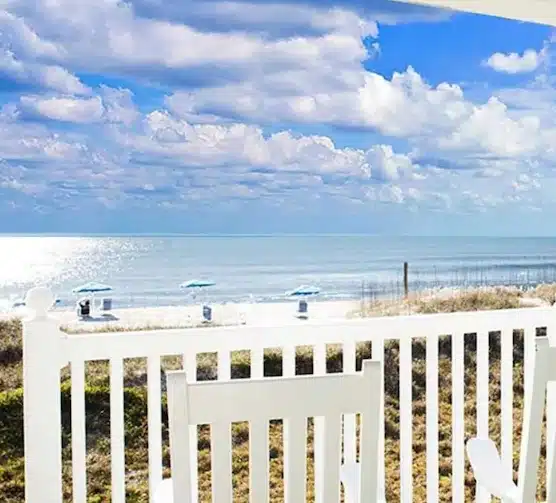
A view of the Atlantic Ocean from the Elizabeth Pointe Lodge.
Where history meets the hunt — and the shells just keep coming……
If you’ve ever spent a lazy morning scanning the tide line for treasures, you already know the quiet thrill of shelling. And while South Florida’s Sanibel Island gets most of the glory, North Florida has its own hidden gem for shell seekers: Amelia Island, home to Fernandina Beach and 13 glorious miles of Atlantic coastline.
The Amelia Island historical district in Fernandina Beach. Shops, restaurants and bars abound.
Where Is Amelia Island?
Amelia Island sits in the extreme northeastern corner of Florida, just 22 miles from Jacksonville International Airport and a stone’s throw from the Georgia border.
It’s part of the famous Sea Islands barrier island chain that stretches up through Georgia and the Carolinas, and it’s one of the most historically rich — and naturally stunning — destinations in the entire state.
The main city on the island is Fernandina Beach, a charming small town with a designated historic district listed on the National Register of Historic Places.
Think Victorian architecture, local boutiques, and Florida’s oldest continuously operating bar — all within a short drive of some seriously spectacular shelling beaches.
Why Amelia Island Is North Florida’s Best Shelling Spot
While North Florida doesn’t have the legendary shell density of Sanibel, Amelia Island is a standout for the region — and it offers something Sanibel increasingly cannot: room to breathe. Its wide, uncrowded beaches and 13 miles of shoreline mean you’re not competing with a hundred other shellers for every whelk.
The shells you’re most likely to find here include sand dollars, great heart cockles, olives, clams, lightning whelks, and baby’s ear moon snails. Feeling lucky? Keep an eye out for fossilized shark’s teeth, which are especially plentiful near Fort Clinch and after storms roll through.
The best time to visit is winter through early spring (December to May), when stronger seasonal currents push more shells onto the beach and fewer visitors mean more finds for you. Pro tip: head out at low tide, scan the wet sand near the water’s edge, and plan a morning walk after any storm — that’s when the real treasures surface.
The two top shelling spots on the island are the beach at Fort Clinch State Park (especially along St. Mary’s Inlet and near the jetty) and the wide flats of Little Talbot Island State Park, just south of Amelia, which really shine at low tide.
Attractions Around the Island
Amelia Island is far more than a shelling destination — it’s a full vacation in itself.
Fort Clinch State Park
Fort Clinch is the crown jewel. Spanning over 1,400 acres, this Civil War-era park combines history and nature in one spectacular package. Tour the 19th-century fort, catch panoramic views of the Atlantic Ocean, Cumberland Sound, and the St. Mary’s River from the gun deck, and spot dolphins, right whales, and gopher tortoises along the inlet.
On the first weekend of every month, a soldier garrison fires cannons and demonstrates battlefield skills. The park also offers six miles of off-road trails, 69 campsites, and prime shelling along the shore.
Little Talbot Island State Park
Just south of Amelia Island, Little Talbot is beloved for its wide beach and stellar low-tide shelling conditions. It’s a wilder, quieter experience with abundant birdwatching and beautiful natural surroundings — a true Florida escape.
Historic Downtown Fernandina Beach
More than 50 blocks make up this charming historic district. Centre Street is the heart of it — lined with locally owned boutiques, art galleries, and excellent restaurants.
Don’t miss The Palace Saloon, Florida’s oldest continuously operating bar, in business since 1903. The Amelia Island Museum of History, housed in a former jailhouse, traces over 4,000 years of island history from the Timucua people through the Civil War era.
To provide our readers with timely and comprehensive coverage, South Florida Reporter uses artificial intelligence (AI) to assist in producing certain articles and visual content.
Articles: AI may be used to assist in research, structural drafting, or data analysis. All AI-assisted text is reviewed and edited by our team to ensure accuracy and adherence to our editorial standards.
Images: Any imagery generated or significantly altered by AI is clearly marked with a disclaimer or watermark to distinguish it from traditional photography or editorial illustrations.
General Disclaimer
The information contained in South Florida Reporter is for general information purposes only.
South Florida Reporter assumes no responsibility for errors or omissions in the contents of the Service. In no event shall South Florida Reporter be liable for any special, direct, indirect, consequential, or incidental damages or any damages whatsoever, whether in an action of contract, negligence or other tort, arising out of or in connection with the use of the Service or the contents of the Service.
The Company reserves the right to make additions, deletions, or modifications to the contents of the Service at any time without prior notice. The Company does not warrant that the Service is free of viruses or other harmful components.
This article originally appeared here and was republished with permission.