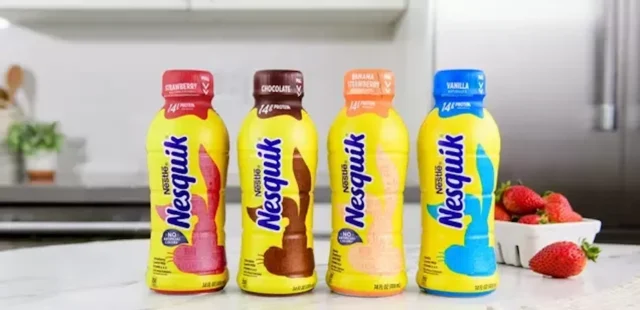
The modern food landscape is experiencing a quiet but monumental shift. If you stroll through any grocery store aisle today, you are likely to notice a profound change in the fine print on the back of your favorite packages. Phrases like “no artificial colors or flavors” have transformed from niche marketing taglines into baseline industry standards.
At the vanguard of this movement was Nestlé USA, which made a groundbreaking announcement that fundamentally shifted how major multinational corporations approach food formulation. The global food and beverage giant committed to a sweeping overhaul of its American confectionery division, pledging to eliminate all FDA-certified artificial colors and flavors across its entire chocolate candy portfolio.
This historic initiative targeted more than 250 individual product SKUs across 10 iconic brands, including household names like Butterfinger, Nestlé Crunch, Baby Ruth, Skinny Cow, and Raisinets. By swapping out laboratory-synthesized chemical compounds for natural, plant-derived alternatives, the company catalyzed an industry-wide realignment. It proved that large-scale, automated food production could adapt to the rigorous demands of the clean-label movement without compromising the taste and nostalgia that consumers expect.
The Science of Color: Moving Beyond Synthetic Dyes
To appreciate the scale of this reformulating milestone, it is helpful to look under the hood at the food science involved. For decades, mass-market candy and processed foods relied heavily on what the U.S. Food and Drug Administration (FDA) categorizes as “certified colors.” These are highly stable, intensely vibrant chemical compounds synthesized from petroleum or coal tar derivatives.

In the United States, seven primary synthetic dyes dominate the confectionery market:
- FD&C Blue No. 1 and No. 2
- FD&C Yellow No. 5 and No. 6
- FD&C Red No. 3 and Red No. 40
- FD&C Green No. 3
While these synthetic options are incredibly cost-effective, offer unparalleled color uniformity, and resist fading under high-heat manufacturing processes, changing consumer sentiment forced a rethink. Over the years, behavioral and clinical research raised public questions regarding the potential links between certain synthetic dyes and hyperactivity in sensitive children. Furthermore, a broader cultural push toward wellness left many millennials and younger families deeply skeptical of eating highly processed chemical additives.
Replacing these laboratory dyes is far from a simple copy-and-paste job. Food scientists must turn to “exempt-from-certification colors,” which are natural pigments sourced directly from nature.
When Nestlé committed to removing synthetic dyes, their culinary teams had to completely reinvent legacy recipes. For instance, the signature bright yellow-orange center of a Butterfinger bar—historically achieved using a blend of Yellow 5 and Red 40—was re-engineered using annatto, a natural orange-red condiment extracted from the seeds of the achiote tree. Similarly, the distinct color profile of Nestlé Crunch was stabilized using natural vanilla flavorings, replacing synthetic vanillin.
The technical hurdles of this shift are massive, as summarized by food scientists below:
| Technical Attribute | Synthetic Dyes (Certified) | Natural Colorants (Exempt) |
| Primary Sources | Chemical synthesis / Petroleum | Vegetables, fruits, roots, insects, and minerals |
| Thermal Stability | Exceptionally high; withstands intense cooking | Variable; can degrade or brown under high heat |
| Light Sensitivity | Highly resistant to UV fading on shelves | Prone to fading over time when exposed to supermarket lighting |
| Flavor Profile | Completely neutral | Can impart trace flavors (e.g., earthy notes from beets or turmeric) |
| Common Examples | Red 40, Yellow 5, Blue 1 | Annatto, turmeric, beet juice, lycopene, spirulina |
Decoding the Clean-Label Consumer Push
The corporate strategy driving this massive reformulation was directly tied to changing public values. Consumer research indicated that a vast majority of shoppers preferred foods with brief, recognizable ingredient lists. Parents, in particular, were driving double-digit growth in natural organic food categories, actively avoiding products that required an undergraduate degree in chemistry to decode.
“Consumers have made it clear that they want foods containing recognizable ingredients from familiar sources.”
By listening to this feedback, the company systematically removed certified dyes and replaced them with ingredients like carrot concentrate, hibiscus extract, and turmeric. This strategic pivot highlights a fascinating reality of modern food systems: consumer purchasing power holds immense leverage over supply chains. When an industry giant validates these clean-label preferences, it shifts the economic calculus for the entire agricultural sector, driving down the cost of natural color extraction techniques and making clean food more accessible to the general public.
A Lasting Legacy Across the Food Industry
Nestlé’s proactive stance created an immediate domino effect. Shortly after their announcement, direct competitors like Hershey’s, General Mills, and Kellogg’s committed to similar paths, seeking to remove synthetic colorants and artificial preservatives from their own North American product lines.
Interestingly, the story of these specific brands took another corporate turn. In 2018, Nestlé sold its entire U.S. confectionery portfolio to the Italian candy conglomerate Ferrero for $2.8 billion. However, the clean-label blueprints established during this massive transition remained firmly intact. The naturally sourced recipes for Crunch, Butterfinger, and Baby Ruth continue to define those products on grocery shelves today, proving that the removal of synthetic dyes was not a passing corporate fad, but a permanent evolution in public expectations.
Ultimately, the removal of artificial colors from major American products serves as a case study in market responsiveness. It demonstrates that the future of food processing lies in balancing agricultural innovation with consumer transparency, delivering the familiar treats we love through simpler, closer-to-earth ingredients.
Sources and Links:
- AgEcon Search (University of Minnesota): Sourcing Vanilla Closer to Home / Nestlé USA Clean Label Metrics https://ageconsearch.umn.edu/record/369395/files/cmsarticle_997.pdf
- Food and Drug Law Institute (FDLI): What’s in a Flavor? A Proposal to Address Consumer Confusion Surrounding Natural Flavoring https://www.fdli.org/wp-content/uploads/2023/04/Benavides-FDLJ-77-4.pdf
- National Center for Biotechnology Information (NCBI PMC): Red Tomato Products as an Alternative to Reduce Synthetic Dyes in the Food Industry: A Review https://pmc.ncbi.nlm.nih.gov/articles/PMC8659080/
- Pennsylvania Manufacturing Confectioners’ Association (PMCA): Making the Move from Synthetic to Natural Colors in North American Brands https://pmca.com/wordpress/wp-content/uploads/2016/08/2016-PMCA-Making-the-Move-from-Synthetic-to-Natural-Colors-M-Jelavich.pdf
- Perfumer & Flavorist Data Repository: The Truth About Chemophobia and Corporate Reformulations https://img.perfumerflavorist.com/files/base/allured/all/document/2015/11/pf.PF_40_12_030_07.pdf
Disclaimer
Artificial Intelligence Disclosure & Legal Disclaimer
AI Content Policy.
To provide our readers with timely and comprehensive coverage, South Florida Reporter uses artificial intelligence (AI) to assist in producing certain articles and visual content.
Articles: AI may be used to assist in research, structural drafting, or data analysis. All AI-assisted text is reviewed and edited by our team to ensure accuracy and adherence to our editorial standards.
Images: Any imagery generated or significantly altered by AI is clearly marked with a disclaimer or watermark to distinguish it from traditional photography or editorial illustrations.
General Disclaimer
The information contained in South Florida Reporter is for general information purposes only.
South Florida Reporter assumes no responsibility for errors or omissions in the contents of the Service. In no event shall South Florida Reporter be liable for any special, direct, indirect, consequential, or incidental damages or any damages whatsoever, whether in an action of contract, negligence or other tort, arising out of or in connection with the use of the Service or the contents of the Service.
The Company reserves the right to make additions, deletions, or modifications to the contents of the Service at any time without prior notice. The Company does not warrant that the Service is free of viruses or other harmful components.