Poker is more than a game of chance; it serves as a mirror reflecting key aspects of human psychology and decision-making. The clash of strategy, patience, and emotion at the poker table creates a unique backdrop where each hand becomes a test of self-control and analytical thinking. As James Warring notes, players quickly learn that success requires a blend of calculation, intuition, and resilience. The lessons absorbed can be applied beyond cards, teaching valuable approaches to risk, self-management, and perseverance.
Setting the Stage: Poker and Decision-Making
Poker is a game where skill, psychology, and strategy all come together at the table. Every hand challenges players to make choices with limited information, often under pressure. Success depends not just on knowing the rules, but on the decisions that shape each round. The stakes may shift with each deal, but the core challenge remains: how to make the best decision in the face of uncertainty and incomplete information.
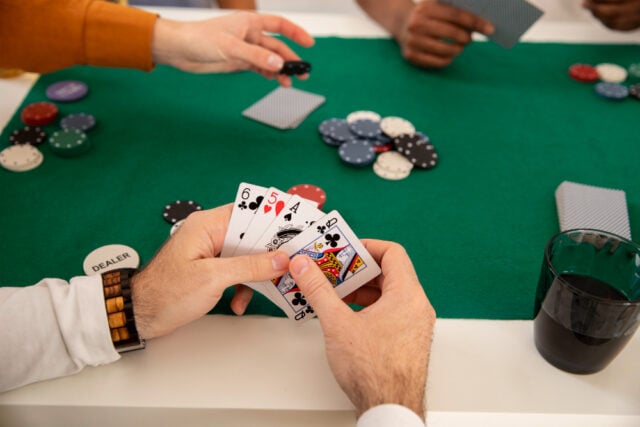
Players often find themselves weighing whether to fold, call, or raise based on subtle cues and probabilities. In many ways, poker mirrors real-life decision-making, where outcomes are uncertain, and patience is as important as quick thinking. The experienced player does not simply react to what is in front of them; they think several moves ahead, considering how their current action will shape the dynamics of the table. This forward-thinking mindset is what separates those who play poker from those who truly understand it.
The Value of Patience at the Poker Table
Patience often separates winning players from those who act on impulse. Rather than chasing every hand, skilled players know when to wait for the right moment, even if it means folding several times in a row. This discipline allows them to conserve chips and make stronger moves in poker when the odds are in their favor, and it’s often the players who can tolerate the lull who end up reaping the rewards.

Sitting through long stretches can test anyone’s resolve, yet those who manage to stay calm and selective often find themselves in better positions as the game progresses. By resisting the urge to play every opportunity, they demonstrate that self-control pays off in the long run. Patience is not passive; it is a deliberate strategy. Waiting for the right hand, the right moment, and the right opponent requires constant attention and energy. The player who appears idle is often the most mentally active at the table, processing information and preparing to act decisively when the time is right.
The Mental Process Behind Every Move
Every decision at the poker table involves rapid analysis and careful reasoning. Players quickly calculate pot odds, estimate opponents’ possible hands, and adjust their own tactics on the fly. This mental juggling act requires not just mathematical skills, but also the ability to read subtle changes in behavior and betting patterns. The mental stamina to maintain such focus over long sessions is a trait that only dedicated players develop.
In one moment, a player might weigh the risk of a large bet against the potential reward. At another, they might notice a slight hesitation in an opponent’s action—a clue that shifts their entire strategy. The interplay between instinct and logic only becomes more pronounced as the stakes grow higher.
Emotions and Their Impact
Emotions can surge during a long poker session, subtly affecting every choice a player makes. A sudden loss might spark frustration, tempting someone to chase after their losses with reckless bets. On the other hand, a winning streak can create overconfidence, blinding a player to the risks ahead.
Mastering the emotional rollercoaster of poker is a skill that takes time to develop. Those who succeed tend to recognize their feelings without letting them dictate their actions. This awareness lets them stay focused, even when the stakes are high and tensions rise around the table. Over time, seasoned players learn to anticipate these swings and manage them, turning emotional control into an advantage.
Overcoming Common Barriers
Fatigue can creep in after hours of play, clouding judgment and making it difficult to weigh options clearly. The mind starts to crave shortcuts, sometimes leading to hasty decisions that wouldn’t happen when fully alert. Recognizing these moments is crucial, as even a single lapse can be costly. This is why top players emphasize rest and mental breaks during long games to maintain peak performance.
Temptations to act on impulse are frequent, especially when the pressure mounts. By pausing and reassessing, players create space to counteract these urges and build habits that lead to better choices. Such mental discipline is just as important as technical skill in determining long-term success.
Reading Your Opponents: The Human Element
Beyond cards and chips, poker is fundamentally a game played against other people. Learning to read opponents is one of the most nuanced and rewarding aspects of the game. Skilled players pay close attention to betting patterns, timing, posture, and even the way someone handles their chips. These details, often unconscious on the part of the player being observed, can reveal a great deal about the strength of their hand and the confidence behind their decisions.
The ability to observe and interpret human behavior has obvious applications outside the game. In business negotiations, job interviews, and everyday conversations, the capacity to pick up on nonverbal signals and read a room accurately gives a significant advantage. Poker sharpens this instinct through repetition and consequence. Because every misread can cost chips and every correct read can shift the momentum of a session, players are constantly refining their ability to understand the people around them. Over time, this practiced awareness becomes second nature, a skill that proves useful far beyond the felt.
Extending Poker Lessons to Everyday Life
Lessons learned at the poker table often reach beyond the game itself. Whether it’s waiting for a better opportunity or weighing risks before making a big decision, these habits serve people well in daily challenges. The ability to keep emotions in check and analyze situations calmly can make all the difference in work, relationships, and personal goals. Poker’s unique blend of strategy and psychology creates a practical toolkit for tackling life’s unpredictability.
Many find that the patience and resilience developed in poker translate into greater confidence when facing uncertainty elsewhere. In this way, the game becomes more than entertainment—it’s a training ground for navigating life’s unpredictable turns. The skills honed through countless hands often emerge in unexpected ways, shaping a person’s approach to adversity and opportunities alike.
Disclaimer
Artificial Intelligence Disclosure & Legal Disclaimer
AI Content Policy.
To provide our readers with timely and comprehensive coverage, South Florida Reporter uses artificial intelligence (AI) to assist in producing certain articles and visual content.
Articles: AI may be used to assist in research, structural drafting, or data analysis. All AI-assisted text is reviewed and edited by our team to ensure accuracy and adherence to our editorial standards.
Images: Any imagery generated or significantly altered by AI is clearly marked with a disclaimer or watermark to distinguish it from traditional photography or editorial illustrations.
General Disclaimer
The information contained in South Florida Reporter is for general information purposes only.
South Florida Reporter assumes no responsibility for errors or omissions in the contents of the Service. In no event shall South Florida Reporter be liable for any special, direct, indirect, consequential, or incidental damages or any damages whatsoever, whether in an action of contract, negligence or other tort, arising out of or in connection with the use of the Service or the contents of the Service.
The Company reserves the right to make additions, deletions, or modifications to the contents of the Service at any time without prior notice. The Company does not warrant that the Service is free of viruses or other harmful components.