It was an absolute wall-to-wall press squeeze inside the Oval Office this morning. If you have ever seen an impromptu White House press gathering when the room is packed to maximum capacity, you know the atmosphere is electric, chaotic, and incredibly loud. Reporters stood shoulder-to-shoulder under the historic portraits of past presidents, extending boom mics and waving notebooks as President Donald Trump sat behind the Resolute Desk. Instead of a quick, scripted announcement, the morning quickly transformed into a sprawling, high-stakes press conference covering just about every major global and domestic flashpoint on the grid.

Shifting Gears on Iran: Hard Strikes, Fallen Copters, and Sinking Fleets
The most intense moments of the morning centered heavily on the rapidly escalating military conflict in the Middle East. Reporters immediately pressed the president on the recent downing of a U.S. Army Apache attack helicopter near the critical shipping lanes of the Strait of Hormuz. The incident, which occurred just a day after a brief and fragile regional ceasefire showed major cracks, has sent shockwaves through international diplomatic circles and military command hubs.
Trump did not pull his punches. He made it clear that the United States is ready to ramp up its military posture significantly if the Iranian government refuses to finalize a comprehensive peace deal on strict American terms.
“We’re going to be attacking them, attacking them very hard, resuming bombing,” Trump told the press corps assembled in front of his desk. “We want a deal that is meaningful, we want a deal that works.”
The president reiterated that Iran will feel the immediate weight of advanced American capabilities, stating plainly that they are going to “pay the price” for dragging out diplomatic negotiations. He revealed that U.S. military operations had already completed fresh rounds of targeted strikes in response to the helicopter incident.
Interestingly, Trump also displayed his classic habit of taking seemingly contrasting stances within the same news cycle. While his public warnings were filled with fire and fury, reports from recent phone interviews indicated he had also downplayed the immediate military severity of the crash itself, telling journalists it “wasn’t a big deal” primarily because the two service members on board walked away completely unharmed.
The rescue operation itself sounded like something out of a futuristic movie. In the first known military deployment of its kind, an advanced American robotic drone boat was utilized to rapidly extract the two aviators after their sophisticated Apache helicopter went down near the coast of Oman. While U.S. officials are still investigating whether the helicopter was intentionally targeted by an insurgent missile or simply caught in regional crossfire, the administration is treating the event as a direct provocation.
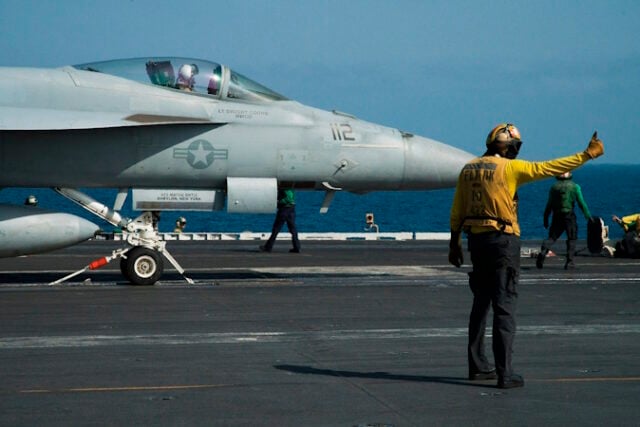
Trump reminded the room that this is not an isolated skirmish. He pointed back to massive naval operations where American forces successfully took out 20-plus ships as part of a wider, ongoing effort to systematically dismantle and sink elements of the Iranian fleet. The strategic goal remains a total maritime blockade of the Strait of Hormuz to stop the flow of Iranian oil traffic, though shipping data suggests some rogue tankers continue to slip through the dragnet. Trump noted that while the U.S. has emissaries dealing both directly and indirectly with Tehran, the patience of his administration has completely run out.
The Venezuelan Crucible: Regional Oil and Regime Pressure
Directly following his comments on the Persian Gulf, the president pivoted to the Western Hemisphere, facing questions about the ongoing political and economic crisis in Venezuela. The situation in Caracas has remained a constant thorn in the side of regional stability, and Trump wasted no time linking the autocratic Maduro regime to the wider global axis of energy disruptions.
Trump emphasized that Venezuela’s domestic mismanagement has not only severely crippled its own infrastructure but has also forced millions of its citizens to flee, directly impacting the migration patterns currently putting pressure on the United States southern border. He noted that the administration is maintaining a posture of extreme economic and diplomatic pressure on Caracas, hinting that further sanctions targeting state-run oil enterprises could be deployed if the regime continues to flout democratic norms and suppress internal opposition groups.
The conversation took on an analytical tone as Trump discussed the global oil market. With the Middle East currently unstable due to the Iranian conflict, Venezuela’s massive, untapped crude reserves represent a critical strategic variable. However, the president made it clear that the United States has no intention of easing up on its strict sanctions framework just to stabilize global energy supplies, arguing instead that American domestic energy independence is the only real solution to shielding working-class families from global market volatility.
Core Economic Squeeze: Dissecting the 4.2% Inflation Jump
Away from the theater of war, the biggest domestic headache landed directly on the president’s desk this morning in the form of the fresh May Consumer Price Index (CPI) data. The numbers are undeniably tough, and there is no wrapping them in a pretty bow. Inflation across the United States officially accelerated to an annual rate of 4.2% in May, marking its third consecutive monthly increase and hitting a stubborn three-year high.
To put that in perspective, before this latest round of geopolitical conflict kicked off in the Middle East, inflation was sitting at a much more manageable 2.4%. The primary culprit for this sudden economic spike? The maritime war with Iran. The severe disruptions and naval blockades in the Strait of Hormuz have sent global energy supplies into a tailspin, forcing up the prices of everyday essentials for millions of American families. According to the Bureau of Labor Statistics, energy costs accounted for a staggering 60% of the entire monthly increase. Drivers are feeling the burn at the pump, with the national average for a gallon of regular gas stubbornly hovering around $4.15.
When reporters asked Trump about the growing economic anxiety and the fact that a vast majority of Americans feel their household incomes simply cannot keep pace with these rising prices, the president offered a defense of his broader economic architecture. He pushed back against the idea that domestic policies were failing, claiming that U.S. fuel prices are actually “not very high” when compared to the catastrophic spikes being seen across Europe and Asia due to the maritime blockages.
The White House released an accompanying statement arguing that these latest inflation figures reflect temporary external disruptions rather than structural flaws in the domestic economy. They emphasized that when you strip away volatile food and energy costs, the core inflation rate ticked up only slightly to 2.9%, suggesting that tariff pass-through pressures and general goods manufacturing costs are beginning to cool for the first time in over a year.
Nevertheless, this economic reality creates an immediate political challenge with a massive Federal Reserve meeting looming next week. The central bank will gather under the leadership of its new chair, Kevin Warsh, to determine interest rate policies. Trump made his preferences known this morning, signaling that he expects the central bank to align with his administration’s goals and look toward lowering borrowing costs to relieve pressure on the public. It sets up an incredibly tense dynamic between the White House and independent financial regulators who are desperately trying to drag inflation back down to their strict 2% target.
A $70 Billion Border War Chest and Fresh Immigration Clashes
Turning to the domestic legislative front, President Trump used his time with reporters to celebrate a massive, hard-fought political victory that he had officially signed into law just hours earlier in the Oval Office. House Republicans narrowly pushed through a massive $70 billion budget reconciliation package that completely bypasses the traditional annual appropriations process to fully fund the administration’s sweeping immigration and deportation agenda through the remainder of his term.
The funding breakdown of this legislative package is immense:
| Department / Agency | Funding Allocation | Primary Operational Focus |
| ICE Operations | $38 Billion | Internal enforcement, tracking, and large-scale deportation logistics. |
| U.S. Border Patrol | $26 Billion | Physical barriers, advanced surveillance tech, and increased personnel. |
| Emergency Buffer | $5 Billion | Contingency funding for unforeseen border security and operational costs. |
Trump framed the signing as a critical national security necessity, pointing to the long-standing funding standoffs in Congress that have paralyzed departmental budgets for nearly six months. However, the victory lap was quickly met with sharp questions from reporters regarding the human cost of these aggressive enforcement operations.
Journalists confronted the president with a damning new investigative report showing that his administration has systematically re-separated dozens of immigrant children from their parents for a second time. Many of these families had originally been separated during the administration’s initial term under the controversial zero-tolerance framework and were only recently reunited. Critics and legal advocates allege that these new re-separations directly violate landmark court settlements.
When pressed on reports that hundreds of babies and toddlers are currently being held in specialized ICE detention facilities, Trump maintained that strict enforcement is the only viable deterrent to secure the southern border. He shifted the blame back onto congressional Democrats, arguing that their opposition to his border policies is what creates administrative chaos.
The 2026 World Cup and a North American Trade Bombshell
With the highly anticipated 2026 FIFA Men’s World Cup officially set to kick off across North America, you would think the atmosphere around the White House would be celebratory. After all, the tournament represents the most expensive and expansive sporting event in history, with the vast majority of high-profile matches scheduled to play out in front of packed American stadiums. FIFA President Gianni Infantino even recently awarded Trump a highly publicized “FIFA Peace Prize” in an effort to smooth over geopolitical wrinkles.
Yet, this morning, the beautiful game found itself deeply entangled in raw trade politics and human rights debates. When asked about the upcoming formal review of the U.S.-Mexico-Canada Agreement (USMCA)—the comprehensive free trade deal that governs commerce across the continent—Trump dropped an absolute bombshell that sent shockwaves through regional markets.
“I’m not looking to renew it,” Trump stated bluntly to a stunned press corps, referring to the tri-lateral trade pact. “We don’t need anything that Canada or Mexico has.”
This protectionist stance perfectly mirrors the intense national security tariffs on aluminum, steel, and copper imports that the administration recently modified under Section 232 rules. But the economic friction is also bleeding directly into the logistics of the World Cup itself.
Human rights organizations and sports alliances have begun raising major alarms over the administration’s restrictive visa bans and aggressive immigration protocols. Reports have emerged that numerous international soccer fans, and even some foreign personnel, who spent thousands of dollars on travel arrangements have suddenly had their entry documents denied or summarily revoked under the sweeping new border security mandates.
Activists are warning of a growing “climate of fear” surrounding the tournament, highlighted by recent high-profile immigrant hunger strikes and intense protests outside detention hubs located just a few miles from major tournament venues like MetLife Stadium. Trump dismissed these concerns, insisting that national security protocols will not be relaxed for a sporting event and that every single individual entering the country must undergo rigorous screening, regardless of their status or athletic affiliation.
The Looming Midterms: Approval Ratings and Political Survival
All of these intersecting crises—the escalating warfare in the Persian Gulf, the 4.2% inflation spike, and the highly polarized battles over border policy—are converging on a massive political reality: the upcoming 2026 midterm elections.
Reporters eagerly questioned Trump about fresh polling data that shows his job approval numbers hitting significant new lows, particularly among critical independent voters who express deep exhaustion over the prolonged conflict with Iran and the daily economic grind of higher consumer prices. A recent Economist/YouGov survey highlighted that nearly two-thirds of the American electorate currently views the administration’s negotiations with foreign adversaries as largely ineffective.
Trump characteristically brushed off the negative data, calling the polls inherently biased and pointing instead to last night’s primary election results as proof of continued conservative momentum. He highlighted various races across the country where his endorsed candidates performed strongly, framing the upcoming midterms not as a referendum on inflation, but as a direct choice between national strength and progressive dysfunction.
Nevertheless, the underlying political math is undeniable. If gas prices and interest rates remain stuck at these elevated levels through the summer months, the administration faces a steep uphill battle to maintain its legislative majorities in the House and Senate. The domestic political stakes are just as high as the geopolitical ones.
Balancing the Digital Frontier: Advanced AI and Cyber Security
The morning discussion also took a fascinating turn into the world of high-tech governance. Just last week, President Trump signed a major Executive Order titled “Promoting Advanced Artificial Intelligence Innovation and Security.” The order aims to confront the emerging national security and cyber defense vulnerabilities posed by frontier AI models without choking off domestic commercial innovation.
Trump explained to reporters that the federal government is establishing a new, classified benchmarking process to evaluate the raw cyber capabilities of top-tier AI systems. The voluntary framework allows cutting-edge developers to collaborate closely with the National Security Agency (NSA) and the Cybersecurity and Infrastructure Security Agency (CISA), granting federal experts early access to evaluate models before they are released to the general public.
Significantly, Trump emphasized that his executive actions deliberately steer clear of creating heavy-handed, mandatory government licensing or pre-clearance permits, which he argues would simply drive tech development offshore to adversaries like China.
The policy conversation carried a distinctly personal touch as well. Just yesterday, First Lady Melania Trump hosted the inaugural Presidential AI Challenge National Champion Awards Ceremony right there at the White House. The event honored six unique teams of young students from across the country who utilized basic AI tools to solve real-world problems in fields like healthcare, public safety, and anti-bullying initiatives. The president praised the initiative, stating that while the public remains deeply split on whether artificial intelligence will ultimately hurt or help the broader labor market, his administration is fully committed to cultivating top-tier American tech talent to lead the global digital race.
White House Grounds: The UFC Controversy and Beyond
Before wrap-up, Trump faced one final, uniquely modern question regarding a bizarre legal battle currently playing out in federal court. The administration is currently fighting a last-minute lawsuit attempting to block a massive Ultimate Fighting Championship (UFC) martial arts event scheduled to take place directly on the White House grounds this coming weekend.
The Justice Department filed urgent paperwork urging a federal judge to reject the injunction, arguing that halting the fight card at this late stage would completely disrupt months of meticulous logistical planning and security coordination. The UFC has already finalized plans to distribute tens of thousands of free tickets to spectators, turning the historic executive grounds into a literal sporting arena. Trump, a lifelong combat sports enthusiast and close friend of UFC leadership, expressed total confidence that the event would move forward as scheduled, viewing it as a great showcase of American spirit right outside his window.
With that, the president turned back to his paperwork on the Resolute Desk, leaving a breathless press corps to parse through hours of breaking news. Whether it is launching missiles in the Strait of Hormuz, rewriting continental trade alliances, or reshaping domestic border infrastructure, one thing is abundantly clear: mid-2026 is proving to be an incredibly intense, high-stakes chapter of American history.
Sources and Links:
- Al-Monitor: “Trump on Iran: We’re going to be attacking them very hard” https://www.al-monitor.com/originals/2026/06/trump-iran-were-going-be-attacking-them-very-hard
- NPR / KYUK: “President Trump says U.S. ‘must’ respond to Iran attack that downed Army helicopter” https://www.kyuk.org/2026-06-09/president-trump-says-u-s-must-respond-to-iran-attack-that-downed-army-helicopter
- The Times of Israel: “Trump, who vowed response to Iran’s downing of US helicopter, also said it ‘wasn’t a big deal'” https://www.timesofisrael.com/liveblog_entry/trump-who-vowed-response-to-irans-downing-of-us-helicopter-also-said-it-wasnt-a-big-deal/
- YouGov: “Trump approval hits new lows on inflation and Iran, AI, E. Jean Carroll, and more: May 29 – June 1, 2026 Economist/YouGov Poll” https://yougov.com/en-us/articles/54886-donald-trump-approval-new-lows-inflation-iran-ai-e-jean-carroll-may-29-june-1-2026-economist-yougov-poll
- The Guardian: “US inflation jumped to 4.2% in May, the third consecutive increase since start of Iran war” https://www.theguardian.com/business/2026/jun/10/inflation-report-rate
- CBS News: “Inflation topped 4% in May as CPI surged to its highest level in more than 3 years” https://www.cbsnews.com/news/cpi-report-today-may-2026-inflation-iran-war-trump/
- Democracy Now!: “House GOP Approves $70 Billion to Fund Trump’s Immigration Crackdown” https://www.democracynow.org/2026/6/10/headlines/house_gop_approves_70_billion_to_fund_trumps_immigration_crackdown
- Democracy Now!: “AP: Trump Admin Separated Dozens of Immigrant Children from Their Parents for a Second Time” https://www.democracynow.org/2026/6/10/headlines/ap_trump_admin_separated_dozens_of_immigrant_children_from_their_parents_for_a_second_time
- Associated Press / WSLS: “Trump signs bill giving nearly $70B to his immigration enforcement agenda through end of his term” https://www.wsls.com/news/politics/2026/06/10/trump-signs-bill-giving-nearly-70b-to-his-immigration-enforcement-agenda-through-end-of-his-term/
- CTV News: “Trump says he’s ‘not looking to renew’ North American free trade deal” https://www.ctvnews.ca/politics/article/trump-says-hes-not-looking-to-renew-north-american-free-trade-deal/
- Sport & Rights Alliance: “FIFA: Fear and Uncertainty in Final Countdown to 2026 World Cup” https://sportandrightsalliance.org/fifa-fear-and-uncertainty-in-final-countdown-to-2026-world-cup/
- New Republic: “Can the 2026 World Cup Be Rescued From Trump and Infantino?” https://newrepublic.com/article/211568/2026-world-cup-trump-infantino
- JD Supra: ““Promoting Advanced AI Innovation and Security” Executive Order: Top points” https://www.jdsupra.com/legalnews/promoting-advanced-ai-innovation-and-6058203/
- The White House Briefings: “First Lady Melania Trump Honors America’s Next Generation of Top AI Talent at Historic Presidential AI Challenge Awards Ceremony” https://www.whitehouse.gov/briefings-statements/2026/06/first-lady-melania-trump-honors-americas-next-generation-of-top-ai-talent-at-historic-presidential-ai-challenge-awards-ceremony/
- WUSA9: “Trump administration asks judge to reject bid to block White House UFC event” https://www.wusa9.com/article/news/nation-world/trump-ufc-white-house-fight/507-e0c339cd-40c4-40fc-955e-118ab5ca24b2
Disclaimer
Artificial Intelligence Disclosure & Legal Disclaimer
AI Content Policy.
To provide our readers with timely and comprehensive coverage, South Florida Reporter uses artificial intelligence (AI) to assist in producing certain articles and visual content.
Articles: AI may be used to assist in research, structural drafting, or data analysis. All AI-assisted text is reviewed and edited by our team to ensure accuracy and adherence to our editorial standards.
Images: Any imagery generated or significantly altered by AI is clearly marked with a disclaimer or watermark to distinguish it from traditional photography or editorial illustrations.
General Disclaimer
The information contained in South Florida Reporter is for general information purposes only.
South Florida Reporter assumes no responsibility for errors or omissions in the contents of the Service. In no event shall South Florida Reporter be liable for any special, direct, indirect, consequential, or incidental damages or any damages whatsoever, whether in an action of contract, negligence or other tort, arising out of or in connection with the use of the Service or the contents of the Service.
The Company reserves the right to make additions, deletions, or modifications to the contents of the Service at any time without prior notice. The Company does not warrant that the Service is free of viruses or other harmful components.