Escalation in the Chokepoint
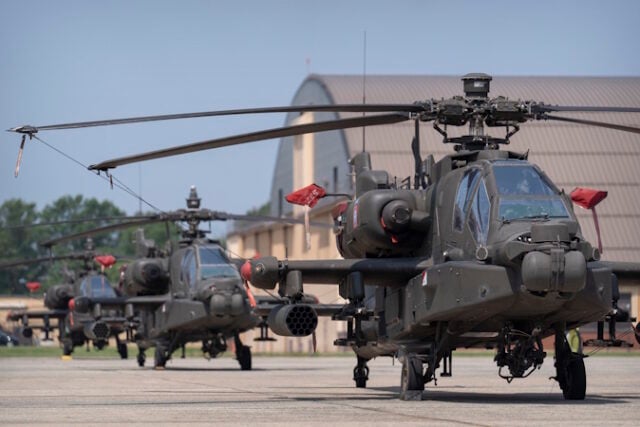
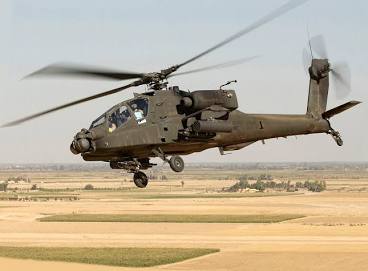
A dangerous conflict reached a critical turning point on Monday night when a U.S. Army AH-64 Apache attack helicopter crashed into the volatile waters of the Strait of Hormuz. The heavy attack helicopter, which was conducting a routine maritime patrol off the rugged coast of Oman, went down amid the broader context of an ongoing regional war that has reshaped global energy markets and military postures since early 2026. Within hours of the crash, the incident transformed from a localized tactical emergency into a full-scale international crisis, threatening to collapse a highly fragile, newly minted diplomatic ceasefire between major regional powers.
“I have just been informed by our Great Military that last night the Iranians shot down one of our highly sophisticated Apache Helicopters while patrolling over the Strait of Hormuz. There were two pilots involved, both are safe and uninjured. Nevertheless, the United States… pic.twitter.com/yMGXqG89ax
— The White House (@WhiteHouse) June 9, 2026
We prefer the language of diplomacy, but we speak other languages far more fluently. Break your commitments, and we’ll switch to what we speak best.
You ride the horse you saddled!
— محمدباقر قالیباف | MB Ghalibaf (@mb_ghalibaf) June 9, 2026

The two U.S. Army soldiers piloting the heavily armed aircraft survived the crash and were pulled from the water in a dramatic, technically unprecedented rescue operation. However, the political fallout from the downing has immediately escalated tensions between Washington and Tehran. Speaking to reporters on the tarmac at John F. Kennedy International Airport after returning from an NBA Finals game in New York, U.S. President Donald Trump confirmed the safety of the crew but took a sharp, confrontational stance on the cause of the incident. Moving beyond the initially cautious statements released by the Pentagon, President Trump explicitly blamed Iranian military forces for the downing, declaring that the Apache had been targeted by hostile fire and vowing that the United States would deliver a severe, calculated response to the provocation.
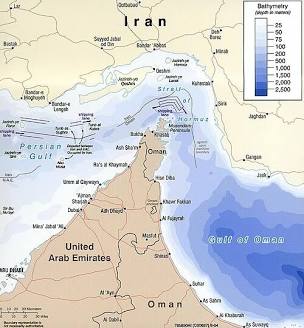
The downing occurs at an incredibly precarious moment for the Middle East. For months, the region has been engulfed in a wider conflict that erupted on February 28, 2026. Just twenty-four hours before the Apache went down, Iran and Israel had traded massive, direct military strikes, pushing the region to the absolute brink of total war before stepping back under immense international pressure. The incident in the Strait of Hormuz threatens to shatter that tenuous peace, drawing the United States deeper into direct kinetic conflict with Iran, while simultaneously complicating Israel’s parallel military campaign against the Iranian-backed Hezbollah militia in southern Lebanon.
Trump’s Verdict and the Threat of Retaliation
While U.S. Central Command (CENTCOM) initially maintained a characteristically guarded posture—stating on Tuesday that the “cause of the incident is under investigation” and that teams were evaluating whether the helicopter suffered a catastrophic mechanical malfunction or was hit by a missile—President Trump left little room for ambiguity in his public remarks.
“The pilots are fine, nobody was injured, which is a miracle given what happened out there,” Trump told reporters as he prepared to board Air Force One. “But make no mistake about it, we know what happened, and we know who is responsible. This aircraft was operating in international airspace, protecting free navigation, and it was downed by Iranian hostile actions. We are finalizing a very comprehensive report that will be released later today, and our response will be swift, it will be powerful, and it will show that we do not tolerate attacks on our service members.”
The administration’s internal deliberations regarding how the U.S. will respond are reportedly focusing on a multi-tiered strategy designed to penalize Tehran without triggering a total regional conflagration that could permanently shut down global shipping. Military planners at the Pentagon have presented the White House with a suite of kinetic and non-kinetic options:
- Targeted Retaliatory Strikes: Precision cruise missile or stealth fighter strikes against the specific Iranian coastal radar installations, anti-ship missile batteries, or Islamic Revolutionary Guard Corps (IRGC) fast-attack craft bases that were active in the southern sector of the Strait during the incident.
- Expansion of Project Freedom: A dramatic surge in naval assets dedicated to the ongoing U.S.-led maritime blockade of Iranian oil ports. Under Project Freedom, which began earlier this spring, the U.S. Navy and its allies have already turned away more than 130 commercial vessels carrying Iranian crude and disabled several non-compliant ships. A shootdown would likely cause Washington to completely seal off access to these ports, throttling Iran’s remaining economic lifelines.
- Asymmetric Cyber Warfare: High-impact cyber operations directed at Iran’s centralized command-and-control infrastructure, maritime tracking networks, and energy distribution systems to paralyze the IRGC’s operational capabilities without dropping physical bombs.
The president emphasized that while he remains deeply committed to his campaign promise of preventing “new endless wars,” he believes that a failure to project overwhelming strength in this moment would invite further aggression. “If we do the massive bombing campaigns of the past, a lot of people are going to be killed. Who wants to do that? I don’t,” Trump noted, signaling a preference for a high-intensity, asymmetric response rather than a prolonged land or air campaign. “But we are very close to a very powerful, very strong deal with Iran, and they need to understand that they cannot shoot at our people while we are negotiating.”
A Historic First: The Sea Drone Rescue
While politicians and strategists in Washington and Tehran debated the geopolitical ramifications, naval historians and tech analysts were focusing on the remarkable manner in which the two downed American pilots were saved. The rescue represented a historic milestone in modern naval warfare: the first time an unmanned surface vessel was successfully used to execute a live search-and-rescue operation in a hostile combat environment.
According to technical briefs provided by CENTCOM spokesperson Capt. Tim Hawkins, the AH-64 Apache went down at approximately 5:30 p.m. Eastern time on Monday. The aircraft plunged into the waters off the coast of Oman, a region heavily patrolled by U.S. and allied forces trying to keep the shipping lanes open. Within minutes of the helicopter disappearing from radar, U.S. Naval Forces Central Command activated emergency protocols.
Instead of deploying a traditional, vulnerable manned helicopter or a slow-moving carrier strike group vessel into the immediate threat zone, commanders utilized Task Force 59—the U.S. Fifth Fleet’s specialized digital and unmanned systems unit based in Bahrain. An autonomous, high-speed unmanned surface drone operating in the vicinity was rerouted to the crash coordinates using real-time satellite telemetry and aerial data feeds from an overhead MQ-9 Reaper drone.
The sea drone arrived at the crash site within two hours of the downing, locating the two pilots floating in their survival gear in stable condition. The autonomous vessel maneuvered alongside the aviators, pulled them from the choppy waters using specialized robotic recovery systems, and safely transported them to a secure maritime extraction point. From there, a manned military helicopter hoisted the soldiers aboard and flew them to a regional medical facility. CENTCOM confirmed on Tuesday morning that both crew members were uninjured and remained in stable condition, a testament to the speed and efficiency of the robotic intervention.
The Shadow of the 2026 Iran War
To fully comprehend the gravity of the Apache downing, the incident must be viewed through the lens of the broader, highly destructive Iran War that has gripped the international community since its outbreak on February 28, 2026. For over three months, a combination of direct military engagements, trade blockades, and proxy wars has shaken the foundations of global stability, driving up international energy prices and causing severe inflationary shocks for food and basic commodities worldwide.
The current phase of the war is defined by a deep, systemic struggle for control over the Strait of Hormuz. Through this narrow body of water, which separates Iran from the Arabian Peninsula, flows roughly one-fifth of the entire world’s daily oil production. Following the outbreak of hostilities in late February, Iran enacted an effective naval blockade, utilizing mines, drone swarms, and shore-to-ship missiles to severely restrict commercial maritime traffic and squeeze Western economies.
In response, the United States deployed a massive array of advanced military hardware to the region to enforce freedom of navigation and execute counter-blockade measures. Alongside stealth fighters and long-range surveillance drones, heavily armed AH-64 Apache helicopters equipped with radar-guided Hellfire missiles have been routinely flying low-altitude patrols. These aircraft are specifically tasked with detecting and deterring Iranian fast-attack craft, intercepting low-flying suicide drones, and escorting vulnerable oil tankers through the narrow channels.
However, this assertive operational posture has come at a staggering cost in terms of hardware. The airspace over and around the Persian Gulf has become one of the most lethal air-defense environments in modern history. According to a Congressional research report published on May 13, 2026, the United States and its regional allies have suffered significant aerial attrition. Iranian air defenses and electronic warfare units have shot down approximately 30 MQ-9 Reaper drones since the conflict began. Furthermore, several American manned fighter aircraft have been lost to a combination of hostile fire, operational accidents, and tragic friendly fire incidents—including an incident in March where three U.S. F-15E Strike Eagles were lost after encountering misaligned regional air defenses, and a separate crash in western Iraq that claimed the lives of six crew members aboard a refueling aircraft.
If President Trump’s assessment is formally validated by the upcoming Pentagon report, this Apache will mark the very first American attack helicopter lost to hostile Iranian fire in the conflict, representing a significant escalation in the qualitative nature of the combat.
The Geopolitical Chessboard: Israel, Lebanon, and Hezbollah
The ripples of the Apache crash extend far beyond the coast of Oman, directly impacting the strategic calculations of Israel and Lebanon. The Middle East is currently trapped in a hyper-complex, multi-front security crisis where an incident on one side of the map can instantly ignite violence on the other.
Just hours before the helicopter went down, a fragile, deeply tenuous ceasefire between Israel and Iran appeared to be miraculously holding. Over the preceding weekend, the two regional titans had engaged in their most explosive direct military exchange since the war began, trading massive salvos of ballistic missiles and long-range drone strikes that illuminated the skies over Tel Aviv, Isfahan, and Tehran. Iranian state television later acknowledged that the Israeli retaliatory strikes had successfully penetrated defenses, killing at least two members of Iran’s national air-defense units. Following an intense, direct diplomatic intervention by President Trump, who demanded that both nations “immediately stop shooting,” both capitals agreed to a temporary halt in direct state-on-state strikes.
However, that ceasefire did not apply to Israel’s parallel, high-intensity war along its northern border. Even as the direct exchange with Tehran paused, the Israeli military dramatically expanded its kinetic campaign inside Lebanon against Hezbollah, the heavily armed, Iranian-backed Shiite militia. On Tuesday morning, Israeli air forces launched a series of devastating airstrikes against command centers and weapon depots in the southern Lebanese port city of Tyre. Accompanying the bombardment was a sweeping, mandatory evacuation order issued by the Israel Defense Forces (IDF) for residents in Tyre and the surrounding municipalities, signaling that a massive ground or air offensive was imminent.
Hezbollah’s leadership explicitly rejected a comprehensive, U.S.-led ceasefire proposal that had been negotiated between Israeli and Lebanese diplomats the week prior. In response to the renewed Israeli actions in Lebanon, Iran’s Islamic Revolutionary Guard Corps issued a fierce warning on Monday, stating that any continued escalation against their Lebanese proxy would be met with a “severe, crushing, and much harsher” response than previously seen.
                  [ IRAN ]
                     |
         +-----------+-----------+
         |                       |
(Financial/Military)    (Anti-Ship Missiles/
         |               Hostile Fire)
         v                       v
   [ HEZBOLLAH ]        [ STRAIT OF HORMUZ ]
   (In Lebanon)         (Apache Downing Site)
         ^                       ^
         |                       |
 (IDF Airstrikes)       (Project Freedom Blockade)
         |                       |
     [ ISRAEL ]           [ UNITED STATES ]
The downing of the Apache in Hormuz completely upends this delicate dynamic. For Israel, a direct confrontation between the United States and Iran in the Gulf could provide the necessary strategic coverage to decisively neutralize Hezbollah’s rocket infrastructure in Lebanon without facing a unified, multi-front response from Tehran. Conversely, for the United States, the risk is that a heavy-handed retaliation against Iran could prompt Tehran to order its proxies in Lebanon, Iraq, and Yemen to unleash an unconstrained barrage against American installations and Israeli cities, plunging the entire region into an irreversible, cataclysmic war.
Diplomatic Deadlock and the Road Ahead
The sudden escalation comes at a time when international mediators, led prominently by diplomatic officials from Pakistan, have been working around the clock to transition the temporary April ceasefire into a permanent, legally binding peace treaty between Washington and Tehran.
Prior to the helicopter crash, President Trump had expressed immense optimism that a historic grand bargain was within arm’s reach. Speaking to political allies and business leaders, Trump had confidently asserted that the United States had a “good chance” of signing a definitive deal within “two or three days,” emphasizing that his administration believed tailored diplomacy backed by economic leverage would prove far more effective than an open-ended military campaign. “We’re very close to having a very, very good, strong, powerful deal,” he had noted.
However, the underlying mechanics of the negotiations reveal deep, systemic disagreements that the Apache incident will only exacerbate. The core components of the proposed peace deal are stuck in a profound deadlock:
- The Nuclear Question: The United States and its international partners are demanding that Iran completely dismantle and surrender its entire accumulated stockpile of highly enriched uranium, alongside granting unfettered, permanent access to international nuclear inspectors.
- Sanctions and Assets: Tehran has steadfastly maintained that it will not sign any agreement without immediate, comprehensive relief from Western economic sanctions, alongside the immediate unfreezing of tens of billions of dollars in sovereign assets currently blocked in international banking systems.
- The Sequencing Dilemma: Iran has aggressively pushed for tangible economic concessions to be delivered before they begin dismantling their defensive or nuclear capabilities—a hardline position that Washington has repeatedly and flatly rejected.
The downing of the Apache helicopter has effectively frozen these delicate talks. With the American public and military leadership demanding accountability for the attack on the helicopter, the Trump administration cannot afford to look weak or overly compromising at the negotiating table.
As the Pentagon prepares to present its formal investigative findings to the White House, the international community holds its breath. The successful, high-tech rescue of the two American pilots prevented an immediate, emotional demands-for-war scenario that bodies returning in coffins typically create. Yet, the physical destruction of a premier American frontline attack asset in an international shipping lane demands a response. Whether President Trump chooses a path of asymmetric retaliation, an intensified naval blockade through Project Freedom, or a targeted kinetic strike, the coming days will decide whether the Middle East moves toward a hard-fought diplomatic settlement or tumbles over the edge into a broader, uncontainable global conflict.
Sources and Links Used
- CBS News: “U.S. crew saved in first-ever sea drone rescue after Apache helicopter crash near Strait of Hormuz” – https://www.cbsnews.com/news/us-apache-helicopter-crash-strait-of-hormuz-first-sea-drone-rescue/
- TIME: “Two Crew Members Rescued as U.S. Army Helicopter Crashes Near Strait of Hormuz” – https://time.com/article/2026/06/09/us-army-helicopter-crashes-near-strait-of-hormuz-crew-drone-rescue/
- The Times of Israel: “US Army helicopter crashes near Strait of Hormuz; Trump says two pilots ‘fine’” – https://www.timesofisrael.com/us-army-helicopter-crashes-near-strait-of-hormuz-trump-says-two-pilots-fine/
- PBS NewsHour: “Pilots are fine after U.S. helicopter crashes near Strait of Hormuz, Trump says” – https://www.pbs.org/newshour/world/pilots-are-fine-after-u-s-helicopter-crashes-near-strait-of-hormuz-trump-says
- The Media Line: “Crew Safe After US Apache Helicopter Goes Down Near Strait of Hormuz” – https://themedialine.org/headlines/crew-safe-after-us-apache-helicopter-goes-down-near-strait-of-hormuz/
- The Economic Times: “US Army Apache helicopter crashes near Strait of Hormuz: Report” – https://m.economictimes.com/news/defence/us-army-apache-helicopter-crashes-near-strait-of-hormuz-report/articleshow/131601096.cms
- Indian Express: “US Army Apache Helicopter crashes near Hormuz; Trump says, ‘pilots are fine’” – https://indianexpress.com/article/world/donald-trump-us-apache-helicopter-crash-strait-of-hormuz-pilots-safe-10730823/
Disclaimer
Artificial Intelligence Disclosure & Legal Disclaimer
AI Content Policy.
To provide our readers with timely and comprehensive coverage, South Florida Reporter uses artificial intelligence (AI) to assist in producing certain articles and visual content.
Articles: AI may be used to assist in research, structural drafting, or data analysis. All AI-assisted text is reviewed and edited by our team to ensure accuracy and adherence to our editorial standards.
Images: Any imagery generated or significantly altered by AI is clearly marked with a disclaimer or watermark to distinguish it from traditional photography or editorial illustrations.
General Disclaimer
The information contained in South Florida Reporter is for general information purposes only.
South Florida Reporter assumes no responsibility for errors or omissions in the contents of the Service. In no event shall South Florida Reporter be liable for any special, direct, indirect, consequential, or incidental damages or any damages whatsoever, whether in an action of contract, negligence or other tort, arising out of or in connection with the use of the Service or the contents of the Service.
The Company reserves the right to make additions, deletions, or modifications to the contents of the Service at any time without prior notice. The Company does not warrant that the Service is free of viruses or other harmful components.