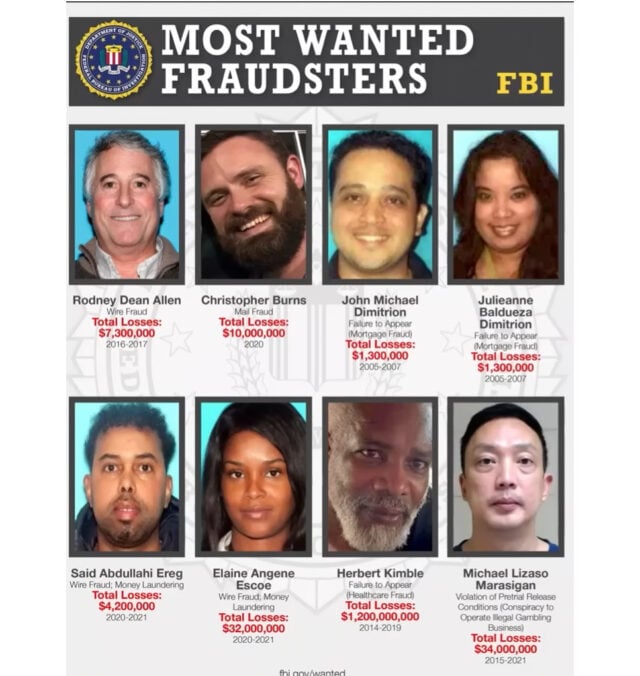
The landscape of federal law enforcement has fundamentally shifted. Decades ago, the Federal Bureau of Investigation (FBI) filled its “Most Wanted” lists with bank robbers, mob bosses, and violent fugitives. Today, a new class of criminal dominates the agency’s priority tracking: the digital fraudster. Fueled by global interconnectivity, algorithmic automation, and complex financial systems, white-collar and cyber-enabled fraud have transformed into a multi-billion-dollar shadow industry.
The FBI Fraudsters List—a colloquial term encompassing the cyber and white-collar crime components of the FBI’s Most Wanted registers—serves as a map of modern illicit finance. These individuals are not robbing banks with firearms; they are siphoning millions of dollars through corrupted lines of code, shell corporations, and sophisticated social engineering. An exploration of this list reveals the staggering evolution of white-collar crime, the structural mechanics of modern digital fraud, and the immense global enforcement networks deployed to bring these elusive fugitives to justice.
The Evolution: From Paper Trails to Algorithmic Theft
White-collar crime was once defined by localized, paper-heavy schemes. Unscrupulous executives manipulated physical ledgers, forged paper checks, or engaged in classic insider trading within domestic stock exchanges. However, the dawn of the digital age collapsed physical boundaries, permanently altering the execution of institutional fraud.

[Traditional Fraud] ──> Physical Ledgers & Local Bank Vaults
[Modern Fraud]      ──> Automated Scripts, Deepfakes & Cross-Border Cryptocurrency
According to empirical research on federal white-collar sentencing, the legal system has scrambled to adapt to the exploding scale of these crimes. In the 1980s and 1990s, medium-to-high loss economic crimes often culminated in relatively short prison sentences or probation; by the 21st century, the devastating systemic impact of mega-frauds like Bernie Madoff’s $64.8 billion Ponzi scheme led to near-lifetime sentences.
The modern fugitives occupying the FBI’s crosshairs have weaponized this systemic shift. Rather than relying on simple deception, they leverage automated computing environments. Assets are siphoned across international borders instantly, concealed beneath automated electronic accounting layers and complex, multi-jurisdictional shell entities.
Archetypes of the Most Wanted: The Profiles of Deception
The individuals who land on the FBI’s high-priority fraud registries generally fall into distinct, highly specialized categories. These archetypes reflect the intersection of traditional human greed with advanced technical capability.
1. The Cyber-Heist Masterminds
These are individuals or organized crime syndicates that execute massive credit card, banking, and data breaches. Unlike lone-wolf hackers driven by digital notoriety, these syndicates operate like multinational corporations, driven entirely by profit maximization.
A notable historic baseline for this archetype is Albert Gonzalez, who orchestrated one of the largest credit card frauds in history by stealing over 45.6 million credit and debit card numbers from TJX Companies Inc., resulting in tens of millions of dollars in fraudulent charges. Similarly, figures like Max Butler crossed the line from government-vetted “white hat” security consulting into illicit “black hat” operations, compromising more than two million credit card accounts and generating $86.4 million in fraudulent transactions.
2. The Global Spam and Botnet Kings
Operating primarily out of jurisdictions with lax extradition laws, these fraudsters run massive digital infrastructure networks designed to infect consumer computers, harvest credentials, and deploy ransomware. Eastern European syndicates, specifically those operating in Russian-speaking regions, have historically dominated this space.
Infamous examples include the operators of the “Mega-D” and “Grum” botnets. The Mega-D botnet, controlled by operators like Igor Nikolaenko—once dubbed the “King of Spam” by federal prosecutors—was capable of transmitting over 10 billion malicious, deceptive emails per day, infecting over half a million personal computers globally to harvest financial identities.
3. Red-Collar Criminals
One of the most dangerous subsets tracked by federal law enforcement is the “red-collar” criminal. This term describes a white-collar fraudster who turns to violent crime, up to and including murder, when their financial schemes face imminent exposure by business partners, auditors, or whistleblowers.
A stark example analyzed in criminology literature is the case of Reginald J. Robinson, who orchestrated an elaborate bank and mortgage fraud scheme designed to defraud JPMorgan Chase out of $417,000 using falsified identities. When his business partner, Kashmir Billon, discovered the illicit transactions and threatened exposure, Billon was found shot to death just hours before the fraudulent real estate escrow was scheduled to close, illustrating that white-collar crime can rapidly turn lethal.
Anatomy of Modern Fraud: How Syndicates Operate
The FBI’s investigative data highlights that modern financial fugitives rarely act alone. Instead, they operate via heavily decentralized, highly organized international criminal groups. The operational execution of a modern multi-million-dollar fraud scheme generally follows a highly coordinated technical pipeline:
[Infection/Phishing] ──> [Credential Harvesting] ──> [Mule Networks] ──> [Exfiltration/Crypto]
- Infection and Access: Syndicates deploy deceptive phishing campaigns, pharming websites, or advanced persistent threats to infiltrate corporate or banking networks.
- Credential Harvesting: Malicious software or automated bots scrape usernames, passwords, bank account details, and Social Security numbers.
- The Mule Network: To move stolen cash without triggering immediate regulatory alarms, syndicates employ global networks of “money mules”—often recruited via online romance scams or fake work-from-home advertisements. These individuals willingly or unwittingly transfer illicit funds through their personal bank accounts.
- Exfiltration and Laundering: The funds are consolidated, often converted into cryptocurrencies, and routed through complex international jurisdictions to evade forensic accounting detection.
During periods of systemic crisis, these networks scale up drastically. During the global COVID-19 pandemic, fraud cases increased by 42% over previous baselines as criminal networks exploited government relief programs, remote work vulnerabilities, and online shopping dependencies. One single tip from U.S. federal authorities led to the apprehension of an international ring that had successfully defrauded the U.S. government of $60 million by harvesting the Social Security numbers of over 30,000 American citizens applying for unemployment relief.
The Threat Landscape: Synthetic Identities and Deepfakes
As the FBI refines its investigative tactics, fraudsters continue to evolve, adopting cutting-edge technologies to mask their identities and manipulate financial markets. Law enforcement faces a steep hurdle with the emergence of two highly complex tools:
Synthetic Identity Fraud
Traditional identity theft involves stealing a real person’s complete profile. Synthetic identity fraud, however, involves combining real information (such as a stolen, unassigned Social Security number) with fabricated data (a fake name, date of birth, and address) to create an entirely new, fictional persona. Fraudsters use these synthetic identities to build credit lines over several years before executing a “bust-out” scheme—maxing out credit lines and vanishing completely. Because there is no single, real victim to report the unusual activity early on, these frauds are incredibly difficult for standard automated banking security algorithms to detect.
Deepfake Deception and Generative AI
The deployment of artificial intelligence has given international fraudsters unprecedented tools for social engineering. Using deepfake technology, criminals can generate hyper-realistic video and audio clones of corporate executives, board members, or political figures.
In modern Business Email Compromise schemes, a mid-level financial manager might receive a video call that appears and sounds exactly like their company’s CEO, ordering an urgent, confidential wire transfer to an overseas account for an unannounced acquisition. By the time the organization conducts an internal audit, the assets have already been distributed across multiple global digital wallets.
The Global Battle: International Enforcement Challenges
The ultimate challenge in clearing names from the FBI Fraudsters List is the geopolitical reality of modern cybercrime. A fraudster sitting at a keyboard in Bucharest, Lagos, or Saint Petersburg can inflict hundreds of millions of dollars in damages on businesses in Ohio or Florida without ever setting foot on U.S. soil.
This borderless reality creates immense jurisdictional friction:
| Challenge | Impact on Law Enforcement |
| Extradition Barriers | Many safe-haven states explicitly refuse to extradite their citizens to the United States, effectively shielding top-tier fraudsters from prosecution as long as they remain within their home borders. |
| Underreporting | According to data from the International Monetary Fund, cyber-enabled fraud has tripled globally, yet it remains drastically underestimated because corporations frequently decline to report incidents to avoid reputational damage or regulatory fines. |
| Anonymizing Technologies | The widespread use of decentralized finance, privacy-focused cryptocurrencies, and encrypted communication networks severely limits the efficacy of traditional subpoena-and-seizure investigative methods. |
To counter this, the FBI relies heavily on joint international task forces, cooperating with Interpol, Europol, and financial intelligence networks like the Financial Crimes Enforcement Network. By coordinating simultaneous multi-country raids and monitoring international banking gateways, global law enforcement continues to choke off the infrastructure that keeps these modern white-collar fugitives afloat. The FBI’s Most Wanted list is no longer a simple record of local outlaws—it is an active, digital battlefield against global financial syndicates.
Sources and Links:
- The Lynnwood Times: FBI Top 10 Most Wanted Fraudsters List Unveiled
- Hindustan Times: FBI Releases Photos in New ‘Most Wanted Fraudsters’ List
- CBS News (Atlanta): Georgia Financial Advisor Named to New Most Wanted Fraudsters List
- Official Briefing Video: FBI Fraudsters Briefing Video
Disclaimer
Artificial Intelligence Disclosure & Legal Disclaimer
AI Content Policy.
To provide our readers with timely and comprehensive coverage, South Florida Reporter uses artificial intelligence (AI) to assist in producing certain articles and visual content.
Articles: AI may be used to assist in research, structural drafting, or data analysis. All AI-assisted text is reviewed and edited by our team to ensure accuracy and adherence to our editorial standards.
Images: Any imagery generated or significantly altered by AI is clearly marked with a disclaimer or watermark to distinguish it from traditional photography or editorial illustrations.
General Disclaimer
The information contained in South Florida Reporter is for general information purposes only.
South Florida Reporter assumes no responsibility for errors or omissions in the contents of the Service. In no event shall South Florida Reporter be liable for any special, direct, indirect, consequential, or incidental damages or any damages whatsoever, whether in an action of contract, negligence or other tort, arising out of or in connection with the use of the Service or the contents of the Service.
The Company reserves the right to make additions, deletions, or modifications to the contents of the Service at any time without prior notice. The Company does not warrant that the Service is free of viruses or other harmful components.