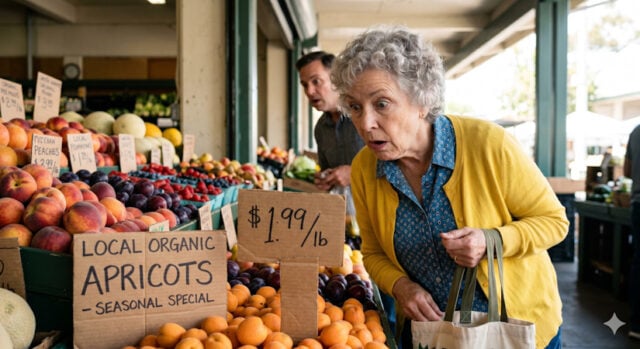
For over a third of Florida families, fresh fruit and vegetables are no longer a grocery staple – they are a luxury. A new survey of 3,004 households by Advance America found that 35% of Florida families are buying less fruit and vegetables on each shopping trip (compared to a national average of 34%), while 51% say their overall diet is less healthy than it was two to three years ago.
The produce aisle has become a decision between good intentions and grocery math.
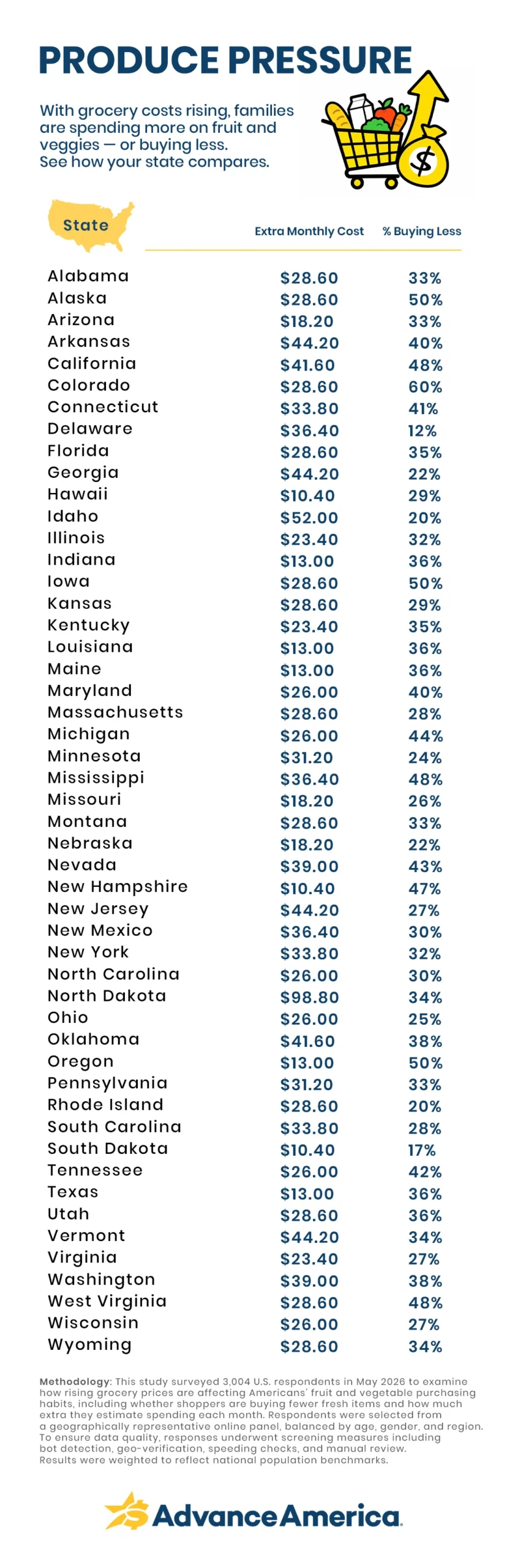
For households that have not reduced their intake, the costs are still being felt. On average, Florida families say they are now spending an extra $28.60 per month just on fruit and vegetables – 11% more than at the same time last year.
Some states are feeling that increase more sharply than others. The top five states spending the most extra per month on produce are:

1. North Dakota – $99 extra per month; 38% increase*
2. Idaho – $52 extra per month; 20% increase
3. Arkansas – $44 extra per month; 17% increase
4. Georgia – $44 extra per month; 17% increase
5. New Jersey – $44 extra per month; 17% increase
- The list of all 50 states is below. Percentage increases reflect the average reported rise compared to last years produce expenditure.
The survey also asked families what they have done over the past 12 months to reduce their spending on fresh produce. The most common answer was a practical one: 20% have bought more frozen fruit or vegetables. Another 13% have visited multiple stores to compare prices, turning the weekly shop into more of a price-checking expedition. Other cost-cutting moves included:
- 9% have stopped buying certain fruits entirely.
- 9% have bought more canned produce.
- 6% have chosen cheaper processed foods instead.
- 4% have switched to lower-quality produce.
- 3% have skipped produce for themselves but still bought it for their children.
The emotional side of rising produce prices is just as revealing. 40% of respondents said they feel frustrated, while 25% said they feel angry that grocery prices have reached this point. Another 8% said they are concerned about their health, and 3% said they are concerned about their children’s diet.
Perhaps most strikingly, nearly one in three families say healthy eating now feels financially out of reach. When asked which statement best reflected their current view, 28% said healthy eating is becoming financially unrealistic for them. A further 30% said they still try to eat healthily but compromise more often now.
Only 19% said they continue to prioritize healthy eating no matter the cost, while 15% said grocery prices have not changed their eating habits.
The survey also found:
- 64% of families worry at least occasionally that their diet is less healthy because of grocery costs.
- 24% say they worry about this frequently.
- 51% feel their overall diet is less healthy than it was two to three years ago because of grocery prices.
- 48% say they have been eating more processed foods because they are cheaper than fresh produce.
Together, the findings paint a picture of a state where the gap between wanting to eat well and being able to afford it is quietly widening.
“Fresh fruit and vegetables should feel like basic groceries, not premium add-ons,” says Laura McCutcheon, VP of Marketing at Advance America. “When parents are skipping produce for themselves to keep buying it for their kids, that tells you everything about the kind of quiet sacrifices families are making right now. ”
Source: News Release
Methodology
This study surveyed 3,004 respondents in May 2026 to examine how rising grocery prices are affecting Americans’ fruit and vegetable purchasing habits, including whether shoppers are buying fewer fresh items and how much extra they estimate spending each month. Respondents were selected from a geographically representative online panel, balanced by age, gender, and region. To ensure data quality, responses underwent screening measures including bot detection, geo-verification, speeding checks, and manual review. Results were weighted to reflect national population benchmarks.
About Advance America
Founded in 1997, Advance America is a leading state-licensed consumer lender in the U.S., serving customers across 23 states through more than 750 storefronts and online lending operations. With approximately 2,500 employees, Advance America provides convenient access to credit through a combination of digital services and real human support.
Disclaimer
Artificial Intelligence Disclosure & Legal Disclaimer
AI Content Policy.
To provide our readers with timely and comprehensive coverage, South Florida Reporter uses artificial intelligence (AI) to assist in producing certain articles and visual content.
Articles: AI may be used to assist in research, structural drafting, or data analysis. All AI-assisted text is reviewed and edited by our team to ensure accuracy and adherence to our editorial standards.
Images: Any imagery generated or significantly altered by AI is clearly marked with a disclaimer or watermark to distinguish it from traditional photography or editorial illustrations.
General Disclaimer
The information contained in South Florida Reporter is for general information purposes only.
South Florida Reporter assumes no responsibility for errors or omissions in the contents of the Service. In no event shall South Florida Reporter be liable for any special, direct, indirect, consequential, or incidental damages or any damages whatsoever, whether in an action of contract, negligence or other tort, arising out of or in connection with the use of the Service or the contents of the Service.
The Company reserves the right to make additions, deletions, or modifications to the contents of the Service at any time without prior notice. The Company does not warrant that the Service is free of viruses or other harmful components.