The U.S. Department of Justice (DOJ) has formally complied with a federal court order to temporarily freeze operations surrounding the Trump administration’s newly established $1.8 billion “Anti-Weaponization Fund.” The freeze, enacted late last week by U.S. District Judge Leonie Brinkema of the Eastern District of Virginia, halts all administrative momentum on the controversial program. By choosing not to immediately violate or circumvent the injunction, the DOJ has consented to preserving the legal status quo while a complex web of constitutional lawsuits proceeds toward an early summer showdown.
The judicial intervention came less than 24 hours after a broad coalition of plaintiffs filed an emergency motion. The court’s ruling temporarily stops a mechanism that critics from across the political spectrum have described as a secretive executive branch “slush fund.” Judge Brinkema’s mandate explicitly bars the Justice Department from moving money into the account, reviewing any financial claims submitted by individuals, or disbursing public funds to any applicants.
In her written order, Judge Brinkema emphasized that an immediate halt was necessary to ensure that “no funds are irreversibly disbursed” before the court could fully assess the program’s legality and constitutionality. A formal, comprehensive hearing on the matter has been scheduled for June 12, 2026.
Origin of the $1.8 Billion Settlement
The multi-billion-dollar fund—officially valued at $1.776 billion in a nod to patriotic imagery—was abruptly unveiled by the DOJ on May 18, 2026. The program emerged as the centerpiece of a sweeping, non-public settlement resolving a $10 billion lawsuit filed by Donald Trump and his two eldest sons against the Internal Revenue Service (IRS). That private litigation stemmed from the unauthorized leak of the president’s tax records during his first term in office.

Rather than proceeding through public trial, the Justice Department resolved the multi-billion-dollar claim by creating the Anti-Weaponization Fund. The administration asserted that the money would be utilized to provide restitution to citizens who believe they have been victims of ideological persecution and “lawfare” conducted by the federal government during the Biden administration.
Financing for the $1.776 billion sum was drawn directly from the federal Judgment Fund—a permanent, rolling congressional appropriation administered by the Treasury Department to pay out settled legal claims against the United States. Furthermore, as part of the settlement terms, the IRS was permanently barred from auditing Donald Trump, his sons, or the Trump Organization, effectively granting them an unprecedented exemption from standard tax enforcement mechanisms.
Operational Structure and Slush Fund Allegations
The operational framework of the fund quickly drew fierce condemnation from constitutional scholars and lawmakers. According to government filings, the program is designed to be managed by a five-member commission. Four of these commissioners are appointed directly by the U.S. Attorney General, with the fifth selected in consultation with congressional leadership. Crucially, all five commissioners serve at the pleasure of the president and can be terminated for any reason.
Unlike typical federal restitution programs, the settlement did not mandate public disclosure of who applies for the funds, the specific criteria used to evaluate claims, or the precise dollar amounts distributed to individual claimants. This lack of transparency triggered immediate warnings from watchdog groups, who pointed out that the structure allows the executive branch to distribute immense sums of taxpayer money with total anonymity.
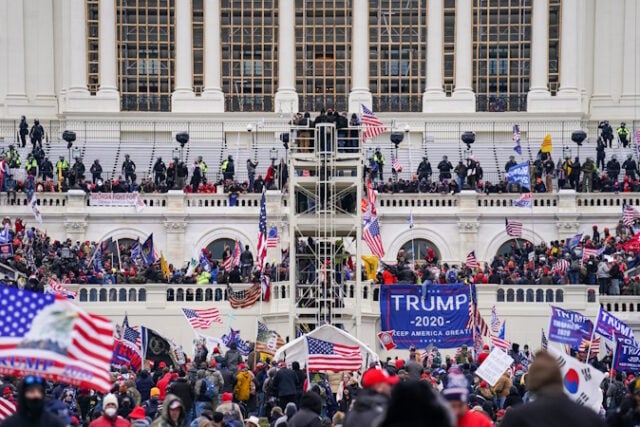
The criteria for who constitutes a victim of “government weaponization” were left intentionally broad, raising concerns that the fund would be used to reward political loyalists, legal defense teams, and far-right activists. Legal filings by opponents noted that individuals involved in the January 6, 2021, Capitol riot or members of allied paramilitary groups could technically apply for and receive massive cash payouts under the current definitions. At least one claimant had already publicly announced a formal request for $2.7 million from the fund immediately after its creation, signaling to the court that payouts were imminent.
The Legal Challenges and Plaintiff Coalitions
The emergency injunction that successfully froze the fund was achieved through a lawsuit spearheaded by the legal watchdog group Democracy Forward. The organization filed the suit on behalf of a diverse array of plaintiffs who argue they are uniquely harmed by the fund’s existence.
The plaintiff coalition includes:
- Andrew Floyd: A former DOJ official who led a federal task force prosecuting January 6 rioters.
- A California Professor: An individual previously acquitted of charges related to attacking immigration enforcement agents.
- The City of New Haven, Connecticut: Representing municipal interests and national taxpayers.
- Advocacy Groups: Common Cause and the National Abortion Federation.
The core legal argument presented by Democracy Forward asserts that the fund violates the Appropriations Clause of the U.S. Constitution. The plaintiffs argue that by utilizing the Judgment Fund to establish a brand-new, multi-billion-dollar compensation program, the executive branch has engaged in an unconstitutional “end-run” around Congress’s exclusive authority to allocate public funds.
Furthermore, the lawsuit alleges a violation of the First Amendment, demonstrating that the fund operates as an unconstitutional system of viewpoint discrimination. Because the program explicitly targets restitution toward those alleging persecution by the previous administration, it leaves individuals who claim they were targeted or weaponized by the Trump administration entirely ineligible for compensation or institutional apologies.
A separate, concurrent lawsuit has been filed in the District of Columbia by U.S. Capitol Police officers who sustained physical injuries while defending lawmakers on January 6. Their complaint argues that the fund poses a direct threat to public safety and incentivizes future political violence by establishing a financial safety net for individuals who commit crimes or engage in insurrections in the president’s name.
Bipartisan Backlash and Legislative Fallout
The creation of the Anti-Weaponization Fund has provoked severe political turbulence in Washington, crossing traditional partisan lines. While the administration has aggressively defended the program, several congressional Republicans joined Democrats in expressing deep discomfort with an opaque, multi-billion-dollar executive payout system operating completely outside of legislative oversight.
The political blowback paralyzed Capitol Hill during the final weeks of May. In direct protest of the DOJ’s settlement terms, a faction of Senate Republicans joined a unified Democratic caucus in refusing to pass a critical, immigration-related government funding bill. Lawmakers argued that allowing the executive branch to unilaterally weaponize the Judgment Fund sets a dangerous precedent that threatens the separation of powers.
“No administration has the authority to spend public money through a political rewards program that Congress never authorized,” stated Skye Perryman, President and CEO of Democracy Forward, following the court’s ruling. Representatives from Common Cause echoed the sentiment, calling the temporary injunction a vital victory for national taxpayers and the fundamental rule of law.
The DOJ’s Response and Upcoming Legal Deadlines
While the Justice Department has complied with the court’s immediate command to pause all operations, its formal rhetoric remains highly combative. The department has signaled that its compliance with the temporary restraining order is strictly procedural and does not indicate a willingness to abandon the program.
Following the issuance of the injunction, a Justice Department spokesperson issued a sharp rebuff of the court’s intervention:
“The Department remains extremely confident in the legality of the Anti-Weaponization Fund, which is supported by ample precedent, including Obama-era settlements. We will not allow the policy preferences of judges to interfere with our efforts to provide restitution to victims of lawfare.”
The administration’s legal strategy hinges on the argument that the executive branch possesses broad statutory authority to settle civil litigation through the Judgment Fund without requiring a specific, secondary vote from Congress. Furthermore, DOJ lawyers are expected to challenge the constitutional “standing” of the plaintiffs. Under federal jurisprudence, a plaintiff must prove they have suffered a concrete, individualized injury to bring a lawsuit. The government will argue that individual taxpayers, advocacy groups, and municipal entities lack a legally cognizable injury merely because they disagree with the structure of a federal settlement.
The legal battle is on an exceptionally fast track. The DOJ is required to file its formal legal rebuttal and opposition papers to the court on June 5, 2026. This filing will set the stage for the crucial June 12 evidentiary hearing before Judge Brinkema in Alexandria, Virginia. At that time, the court will determine whether to convert the temporary pause into a preliminary injunction, which would keep the $1.8 billion fund completely locked down for the foreseeable future as the overarching constitutional litigation winds its way toward the Supreme Court.
Sources and Links:
- Democracy Docket: Judge temporarily halts Trump’s $1.8 billion ‘weaponization’ slush fund
- The Guardian: US judge temporarily blocks Trump’s $1.8bn ‘anti-weaponization’ fund
- Democracy Forward: Federal Court Pauses Trump-Vance Administration’s $1.776 Billion Slush Fund
- The Hill / YouTube: Federal judge temporarily blocks DOJ’s $1.8B ‘anti-weaponization’ fund
- NPR / WWNO: Justice Department ‘anti-weaponization’ fund paused
- Xinhua News Net: U.S. federal judge pauses Trump administration’s “Anti-Weaponization Fund”
Disclaimer
Artificial Intelligence Disclosure & Legal Disclaimer
AI Content Policy.
To provide our readers with timely and comprehensive coverage, South Florida Reporter uses artificial intelligence (AI) to assist in producing certain articles and visual content.
Articles: AI may be used to assist in research, structural drafting, or data analysis. All AI-assisted text is reviewed and edited by our team to ensure accuracy and adherence to our editorial standards.
Images: Any imagery generated or significantly altered by AI is clearly marked with a disclaimer or watermark to distinguish it from traditional photography or editorial illustrations.
General Disclaimer
The information contained in South Florida Reporter is for general information purposes only.
South Florida Reporter assumes no responsibility for errors or omissions in the contents of the Service. In no event shall South Florida Reporter be liable for any special, direct, indirect, consequential, or incidental damages or any damages whatsoever, whether in an action of contract, negligence or other tort, arising out of or in connection with the use of the Service or the contents of the Service.
The Company reserves the right to make additions, deletions, or modifications to the contents of the Service at any time without prior notice. The Company does not warrant that the Service is free of viruses or other harmful components.