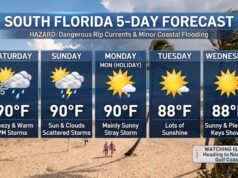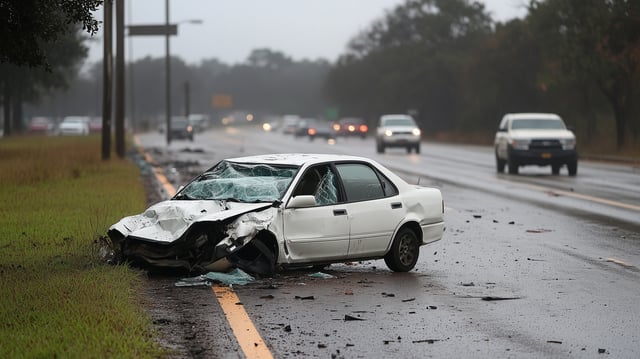
Florida’s unique weather conditions pose a significant challenge to safe driving. While sunshine may be the state’s hallmark, it’s not uncommon for drivers to encounter sudden, intense thunderstorms, high winds, and standing water. Understanding how these weather patterns can influence driving behavior can help residents and tourists alike navigate Florida’s roads more safely. While accidents cannot always be prevented, being aware of the conditions that contribute to road mishaps is an essential step toward improving road safety in the Sunshine State.
Heavy Rain Can Reduce Visibility And Traction
Driving through Florida, one might notice the frequent, unexpected downpours that can catch drivers off guard. These intense rain showers can rapidly diminish visibility, making it harder to gauge the distance between vehicles. When the road becomes soaked, the tires may struggle to maintain firm contact with the surface, which severely compromises control.
When traction is compromised due to slippery roads, the risk of accidents increases. Drivers must exercise extra caution, slowing down and increasing following distances. This proactive approach can be the key to maintaining control in the face of compromised traction and visibility.
According to the National Safety Council, in 2023, 5,375 large trucks were involved in a fatal crash. This statistic underscores the importance of recognizing the risks associated with Florida’s driving conditions. However, with proper awareness and adjustments in driving behavior, it is possible to mitigate many of these dangers effectively.

High Winds Can Make Truck Accidents More Likely
Florida is not only known for its sun and beaches but also for its turbulent weather patterns, including high winds. Such winds can be particularly hazardous for large trucks, whose broad sides can catch the wind like a sail, making them difficult to control. As trucks sway across lanes or topple, the danger extends to nearby vehicles.
It’s vital for truck drivers and those around them to adjust accordingly during high wind conditions. Slowing down and maintaining greater distance between vehicles can reduce the risk of wind-related accidents. Observing these safety practices allows for safer travel across Florida’s highways and byways.
According to Central Michigan University, for a storm to be considered a tornado, it must have a wind speed of at least 65 mph. While not every windy day in Florida leads to a tornado, awareness of the potential for extreme weather conditions is essential to maintaining road safety. Drivers can still enjoy their journey by staying vigilant and respecting the power of Florida’s winds.
Standing Water Can Increase The Risk Of Hydroplaning
The aftermath of heavy rains in Florida often leaves standing water on the roads. These waterlogged patches may seem innocuous, but they pose a significant risk known as hydroplaning. When a car hydroplanes, the tires lose contact with the asphalt and ride on top of the water layer, which can lead to the driver losing steering control.
To reduce the risk of hydroplaning, drivers should slow down when approaching visible puddles and avoid abrupt movements. Planning alternative routes that offer safer driving conditions is another smart strategy. Remaining alert and informed can help keep hydroplaning incidents off the dashboard.
According to Shiner Law, on average, a driver in the United States can expect to be involved in a car accident roughly every 17.9 years. This statistic serves as a compelling reminder of the importance of being prepared for unexpected conditions, especially in a state like Florida. By adopting defensive driving habits, motorists can enjoy a safer driving experience despite the challenges presented by Florida’s climate.
While Florida’s weather can present challenges, understanding and preparing for adverse conditions can significantly reduce the risk of accidents. By recognizing the potential for heavy rain, high winds, and standing water, drivers can take proactive measures to ensure their safety on the road. Summer vacations, leisurely drives, and daily commutes can continue to be safe and enjoyable experiences in Florida.
Disclaimer
Artificial Intelligence Disclosure & Legal Disclaimer
AI Content Policy.
To provide our readers with timely and comprehensive coverage, South Florida Reporter uses artificial intelligence (AI) to assist in producing certain articles and visual content.
Articles: AI may be used to assist in research, structural drafting, or data analysis. All AI-assisted text is reviewed and edited by our team to ensure accuracy and adherence to our editorial standards.
Images: Any imagery generated or significantly altered by AI is clearly marked with a disclaimer or watermark to distinguish it from traditional photography or editorial illustrations.
General Disclaimer
The information contained in South Florida Reporter is for general information purposes only.
South Florida Reporter assumes no responsibility for errors or omissions in the contents of the Service. In no event shall South Florida Reporter be liable for any special, direct, indirect, consequential, or incidental damages or any damages whatsoever, whether in an action of contract, negligence or other tort, arising out of or in connection with the use of the Service or the contents of the Service.
The Company reserves the right to make additions, deletions, or modifications to the contents of the Service at any time without prior notice. The Company does not warrant that the Service is free of viruses or other harmful components.